| Author |
 Replies: 18 / Views: 2,689 Replies: 18 / Views: 2,689 |
|
New Member
United States
12 Posts |
I am trying to determine if this Gold Dollar is a possible proof. It is a peculiar coin as the obverse seems to be proof while the reverse has a more dull business strike appearance. I have examined it carefully with a loop and have taken the best photos I am able to at the moment. It is pretty difficult to get a good shot. The camera I have likes to go out of focus about the time you snap the picture. There seems to be lint marks on the obverse which is another indication that the coin is a proof. Also, It gives off a very cameo appearance. The weight is 1.656g approximately. Added the reverse. The difference is great from the obverse and the reverse. They don't look anywhere near the same type of striking to me. I have considered also that it could just be proof-like. It is difficult to determine, which is why I am asking here. I could really use some extra eyes and experience. This is my first time posting here. Thanks in advance for any assistance. 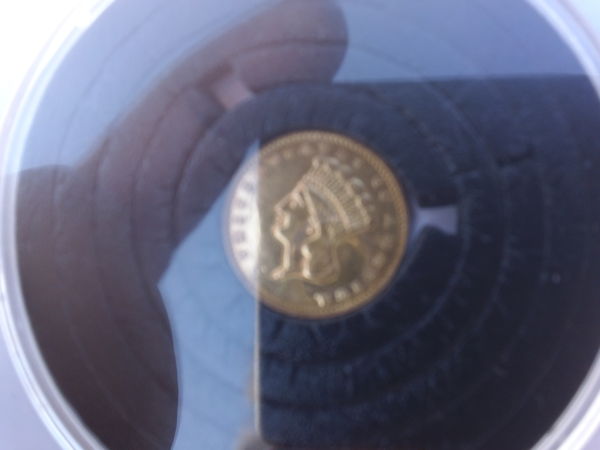 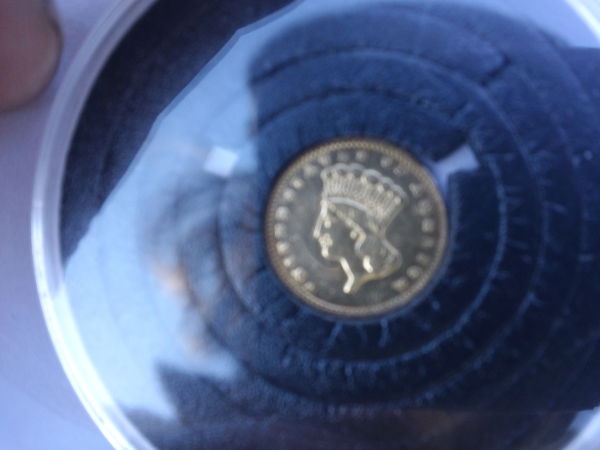 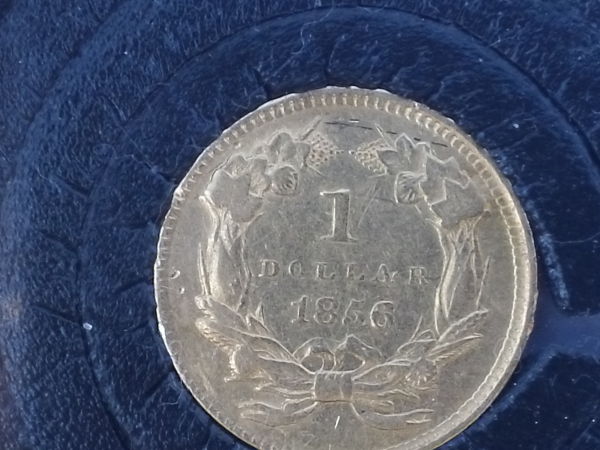 This photo has a very slight angle and zoom. The angle and lighting gave the shot a matte looking appearance. The obverse of the coin in reality has no matte appearance at all. 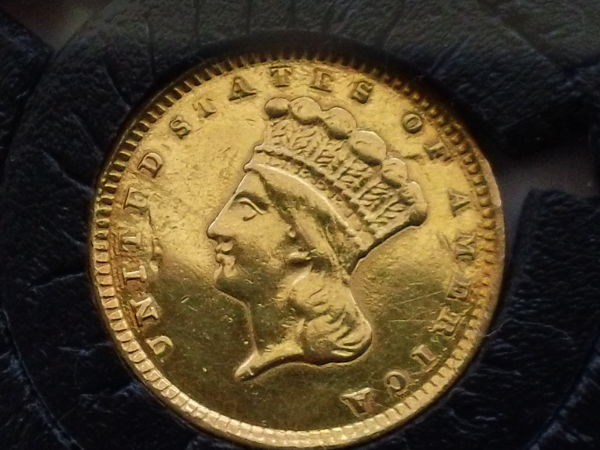 This last photo is from directly above the coin. Again showing a cameo like appearance tho not as bright. The coin is indeed very bright and reflective. 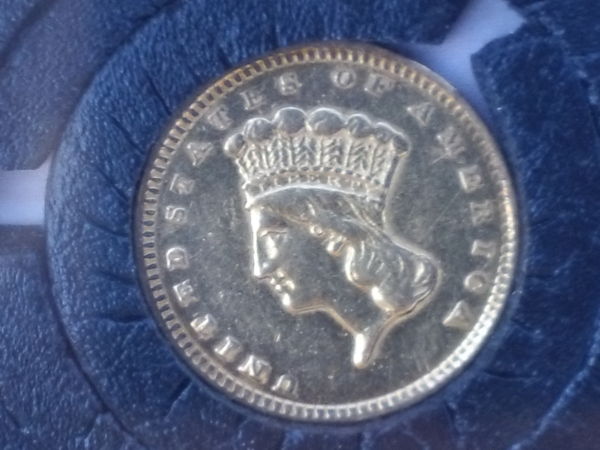 Edited by Coinquest2013
03/06/2013 7:58 pm
|
|
|
|
Pillar of the Community
United States
3234 Posts |
I grade it ungradeable by these pictures.
I give this a UG-1 grade.
|
|
New Member
 United States
12 Posts |
Added an additional image. Close up
|
|
Moderator
 United States
23522 Posts |
Welcome to Coin Community, Coinquest2013. This Dollar shows plain circulation wear, and I'm going to hazard a guess that it was once a piece of jewelery. The obverse faced out, and it's been polished to a shine.
|
|
New Member
United States
12 Posts |
Thanks for the Welcome Dave,
The reverse certainly has more wear than the obverse. I suppose it could of been a jewelry piece. The pictures really don't capture just how reflective it is. It is without any doubt a mirror finish. I could shave with it were it large enough. Also, there is what is maybe? some lint marks in the last picture there. One below the F in OF and a small curly one by the M in aMerica. I really don't know though. But, yes I suppose it could have been heavily polished to look that way. Thanks for the input. Regardless, the gold dollar is a fun coin!
|
|
Pillar of the Community
United States
1081 Posts |
The obverse looks polished and damaged to me.I agree that it may very well have been a jewelry piece. I think it is safe to say that this is not a proof.
|
|
New Member
United States
12 Posts |
There is no damage on the obverse. That is an extreme close up of a very,very tiny coin. You would be able to see nothing that looks like damage with the naked eye. Thanks anyway....
|
|
Moderator
United States
23522 Posts |
Actually, "damaged" is a pretty accurate term. The coin has been polished so heavily that the surface is abraded. You can see this most clearly around the T in UNITED. The shadows around the lettering - most noticeable in the last letters of AMERICA - and behind the head show where the tool used to destroy this coin couldn't reach.
|
|
New Member
United States
12 Posts |
Never mind You guys aren't even remotely serious or your reading a lot of things into the picture that aren't there. It took me a long time to DELIBERATELY get a picture that would reveal that much surface detail at extreme magnification. However, It is absurd to jump to 'destroyed'. The coin is in no way destroy. It is actually a very fine example on the obverse. The only obvious real damage is a large scratch and some nicks on the reverse. Regardless of what was only speculation as to a possible proof. This coin is a very nice example of the regular issue if anything even with polishing.
|
|
Moderator
United States
23522 Posts |
The fact that you're willing to say that is proof that you need to listen to us. Believe what you wish; it won't change reality. You asked our opinion, and we're giving it. This is what an 1856 Proof Dollar looks like. It's a $50,000 coin: 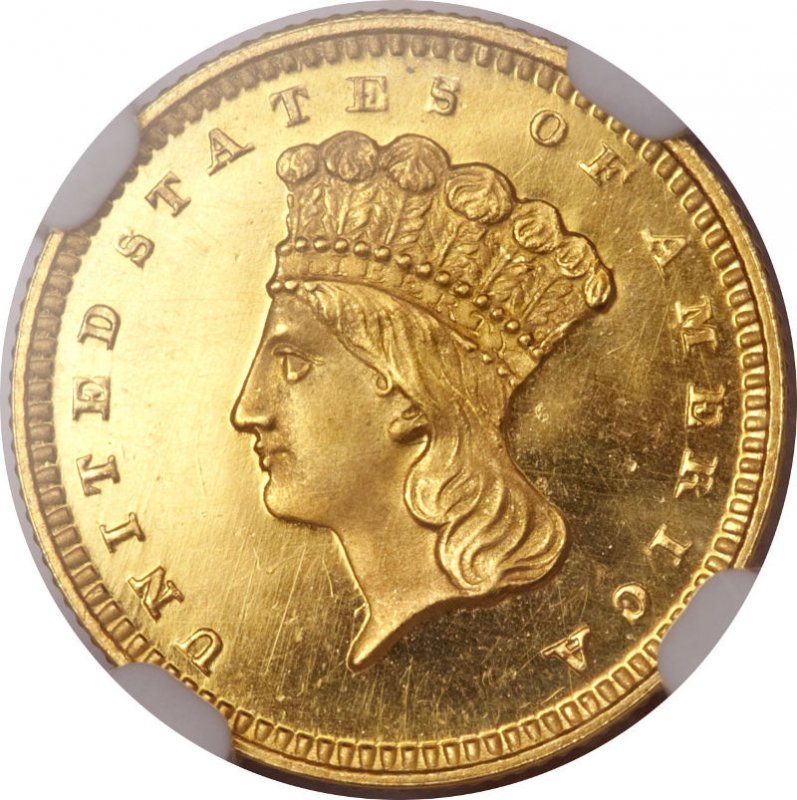 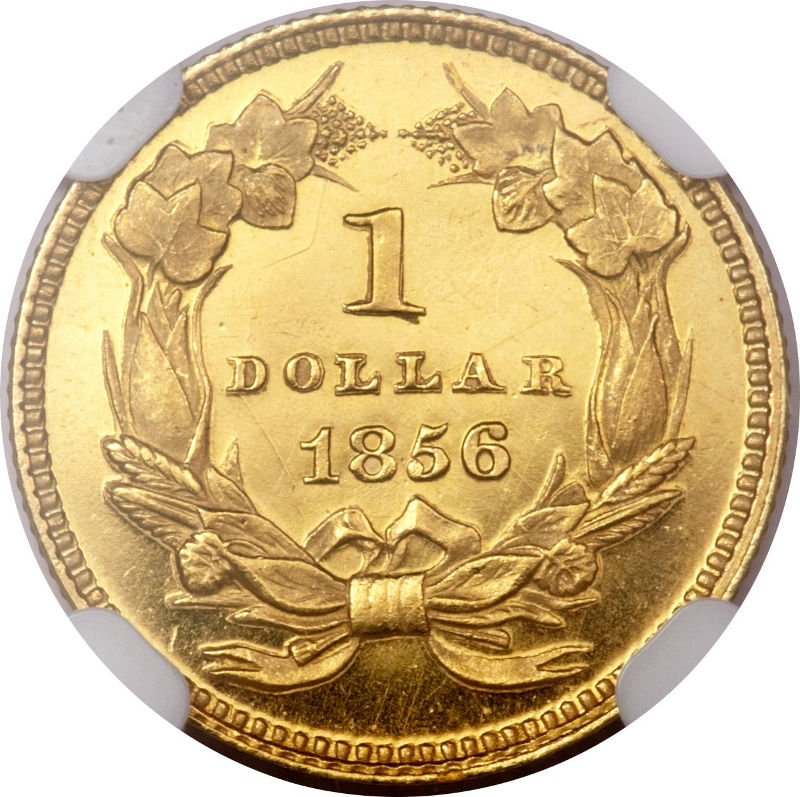 |
|
New Member
United States
12 Posts |
I never said it WAS. I said possibly there is a difference. Unfortunately, I cannot get a clear enough picture such as the one's that you just posted. That was why I was wondering about it. In person, The obverse looks very much like the first photo of the 2 you just posted, while the back does not. It looks so much like the first photo that it had me curious. I looked at numerous mint state business strikes online and none of them have a reflective mirrored background not even the finest examples. The reverse,however,looks exactly like the business strike. So, that is why I was asking. It was curious. I accept your notion that it is possibly highly polished on the front. I don't think 'destroyed' would be anywhere in the ballpark of how one would describe this coin though. Some scratches on the reverse and polishing certainly reduces the value some, but there is a high level of detail on the coin so it is still a fairly nice coin despite that. It wouldn't be very hard to find many far worse looking examples of this coin.
|
|
New Member
United States
12 Posts |
The first 2 photos of the four I posted are as best I could get of the general appearance of the mirror-like background. Those pictures,while not great, show what I am talking about. It is not an optical illusion either. That is how it generally looks. The last more matte looking picture is some what at an angle and zoomed in and that finish is an optical illusion. I could try forever and I would never get the back of the coin to look cameo. That is the way the coin is. It looks highly cameo on the obverse or maybe proof-like. Maybe, A heavy polish made it appear that way. I don't know. Anyway,I do appreciate the help.
|
|
New Member
United States
12 Posts |
I posted another photo. This one has a slightly different surface appearance than the other.
|
|
New Member
United States
12 Posts |
Ok, so the prevailing theory is that the coin was heavily polished and used in jewelry. So, what type of polish would change a business strike into a cameo proof? Wouldn't polishing the coin simply make the entire coin brighter and not change the background surface into a mirrored surface? So, that would rule out polishing just for jewelry and mean possibly that it was machined? or tooled? to changed the background surfaces? But then, if that is the case. That would take incredibly precision small tools on a 15 mm diameter coin that is very fragile and a lot of effort to then simply leave the reverse of the coin as a plain business strike. So, what I am trying to get at is. If it was being altered to fool a collector for example by making it appear to be a proof then why not do the back of the coin? That would likely give it away or raise suspicion. One other possibility: It was tooled into a cameo proof and polished to put in a piece of jewelry. Still, that seems like an awful lot of trouble to go through just to then put the altered coin into a piece of jewelry? Still curious to me. None of those scenarios seem very logical to me.
Well, once again. Thank you very much for taking your time to look at it.
|
|
Bedrock of the Community
United States
12437 Posts |
No, no, you are making way too much out of this. The act of polishing the coin is what produced the mirrored surface. Judging by the condition of the obverse, it was polished with an abrasive cleaner instead of just a polish cloth. The new photo, #5, shows a "halo" around all of the devices which is caused by a combination of unpolished surfaces and polishing compound residue.
|
|
Bedrock of the Community
United States
10982 Posts |
It does look like a heavily polished piece. These tiny gold pieces were often used in jewelry and polished. I don't see any proof cameo characteristics. Here's the obverse of an 1856 proof G$1 with light cameo. I think you have an ex-jewelry piece worth about $150 retail.  |
| |
Replies: 18 / Views: 2,689 |







 Posted 03/06/2013 1:47 pm





