Quote:
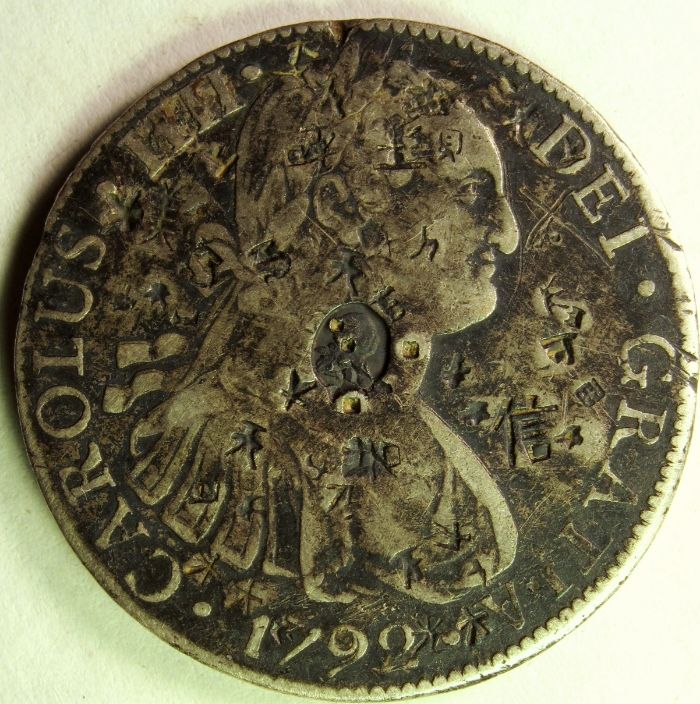
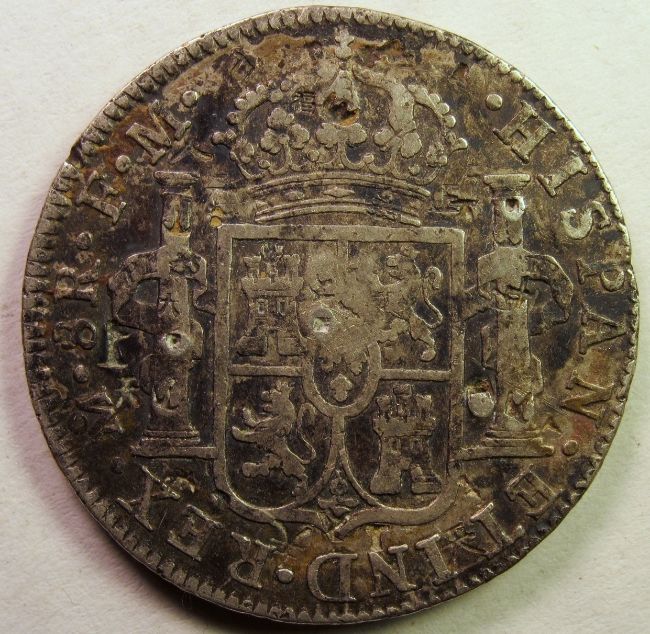
Is it common for counterfeiters to fake a coin to look as beat up as this one is ? If it is a fake, it's a rather impressive job of crustification ...
Regarding a chopped up fake.
It absolutely did happen in two different cases.
Numismatic forgers do in fact add chops to cover their work because a pristine example would be worth so much that it gets a lot of unwanted attention. The best forgeries are the ones that are never detected. That would account for the destruction of the most critical elements.
There were also counterfeits made far earlier that were heavily chopped as they traveled through China. These are the Silver restrikes (counterfeits) made unofficially between 1830 and 1930 all over the world for the China trade. These coins were solid silver within a few % points of correct that could pass in China.
So the answer to chopping on a fake is of course yes.
Here I suspect something just a bit different.
1) The coin may in fact be real.
2) The chops are also likely - MOSTLY real.
3) It is the stamp that is most likely the forgery.
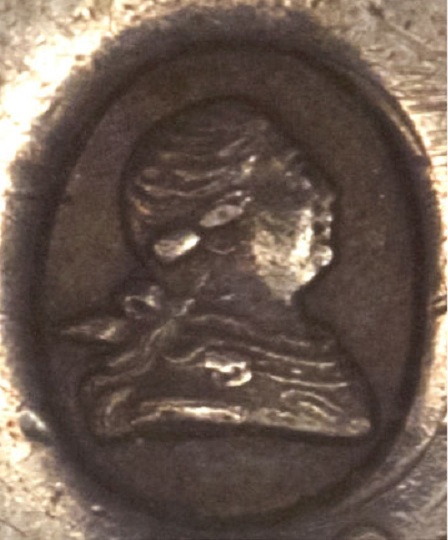
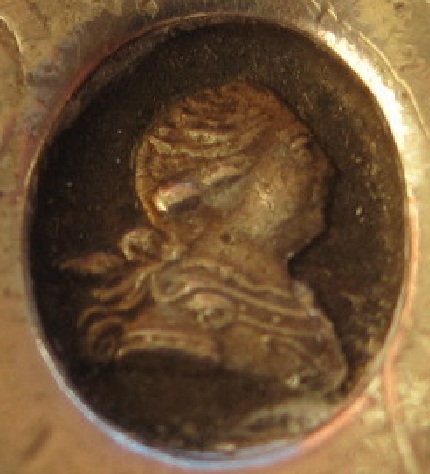
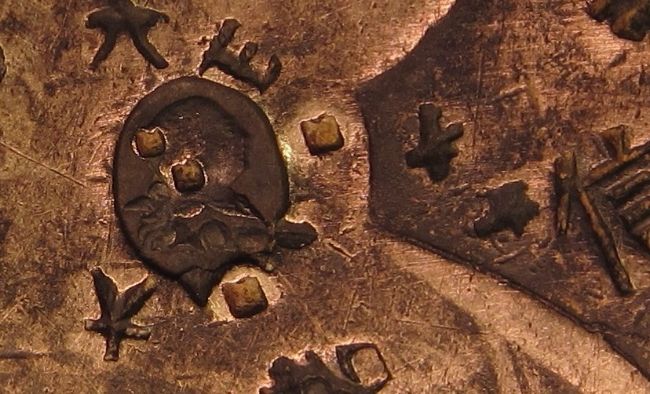
There were some slight variations in the privy stamp used to make the oval punch on the 8Rs. But the B stamp I show above is a Modern Copy of a privy stamp that is still being applied to junk 8 reales to make a melt coin something more. The punches that hit the stamp and the odd looking chop that follows the truncation of the base are likely new with artificial toning and dirt added. Baked on in all probability.
I do know that the B stamp is BEYOND any doubt a fake (modern) and that the A stamp is period from 1797 (at least a few identical to this have been encapsulated by PCGS and NGC). So A is real.
I reviewed your stamp by comparing the ratios with the same measurements taken from both the A & B coins.
a. Overall height (rear curl to forehead)
b. Ribbon point to Nose
c. Ribbon point to Jaw/neck intersection
The measurement from the tip of the ribbon to the jaw neck junction is taken as 1.00 on each coin and a ratio to the other two measurements is the comparison.
I made a large blow up of your coin and the three measurements were
a. = 115 units
b. = 107 units
c. = 74 units.
Therefore the ratios are a/c = 1.554
b/c = 1.446
I did the same for the A coin and got
a. = 127 units
b. = 110 units
c. = 85 units.
Therefore the ratios are a/c = 1.494
b/c = 1.294
Then I did the same for the B coin and got
a. = 115 units
b. = 115 units
c. = 80 units.
Therefore the ratios are a/c = 1.437
b/c = 1.437
Within the bounds of reason the ratios point to a close match with the B stamp than the A stamp.
This is just a simple mathematical way of saying that the height to width ratio of the original privy stamp was higher than either yours or the known forgery.
It might be real - but I would need to see examples of accepted originals with a much narrow deviation in height to width.












 Posted 03/30/2013 2:30 pm