| Author |
 Replies: 21 / Views: 3,175 Replies: 21 / Views: 3,175 |
|
Bedrock of the Community
 United States
18869 Posts |
One of the biggest questions and challenges for all collectors is trying to determine if a particular coin has been cleaned. Post any denomination of coin here and describe how the coin was cleaned and what to look for to determine it. Edited by panzaldi
04/13/2013 3:38 pm
|
|
|
|
Pillar of the Community
United Kingdom
2139 Posts |
Cleaned and counterfeit are totally different and a single sub-forum should be discouraged.
|
|
Bedrock of the Community
 United States
18869 Posts |
Thanks Pertinax. I updated it to just cleaned coins which seems to be more prevalent
|
|
Pillar of the Community
United States
3486 Posts |
A long over due topic. I have a quarter or two to add after I find them.
|
|
Bedrock of the Community
United States
18869 Posts |
This one was from a previous thread:
swirls,hairlines that all go the same direction would be signs of a whizzed or abrasively cleaned coin.
Here is an example of an abrasively cleaned coin.
uploaded/metalman/PICT1299.jpg
|
|
Pillar of the Community
United Kingdom
2139 Posts |
Well, it might be, however a lot of The Royal Mint's production of modern coins come out with lots of bagmarks and minor scratches like this. |
|
Pillar of the Community
United States
4337 Posts |
Here's an abrasive cleaning that has darkened over time but the cleaning is still apparent 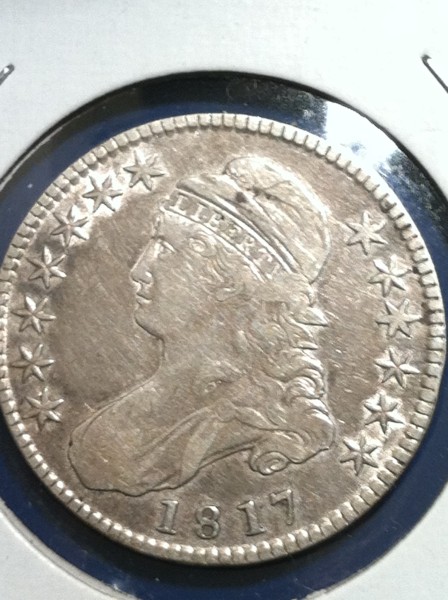 |
|
Pillar of the Community
United Kingdom
2139 Posts |
I wish it were possible to see this coin before it was cleaned.
I bought some 18th century UK copper coins recently. I could see they had been badly and probably recently cleaned.
If their owner had left them alone I think they might have fetched £500 to £800. I paid £45 and I might have paid too much !
|
|
Bedrock of the Community
United States
20753 Posts |
As to a sub or full forum for cleaning coins, coin cleaning, chemicals for coin cleaning and on and on and on.
How to see or tell if cleaned. I too think this is one of the most frequent questions, topics, discussions that is seen over and over. Would be nice to just be able to say, look here and there would be this entire sub type forum all about that subject.
|
|
Moderator
 United States
23522 Posts |
We don't want to pigeonhole the subject with its' own subforum; that would take away from the number of potential viewers when this is the kind of information we want most accessible to everyone who visits here.
Cleaning is such a broad concept, with so many different types/methods/outcomes, that you pretty much have to evaluate it on a case-by-case basis. Yes, there are some which can't be missed, but this is a subject that if there's six concurrent threads on the front page asking for evaluations of specific coins, we're going to be quite happy about it.
No single thread can cover it all.
|
|
Pillar of the Community
United States
624 Posts |
There's an extensive thread on Acetone over on the Modern Coins forum... here's my take on the use of Acetone from that lengthy discussion: 1. Pure Acetone will not damage coins; you can't leave a coin in it too long 2. A water wash after the Acetone dip is unnecessary, but if you insist, use distilled water 3. Acetone will not put a shine on coins; it's best used to remove oil, grease, ink, or residue from tape 4. Acetone will not harm skin; Acetone removes moisture, so it will dry you skin 5. Acetone is flammable; use appropriate caution and use in glass (best) or metal containers only 6. Pure Acetone doesn't care where you bought it from, or how much you spend; cheapest at Walmart, but available in any paint/hardware store 7. There is nothing that Acetone will do to limit the ability to have a coin professionally graded, however using metal (or laminated wood) gripping devices, rubbing the coin (with a q-tip, rag, toothbrush, etc), or using a 'tap-water' rinse (it has sediments and minerals) afterwards are bad for your coins. |
|
Pillar of the Community
United States
593 Posts |
Several years ago I was garage sale hunting and I found this pile of old coins in a clump all stuck together with black goop in a coffee can. You couldnt read dates or anything, but I could see 3or 4 large cents and others. I gave them 15$ and went to figure out how to get them apart. I finally tried oven cleaner after nothing else worked and let them set for 2-3 days. I worked very well and I ended up with 4-5 large cents IH or two, some 3 cent pieces and a 1879 shield nickle in xf plus. which came out excellant for the cleaning it took and didnt hurt the surface of any of the coins.
The shield was a good date and I sold it to a dealer for $300
|
|
Pillar of the Community
United States
1959 Posts |
A quick comment to make about garys64wildcats comment about oven cleaner. Oven cleaners use many different types of chemicals depending on brand/type etc. I'm glad oven cleaner worked well on your coins, I would caution anyone who wants to try this. Only as a last resort or possibly try on some junk coins you care nothing about. Some oven cleaners will destroy coins. FYI.
|
|
Pillar of the Community
United States
593 Posts |
Just for the record, these were in a big clump that was very hard like they were in there for years and it was the last resort. I would never use that on anything other than the oven but it turned good with out damage to even the large cents. For 15$ not much to lose and it turned out good.
|
|
Pillar of the Community
United States
1536 Posts |
I think that you first have to determine if the cleaning is acceptable or if it was harshly cleaned. Some of us openly discuss cleaning coins by soaking them in distilled water and acetone. Sometimes it is necessary to conserve the coin from further corrosion or some sort of substance is on the coin that will damage it further.
|
|
Pillar of the Community
United States
1374 Posts |
The brevity of this original post is way too much for a thread. There must be several hundred methods to cleaning and conserving coins... which could be two totally different topics in of themselves. A quick google search for a plethora of chemicals and treatments and their use on particular series will yield a lot of information.
The skinny of it is, that over several years you will develop an eye for what is natural and what is not. Online digital pictures can't teach you that. You have to go to coin shows, dealers, and look at raw and slabbed coins. Some slabbed coins are cleaned, although they don't mention it on the slab. Some raw coins have never been cleaned. This is where skill comes in. Sadly, I'd have to assert that pictures will not teach you what is real luster and what is not. After one learns what coins should look like in-hand, you can deduce with great certainty whether photographed coins are original, conserved, or cleaned. This is my experience, at least.
|
| |
Replies: 21 / Views: 3,175 |







 Posted 04/13/2013 3:40 pm





