| Author |
 Replies: 31 / Views: 4,310 Replies: 31 / Views: 4,310 |
|
Pillar of the Community
Canada
618 Posts |
This doubling resembles a case of re-punching. 4 different coins. Same doubling effect on each. Same "tail" on the upright E. Toning obscures the 4th coin features, but the tail is there. The whole E is twisted in relation to the other letters. 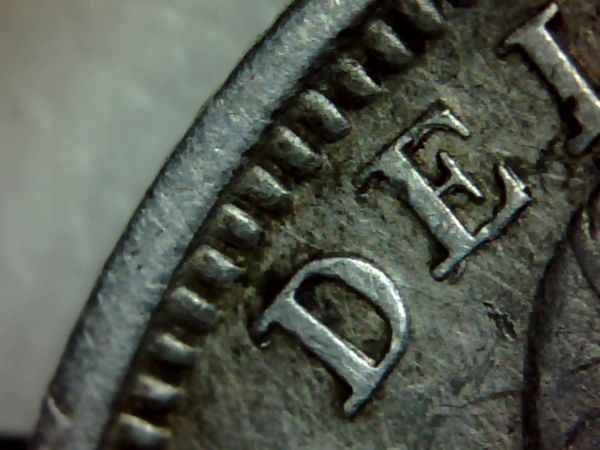 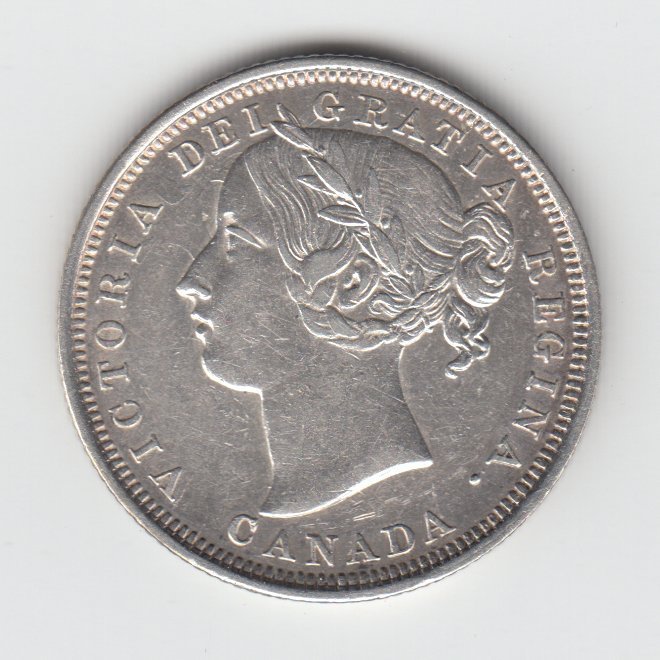 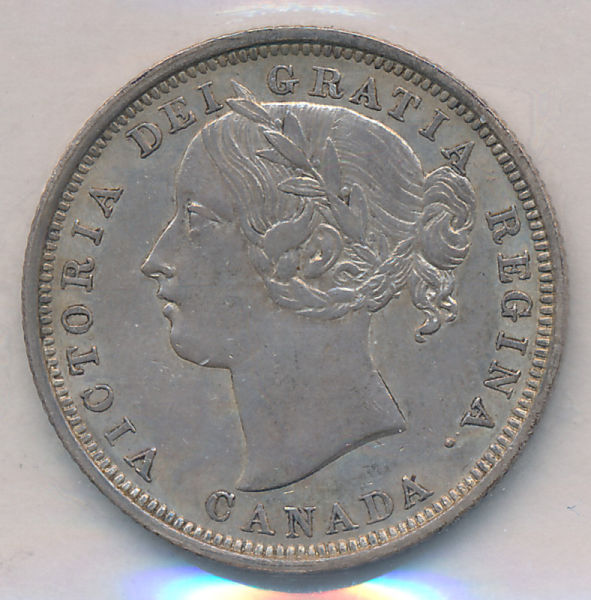 Control+ to enlarge photo 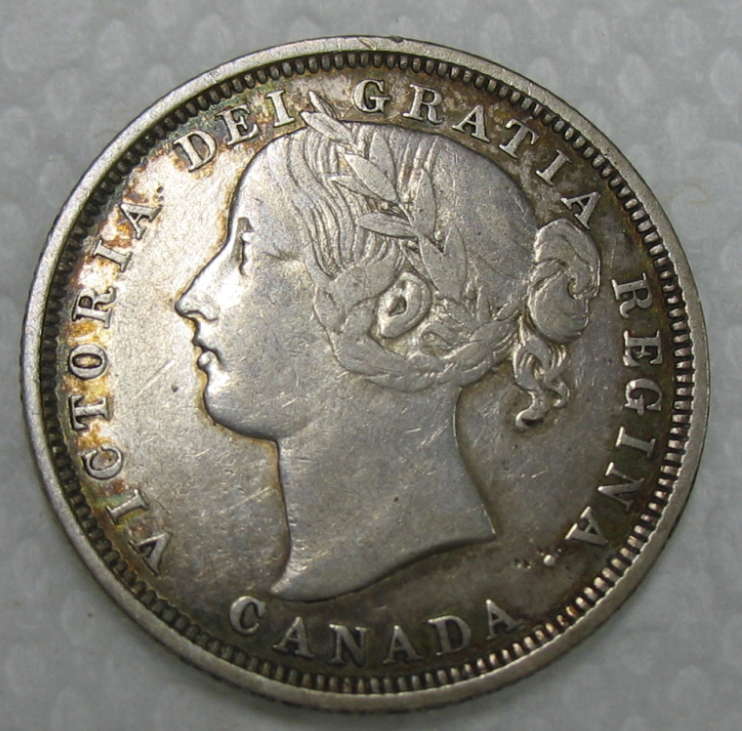 Edited by lambecolin
04/18/2013 9:29 pm
|
|
|
|
Valued Member
Canada
286 Posts |
Nice lambecolin... noticed that the "DEI" on these coins has a certain degree of a tilt to it...haven't seen too many of these 20 cent coins but just wanted to mention how nice of shape these are especially for being as old as they are... Nice.
Hope someone can help out with this.
|
|
Pillar of the Community
 Canada
618 Posts |
I call these "twisted " E's
|
|
Valued Member
Canada
263 Posts |
|
|
Pillar of the Community
United States
2189 Posts |
I checked the one I posted the other day just to see if I had a relative of your coins. nope
|
|
Pillar of the Community
Canada
618 Posts |
RK55--Your coin is twisted---I estimate 2 to 3 % of the 1858 20 cent is twisted.
It might become a variety (Off the same die)--- only about 200 exist.
|
|
Pillar of the Community
United States
2189 Posts |
Can't believe I didn't see it, think I was looking for the doubling effect and overlooked the "twisted" E.
What references show only 200 exist? or is it based on your research of this date and the estimation of the survival amount of all 1858's
curious here, thanks RK
|
|
Pillar of the Community
Canada
618 Posts |
Survival number pinned down by Ron Turner's article of 2009---7,342
I found 4 twisted in about 150 searches = 2.7%
To be confident about the 2.7% I need to search about 300 coins.(Statistically speaking)
My hunting will go on.
|
|
Valued Member
United States
159 Posts |
I checked the 2 I have - 1 is the "twisted" variety. Identical to the one pictured above.
|
|
Valued Member
United States
159 Posts |
I checked the 2 I have - 1 is the "twisted" variety. Identical to the one pictured above.
|
|
Valued Member
United States
159 Posts |
I checked the 2 I have - 1 is the "twisted" variety. Identical to the one pictured above.
|
|
Valued Member
United States
159 Posts |
I checked the 2 I have - 1 is the "twisted" variety. Identical to the one pictured above.
|
|
Pillar of the Community
Canada
618 Posts |
I have been thinking about this error--- which is an unintentional mint error -- sloppy work at the mint--- this would never become a separate variety unless the market demanded it. A good example would be the 1936 BAR coins, which are essentially plain die cracks. So what we are left with are Twisted E's -- mint errors. Much better than PMD's !!!!!!! |
|
New Member
Canada
20 Posts |
I just checked my 1858 20 cent piece (ICCS MS-62), look what I found! The picture is foggy because I'm shooting through the ICCS plastic holder. 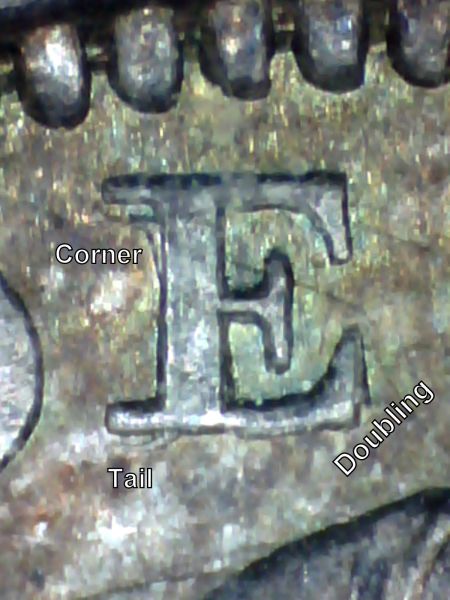 |
|
Pillar of the Community
Canada
618 Posts |
Perfect specimen !! Love that tail. I bet all these doublings come from a specific die that had a defect--- different from the master die. Back in those days, dies lasted about 30,000 copies. Divide that by a total mintage of 750,000 gives 4% of the population. That coincides roughly with my sample estimate of 2.7%. It also gives credence to Ron Turners Article.
|
|
New Member
Canada
20 Posts |
Umm.. where would I find Ron Turner's article of 2009?
|
| |
Replies: 31 / Views: 4,310 |







 Posted 04/18/2013 6:21 pm





