| Author |
 Replies: 8 / Views: 1,158 Replies: 8 / Views: 1,158 |
|
|
Valued Member
Germany
194 Posts |
I am looking for the experts' input on the following coin, which I brought back from Mexico: It is a cast copy of an 1803 Carolus IIII 8 reales. There is no doubt about the casting, and the weight is a mere 23.35g. I have not done a gravity test, but from the color I guess there's plenty of copper in it. Here are the pictures: 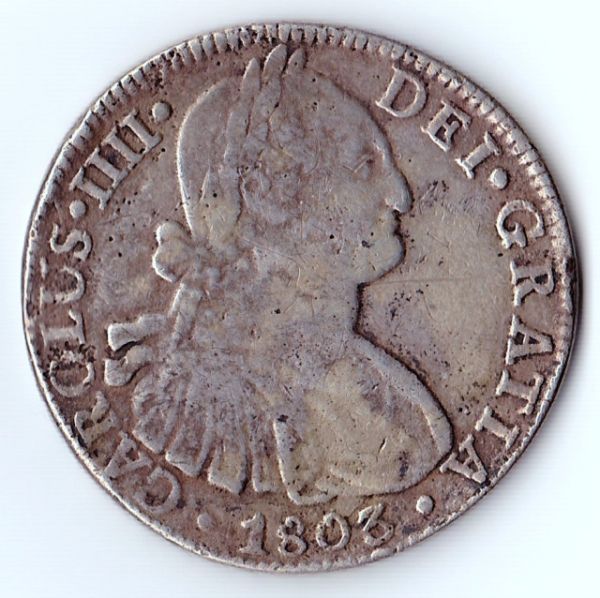 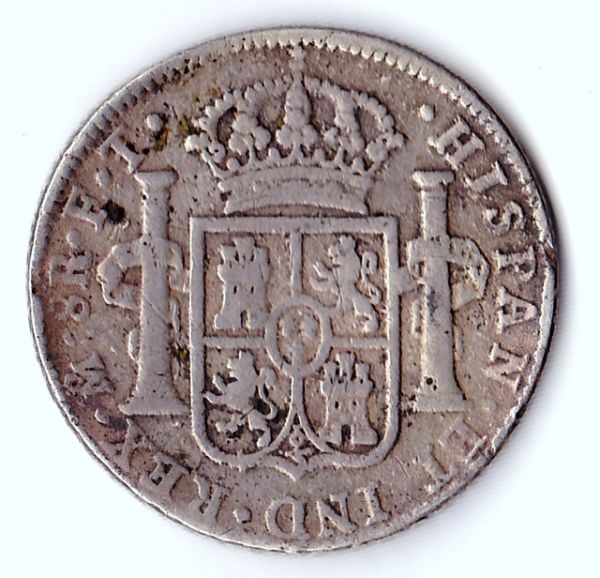 So far, so good (or bad, in this case). Now comes the edge: 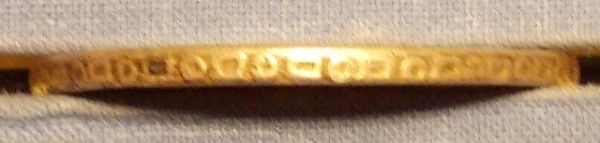 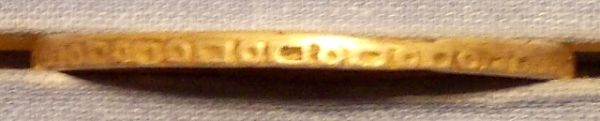 (I really hope these pictures are at least halfways useful because the zoom of the digital camera isn't working properly (sands of Acapulco?) Here my questions: The edge seems not to have been applied afterwards - is it possible to cast a coin with the edge? The quality is not deceiving anybody. Any ideas why such crude fakes would be made (and yet they bothered for the edge design)? My working assumption is that it could be a production of the Insurgents, one of the coins they counterstamped, but which seems to have evaded stamping. Yet, these coins are usually even cruder, and usually without colonial edge design. Any ideas are welcome. Edited by dosmundos
04/19/2013 8:29 pm
|
|
|
|
Pillar of the Community
Canada
2805 Posts |
A casting involves the entire coin - a cavity is formed in one go and then filled with metal as needed. So you'd actually have a harder time leaving off that edge design with casting.
|
|
Valued Member
 Germany
194 Posts |
But to prepare such a cavity you have to make a way model of the coin. For this, you have to copy obverse and reverse of the original, by which you lose the edge.
So they needed to apply the edge by hand to the wax model, which explains its crudeness. Now, my question is whether it is technically possible to have a re-useable mold that provides an edge design, or whether they had to make one wax model for each coin, which means that each way model had to be individually edged - a very tedious process...
|
|
Pillar of the Community
United States
1962 Posts |
|
|
Pillar of the Community
United States
5362 Posts |
The edge on a casting has to be applied after it is cast. There is no other convenient way to place the edge on a coin. You say Quote:
The edge seems not to have been applied afterwards Why do you believe it was not done after the casting? A production molding prcess requires a seam for the removal of the cast coin and it also requires a sprue and vent to allow molten metal in and gas out. You could use a lost wax process for one coin per mold but that is not the fastest way to make these. It would likely not be profitable. If it is an insurgent coin - the edge would have to be rolled on AFTER being cast with a more or less standard edging mill. There are tons of these kinds on the market - the presumption of an "unmarked" insurgent coin being possible drives the market. While they may possibly exist, they should be much rarer than the ones with the stamp. These are simply too common for them to be real. The weight 23.5 grams is on the low end for a Class 1 variety. Very low weight counterfeits are not that common either. Most very low weights are seen on Class 3 MODERN examoles. There are many 1803 Class 3 counterfeits that use a very shallow edge design. The Class 3 coins often shouw evidence of fine grounding on the edge surface itself. |
|
Valued Member
Germany
194 Posts |
Well, you confirmed my initial understanding that it is rather difficult and in any way not economic to cast a coin including the edge.
The edge design on this coin is definitely "hand-made", as the rectangles are not always rectangular and the diameter of the circles differ. Most importantly, the edge design on this coin is strong on one side and rather weak on the other. Could this effect be possible in an edging mill if the coin is not perfectly round?
Upon closer inspection I see some upsetting at the edges which would be consistent with edge reeding after the casting. So I can't really uphold my initial observation of the edge not having been applied afterwards.
You are speaking of "many 1803 Class III counterfeits". Are these modern counterfeits to dupe collectors looking for an original 1803 Mo 8 Reales coin? If so, are those counterfeits really as crudely made as this one? I mean, this coin will hardly fool anybody (okay, there's a sucker born every minute, but still...).
Or are you talking of a modern counterfeit of a "Mexican Insurgents' copy of a Colonial coin, but missing the Insurgents' counterstamp"? This would at least explain why the alleged forger did not care about his product looking crudely cast - this would be a prerequisite. A Class III counterfeit of a Class I counterfeit used as emergency issue?
That would be interesting. I didn't know there was much of a market for such "possibly unstamped Insurgent casts". Okay, I did indeed buy this coin as a "possible cast of the Insurgents", but at a price much in line with what a badly-made modern counterfeit of an 8 Reales would sell for. So it's definitely not a hot market :-)
|
|
Valued Member
Germany
194 Posts |
Realeswatcher, the one from the Almanzar auction is one of those Insurgent casts without counterstamps one sees every once in a while. The crudeness matches the ones found with c/s. And they don't have edge designs.
Which is why I am wondering about mine - still crude, but much less so, and with Colonial edge.
|
|
Pillar of the Community
United States
5362 Posts |
The description of the edge getting weaker as it goes around is VERY typical of more MODERN counterfeits. It is caused by the coin getting smaller in diameter as it is edged. Since the edging process actually reduces the overall diameter of the blank and upsets the edge for striking, this reduction in diameter has to be taken into account.
The Class 3 recently made coins are often injection molded and a poor cast made in that way can still have bubbles.
|
|
Valued Member
Germany
194 Posts |
That way it makes much sense.
However, there is still one question I can't find an answer for:
What's the point in a modern counterfeit of such a low quality, with all the striking and casting technology available today? Are there really collectors who would be duped by such a coin?
|
| |
Replies: 8 / Views: 1,158 |
|










 Posted 04/21/2013 2:57 pm


