|
This page may contain links that result in small commissions to keep this free site up and running.

Welcome Guest! Registering and/or logging in will remove the anchor (bottom) ads. It's Free!
To participate in the forum you must log in or register. | Author |
 Replies: 11 / Views: 1,266 Replies: 11 / Views: 1,266 |
|
|
Pillar of the Community
United States
595 Posts |
Hello all, I recently received a graded 1855 Type II gold dollar back from PCGS. The coin came back as Genuine, About Uncirculated Details, Altered Surface. Accordingly, this means that there is wax on the coin, which could be used to cover up flaws. I do not disagree with the presence of wax - light lines of a bit of wax were apparent on the fields to me before I sent it. I did not realize that this was a problem. The origin of the wax, I believe, was the small wax paper envelope that the coin was stored in for at least 50 years, and possibly as much as 75 years, based on the acquisition date and when it was put into long term storage. Anyway, I think what happened was that each time there was pressure on the wax paper envelope, a bit of wax rubbed onto the coin. What do all of you think - should I break the coin out of the holder, soak it in acetone to remove the wax, and have it regarded?  I don't really like having the coin in a body bag if it does not need to be. I have not broken coins out of holders, though I can think of many ways to do it. What ways are the best? Thanks for your thoughts. 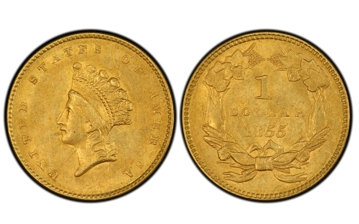 |
|
|
|
Bedrock of the Community
United States
10982 Posts |
Quote:
...The coin came back as Genuine, About Uncirculated Details, Altered Surface. Accordingly, this means that there is wax on the coin, which could be used to cover up flaws... First, Are you sure wax is the reason for rejection? Altered surfaces can mean many things. An acetone bath wouldn't hurt but might not help get it into a problem-free holder either. Second, I use pliers to break open slabs on the label end of the slab, as far away from the coin as possible. A Dremel tool is often mentioned and should work well too. Last, Your coin is not a high-value piece. You might be better off selling it selling buying one already in the grade you want. Best of luck! |
|
Pillar of the Community
 United States
595 Posts |
To the best of my knowledge, I believe that wax is the problem. The problem is code 94, which implies something applied to the surface to hide defects, according to the PCGS code information. I know that there is wax rubbed onto it, and I can't see anything else. No scratches or other weird things that I can see. The photos (from PCGS) are not very good and are washed out. Much more detail is visible on the coins then in the photos.
I would prefer to keep the coin. It is part of a set of 10 gold dollars, starting in 1849, that was auctioned in Baltimore in the 1930's after some kids found them under a house. It is a rather famous story which I learned about only after I googled the information on the card that contained the wax paper envelopes with the coins, which specified where the coins were from. So, I would like to keep the set together. I am not necessarily looking for specific grade, but would at least prefer the coins authenticated as problem free.
|
|
Moderator
 United States
23522 Posts |
I can see why you'd want to keep it, then. Your reasoning about the removal of the wax is accurate, but so is BH's advice that removing the wax won't necessarily get the coin into a problem-free holder.
Another consideration is that it's possible (since you've submitted the coin recently) PCGS may already have high-resolution images of it, whether they've released them to the public or not. PCGS has owned the patent on automated software grading for many years, and never done anything with it....in public. Until (I'm theorizing) they introduced the Secure Plus service which is plainly the application of that patent in their operations.
The only reason I went off on that tangent is to explain why they may already have precise data on your coin, sufficient for them to almost-automatically determine that they've already seen the coin before, and assigned a Details grade. It's very unlikely that they've done so for your relatively low-value coin, but they may have.
The only thing which removing the wax might hurt is when it reveals what was under it. If the wax was accidental as you think, nothing untoward will be revealed.
In my shoes, if I were you? I'd do it. Remove the wax and resubmit. You seem comfortable with the cost, and that'd be the only stopper.
|
|
Pillar of the Community
United States
3755 Posts |
 The acetone will NOT hurt anything and you may just get a better slab out of it. Nothing ventured, nothing gained. |
|
CCF Sponsor
United States
702 Posts |
This is a neat one - I'll be following along. [popcorn]
|
|
Pillar of the Community
United States
7841 Posts |
Sounds like the story (was placed in a waxed envelope for MANY years) that my 1849 Seated dollar may have went through. I don't think I'll mess with it though. |
|
Pillar of the Community
United States
595 Posts |
Hmmmm... After reading SsuperDdave's comment, perhaps I am not in the best position for sending it back. The coin was graded through their Secure Plus service, so they certainly have a scan. Does this mean that they will not in the future re-grade a details coin, even if it is then apparent that there are no problems?
On value, I was not convinced that the coin has any real wear on it. The coin does exhibit a very light strike in some areas, particularly the center of the reverse. In MS state, this coin can be rather valuable as it is the Type II, which is why I sent it into the Secure Plus service. I agree though that based on the picture included above, this is not apparent.
The results on other coins I sent through the Secure Plus service came back with the exact grade I expected. I can not, in any way, blame the service, but rather my lack of previous knowledge on the wax issue. Although relatively new at all this, I catch on quick, but can still get tripped-up on details or situations that I have not previously encountered. I'm learning.....
|
|
Pillar of the Community
United States
2589 Posts |
Superdave's speculation regarding Secure Plus is just that, speculation. They do indeed have a scan of your coin on file, but if you submit it raw I seriously doubt they would bother to check it with the scan. What they primarily use the scans for is for determining whether or not a PCGS slabbed coin is fake by comparing the coin in the scan to the coin in the slab. (There have been Chinese companies lately making duplicates of pcgs slabs, coin, holder, serial number, and all. That was the primary focus PCGS had on creating secure plus in the first place.
|
|
Moderator
United States
23522 Posts |
Quote:
Superdave's speculation regarding Secure Plus is just that, speculation. I did not emphasize that truth as well as I should have. Secure Plus is for high-value coins. It's a technology that scales down rather easily, but that doesn't mean they're doing it, nor does it mean that they're necessarily disqualifying coins based on what their computers flag. It's just as likely that, seeing the coin in its' conserved state (and mind you, nobody considers the results of acetone to be "cleaning," because if it's done properly to the right coin you can't tell it's been done), they'll compare it to the previous and say "Hey, this was only incidental wax-paper rub, not deliberate" and offer a righteous grade. But consider that "Altered Surface" does not mean only wax; it could mean putty (for gold) which is not accidental. It could also mean, "let me rub this thing with my thumb (or an eraser) until this soft gold melds back into what it was before." Successfully removing the wax might not change why they called it a 94. It's the risk you have to weigh, and unless you're capable of providing images at the very highest level of quality (this is a darn small coin), all we can do to help is offer opinion based on what we know. |
|
Pillar of the Community
United States
2589 Posts |
You won't know whats under the wax until its removed, but the one thing to be careful of when using acetone is to make sure its of an extremely high purity. Using low quality acetone (ie: lower percentage acetone) can leave residue on the coin from various other chemicals added to it. |
|
Pillar of the Community
United States
595 Posts |
Everything is understood in the comments, and I thank you. It is my belief that the problem is the wax. The other 9 coins in the set of gold dollars are also in the small wax paper envelopes and have wax transferred onto them. None of the other gold coins in the collection, which were in small manila 2X2 envelopes, have the problem. Of course, by removing the wax, there could be something else, though I would be surprised. I understand that nobody here can answer this question, but ideas and suggestions on the best way to proceed are appreciated.
I do have pure acetone, so I should be ok on that front.
|
| |
Replies: 11 / Views: 1,266 |
|
To participate in the forum you must log in or register.
Disclaimer: While a tremendous amount of effort goes into ensuring the accuracy of the information contained in this site, Coin Community assumes no liability for errors. Copyright 2005 - 2026 Coin Community Family- all rights reserved worldwide. Use of any images or content on this website without prior written permission of Coin Community or the original lender is strictly prohibited.
Contact Us | Advertise Here | Privacy Policy / Terms of Use
|
| Coin Community Forum |
© 2005 - 2026 Coin Community Forums |
| It took 0.49 seconds to rattle this change. |
 |
|
| |
| |







 Posted 05/02/2013 06:59 am


