| Author |
 Replies: 12 / Views: 1,514 Replies: 12 / Views: 1,514 |
|
|
Pillar of the Community
United States
1536 Posts |
Maybe it is me but the Flying Eagle cent below seems a little rotated. The reverse was kept perfectly straight during the scan. Is it common for older coins to be rotated a little since coin minting wasn't really as advanced as it is today? 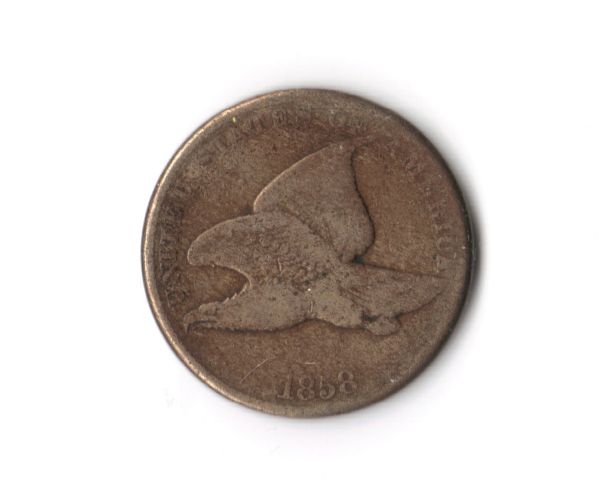 |
|
|
|
Valued Member
United States
331 Posts |
The Two Cent issues are famous for having rotated reverses. Thousands were released making the premium minimal. |
|
Pillar of the Community
United States
1699 Posts |
Yes, it's pretty common, or...not uncommon, on classic coinage like this.
I guess I haven't really taken notice, but does anyone know of the period in which small rotations became less of a norm? Or was it a gradual progression where fewer and fewer coins with rotated dies were being minted? Rotated dies still happen though, but I haven't seen many, if any, in the last five-ten years. Sorry to lead the thread on a bit of a tangent.
|
|
Pillar of the Community
United States
2077 Posts |
I think as mintage quantities got higher, they had to make improvements to the dies and machinery or they wouldn't be able to keep up.
|
|
Valued Member
United States
206 Posts |
I have an 1823 Half Dollar and an 1851 Gold Dollar that both show significant die rotation. I didn't pay a premium for either, so I too have to assume it is not uncommon.
|
|
Pillar of the Community
United States
2760 Posts |
check out rotateddies.com for a population list of coins with rotations between 90 and 180 degrees.
|
|
Valued Member
United States
206 Posts |
>>rotateddies.com
Hmm, guess mine aren't as significant as I thought! They only show a rotation of about 20 degrees CCW.
Thanks for the link, robbudo.
|
|
Pillar of the Community
United States
2760 Posts |
20 deg seems to be collectible on an American Silver Eagle or modern commemorative, but nothing short of common on older coins and even some modern denominations.
|
|
Pillar of the Community
United States
5227 Posts |
Are you referring to the obverse / reverse die orientation or the position of the date relative to the main devises on the obverse of your coin.
|
|
Moderator
 United States
23522 Posts |
Quote:
Are you referring to the obverse / reverse die orientation or the position of the date relative to the main devises on the obverse of your coin Die orientation. Dates were primarily hand-punched back then, and although positional differences exist it's highly unlikely you'd ever find one 20 degrees out. The guy who did that would get fired on the spot.  |
|
Pillar of the Community
 United States
1536 Posts |
Maybe that is what I was seeing, a difference in where the date is placed.
|
|
Pillar of the Community
United States
1374 Posts |
From what I recall, there is only one coin in the entire FEC and IHC series that commands a premium due to the placement of the date. There is a variety where the 1 actually touches the bust of Lady Liberty on an IHC, but I can't recall the date. Date positions vary widely, even within a single year, because they were punched into the die by hand after hubbing. The only way for the position of the date itself to command a premium would be if it were touching the devices, like the rim or the bust. Edited by Drsandman2
05/20/2013 01:47 am
|
|
Pillar of the Community
United States
1536 Posts |
That is what I figured, that since slight variations were very common on older coins because of the lack of technology, few get a premium.
|
| |
Replies: 12 / Views: 1,514 |
|










 Posted 05/09/2013 9:12 pm


