| Author |
 Replies: 8 / Views: 6,907 Replies: 8 / Views: 6,907 |
|
|
Valued Member
United States
213 Posts |
Hey there again. On one of my grading posts someone was asking if carbon spots effect the grade and I honestly don't know myself. Do you guys know if the carbon spots effect the grade? Is it in terms of detail? or just eye appeal?
|
|
|
|
Pillar of the Community
United Kingdom
2139 Posts |
I don't think carbon spots affect the grade, but they reduce the value compared to a coin of the same grade without carbon spots.
There are some coins on which all the coins seem to have carbon spots.
My problem is that I don't know how to distinguish carbon spots from other black or brown spots.
What causes these spots ?
|
|
Pillar of the Community
United States
3284 Posts |
Carbon spots decrease eye appeal so will effect the grade of higher grade coins.
|
|
Pillar of the Community
United States
613 Posts |
Does anyone understand the chemistry of carbon spots? What is physically occurring to the coin? Will the spots grow on coins inside folders or albums?
|
|
Pillar of the Community
United States
3284 Posts |
Quote:
The term "carbon spots" refers to tiny black concentrations of corrosion. Oftentimes these are so small as to escape notice by the naked eye, though they may be seen with low-power magnification. Also called "flyspecks" by some in the hobby, these spots are actually slightly raised from the surface of the coin, as the corrosion forms around some particle of organic matter, such as paper dust (often present with coin albums and cardboard "2x2" stapled holders) or human saliva deposited unknowingly by a numismatist during casual handling. Oxygen, humidity, and other atmospheric elements react with the debris to form a minute mound of corrosion around it, and this is called a carbon spot. From NCS Edited by upstate
07/15/2013 3:30 pm
|
|
Pillar of the Community
United Kingdom
2139 Posts |
On some coins, especially Lincoln cents, and UK farthings, I've noticed a dark stain occupying about 1/3 of the coin, but not obscuring the detail. Here's one on a German coin: 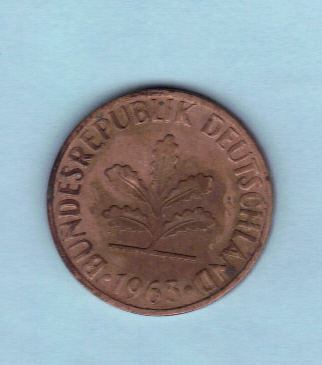 Does this have the same chemistry as carbon spots ? |
|
Pillar of the Community
United Kingdom
2139 Posts |
Incidentally, all the coins with carbon spots that I have; the carbon spots are in the field.
Presumably this is just luck ?
|
|
Pillar of the Community
United States
9807 Posts |
and why one should not talk while examining uncovered coins. Saliva droplets are the primary cause and I don't believe tiny spots affect grade, but large ones will, eventually they will pit and scar the coin's surface. Very common on many early copper proofs, it's hard to find high grade Proofs and mint state graded coins without them, in my searching for 2¢ pieces a Proof coin in RD or Red Brown free of spots is unheard of and commands a large premium, I would assume the same goes for Large cents and Half Cents, as well as Indian Head cents. "Buy the Book Before You Buy the Coin" - Aaron R. Feldman - "And read it" - Me 2013! ANA Life Member #3288 in good standing since 1981, ANS, Early American Coppers Member (EAC), Colonial Coin Collectors Club member (C4), Conder Token Collector Club member (CTCC), Civil War Token Society (CWTS) member, Liberty Seated Collectors Club (LSCC) & Numismatic Bibliomania Society member (NBS), USMex, Member in good standing, 2¢ variety collector. See my want page: http://goccf.com/t/140440 |
|
Bedrock of the Community
United States
20029 Posts |
Quote:
The term "carbon spots" refers to tiny black concentrations of corrosion. Oftentimes these are so small as to escape notice by the naked eye, though they may be seen with low-power magnification. Also called "flyspecks" by some in the hobby, these spots are actually slightly raised from the surface of the coin, as the corrosion forms around some particle of organic matter, such as paper dust (often present with coin albums and cardboard "2x2" stapled holders) or human saliva deposited unknowingly by a numismatist during casual handling. Oxygen, humidity, and other atmospheric elements react with the debris to form a minute mound of corrosion around it, and this is called a carbon spot.
I don't completely agree with their description. Carbon spots are primarily organic-based although I have seen corrosion form around the spot (like they said). The spot in itself is not actually corrosion but more tar-like. However, depending on the spots composition, it can promote corrosion. To the OP: YES, carbon spots DEFINATELY will affect the grade. Lincoln Cent Lover!VERDI-CARE™ INVENTOR https://verdi.care/
|
| |
Replies: 8 / Views: 6,907 |
|







 Posted 07/15/2013 09:39 am





