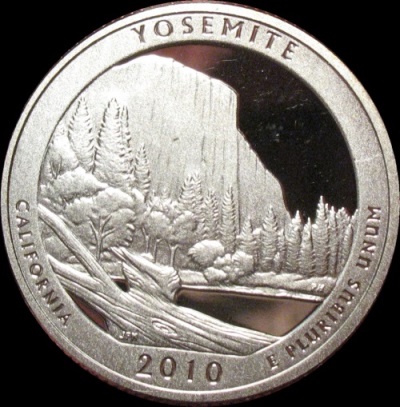
I am glad to see my setup was well received.
I hope others will try to build setups that work for them.
Like we've said before, a few simple things can greatly improve your images. Learn your camera settings, steady the camera, use a timer, use consistent lighting (not the flash), etc. . .
Most of my coins are 'junk' with a value of less than $0.50, which is why I find it hard to justify spending so much on a new camera.
In my case I had the camera, plywood, screws, and jug. The only additional costs were $2 for the hardware and $4 for felt.
I was surprised to find that the standard camera threads are the same that you can find at every hardware/walmart/grocery store. I think they are standard 1/4" 20tpi. I would have thought they were a special hard to find size. Once you have the mounting hardware the next step is building a stand.
The milkjug does its job. I'd like to have some diffusers that clip onto the jansjo lights but am too lazy to come up with any alternatives.
The threaded rod has a plastic insert at the top. I think it was to cushion electric wires. It doesn't show up too well in the pictures. But this protects the coin from metal-on-metal contact.
I kinda like the hollow rod, as it helps when taking pix of coins with holes in the center. This is not a concern for USA-only collectors. Here is a holed coin from my previous setup. There I used a plastic drywall anchor. I would have to spend time editing out the plastic showing in the center. Now with the hollow threaded rod that is not necessary.

The lens is approximately 6.5-7 inches from the coin.
This is with the camera zoomed-in 90-100%, allowing room for lights. I usually zoom in 100% then have to back up a little.
If I get any closer, the auto-focus doesn't work. So although I could put the coin 3 or 5 inches away, I'd have to zoom in less, making for the same ultimate size.
The Queen Victoria coin is a penny, at 31mm. The Vitt Em III (an Italian 2 Lire) coin is slightly smaller at 29mm.
The total image size off the camera is roughly 1700x2300 pixels. Silver dollars come out ~1400-1500 pixels across, which I consider 'filling the sensor'. But with smaller coins the image size goes down. Half dollar sized coins are 1200ish pixels, and the smallest (smaller than a dime) coins are maybe 700ish pixels. Good enough for sharing on the web or
ebay, but definitely not filling the sensor.
I think my camera takes acceptable pictures. I remember reading a thread by SsDd where he said he tested another CCF member's camera at a coin show and was impressed at the images. IIRC, that camera was also a point-and-shoot Olympus.
I once borrowed a newer 14-16 megapixel Sony camera, assuming it would take similar quality pictures but with higher resolution. I was disappointed.
So between my experience and SsDd's comments maybe we can place the early-2000s Olympus point-and-shoots in the 'good enough' category.
I do have some complaints. The timer is set at 10 seconds and not adjustable. This means at top speed I can image the front and back of less than 3 coins a minute. Keep in mind that I may have dozens or 100s to take at a time. Also I have to constantly change the rechargable batteries, which means I have to reprogram all the settings. I can't see the images until transferring them to the computer. So the more I read about the tethering and live-view cameras the better they sound.
Like I said I'm imaging most of my collection, mostly for my personal use but maybe for sharing on the web.
For now I save the cropped, full size, 100% quality, jpegs on my hard drive. These are roughly 1mb in size. I keep backups on google drive which is free up to 5GB. If I intend on sharing them I downsize them to 800-1000pixels and 100-300kb each.
I wonder if in a few years I will be disappointed in 800-1200 pixel jpegs, just like we now look at small GIF images as outdated. I guess time will tell.
-wheatiefan







 Posted 09/02/2013 05:51 am





 A lot of p/s cameras have good macro capabilities.