| Author |
 Replies: 3,989 / Views: 392,532 Replies: 3,989 / Views: 392,532 |
|
|
|
Pillar of the Community
United States
7297 Posts |
1944 D walker   |
|
Bedrock of the Community
United States
11951 Posts |
I keep falling back on my foreign silver bucket finds. 1944 Canada Silver Half Dollar 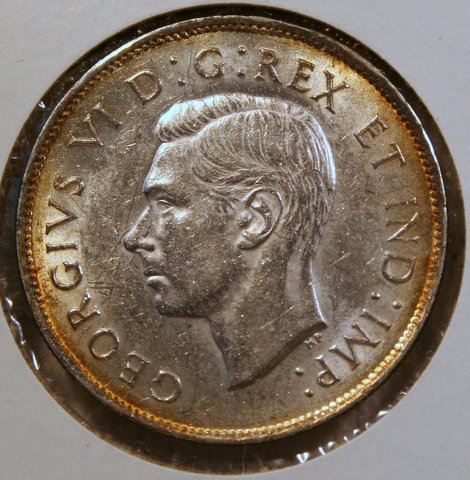 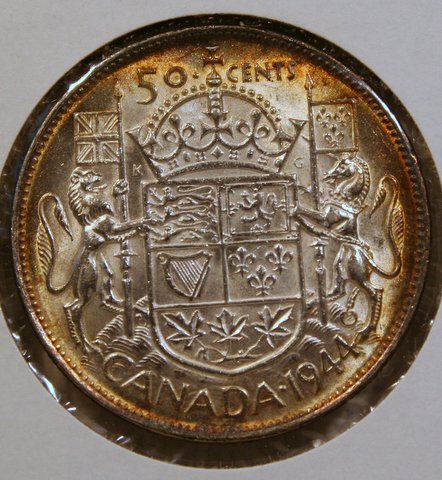 Edit - Been reading the post on Paint, and just wanted to see if I could join the two pictures. And see if it would post correctly. 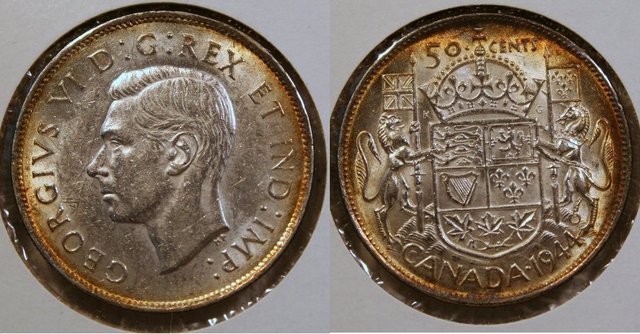 Edit 2 - Now if I can remember how I did it. And play with it a little more I will like it. Thanks those that posted the tips on Paint Edited by GR58
01/04/2014 01:34 am
|
|
Bedrock of the Community
United States
10045 Posts |
Here's perhaps my favorite world coin from 1944--an Egypt 2 Piastres of King Farouk. 1944 is visible in Arabic numerals on the left side of the reverse.  |
|
Pillar of the Community
Australia
9780 Posts |
Nalaberong, I can't believe we both had the same coin in mind. I'm going to post mine anyway, I've been waiting for 2 days to post it. 1944 (B) Switzerland 2 Rappen 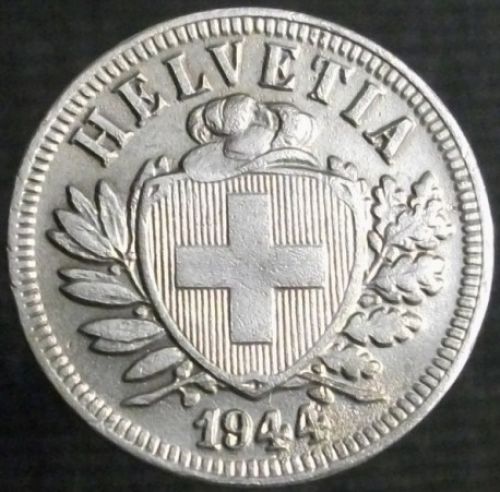 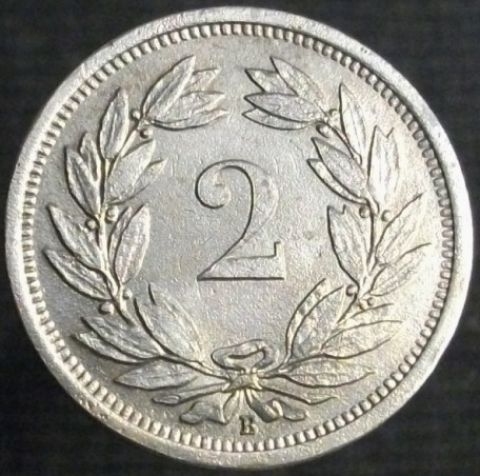 Steve  |
|
Pillar of the Community
United Kingdom
2929 Posts |
Palestine 1944 1 mil 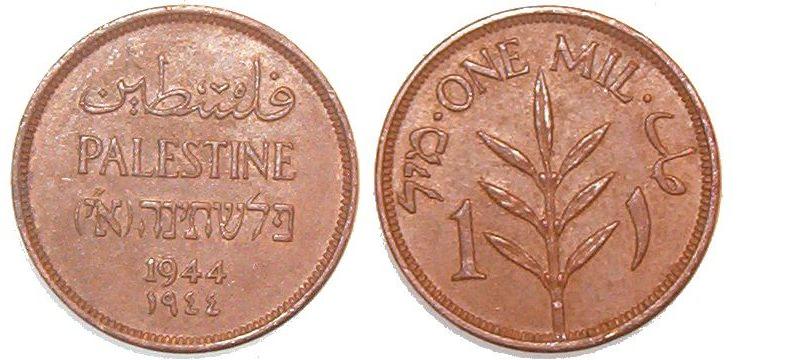 |
|
Bedrock of the Community
United Kingdom
18740 Posts |
East Africa 1 shilling 1944 -  This coin has an even lower percentage of silver than the US wartime nickel - 25%. They were issued from 1921 to 1946 in this alloy, and then in cupro-nickel from 1948 until 1952. The coinage became obsolete in the 1960s when Kenya, Uganda and Tanzania issued their own coins. One can imagine the 'Happy Valley set' using these shillings during WW2. |
|
Pillar of the Community
Belgium
506 Posts |
The 50 Francs is the only silver coin circulated in Belgian Congo. In 1944 the colonial administration was pretty much governing the country independently, while Belgium was occupied by Nazi Germany and the Belgian government in exile in London lacked credibility. Colonies much contributed in obtaining the competitive edge for the arms industry, helping to win WW II. With ample exports of metals, varying from copper to uranium, Belgian Congo more than contributed its share. Despite a mintage of one million, this silver coin has become hard to get. 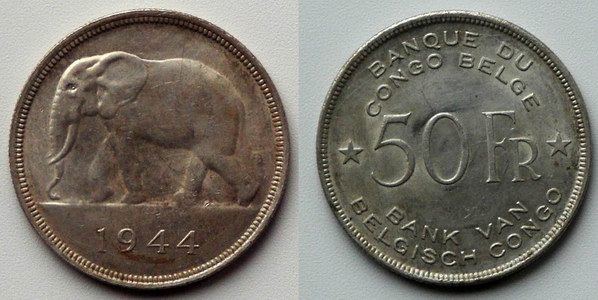 In 1943 the elephant design of the obverse of this coin first made its appearance on a hexagonal 2 Francs coin, soon withdrawn because of a spelling mistake on the reverse. The popular design also continued to be used in the post-war era on smaller denominations minted in brass. Edited by Gwyde
01/04/2014 07:55 am
|
|
Pillar of the Community
United States
1109 Posts |
Here's a 1944 Curacao 1/4 Gulden silver coin. Curacao is part of the Netherlands, but this was actually minted at the U.S. Mint facility in Denver (hence the "D" mint mark on the reverse - about the 4 o'clock position). You're welcome, Curacao! This particular specimen was part of an estate sale pick-up (one of about 30 coins) I purchased sight-unseen for $5.00 back around April, 2013. I think I got a good deal, and the coins found a good home. 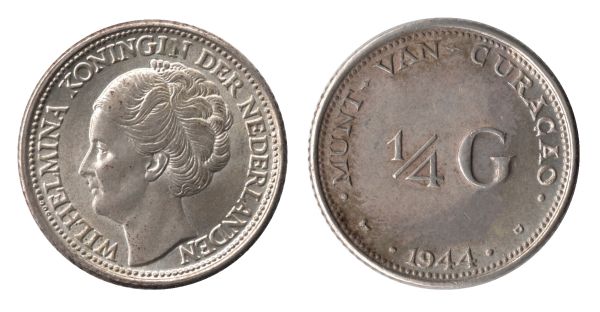 Edited by skyshark124
01/04/2014 08:20 am
|
|
Valued Member
United States
103 Posts |
I did not have a 1945 coin, but I will return to the game with a 1944 Philippines 20 Centavos. My aunt gave this one to me for helping her to sort her coins. I'm not sure it is even worth 20 cents and it looks terrible in hand, but I like the way the photo turned out.  |
|
Pillar of the Community
United States
1234 Posts |
Nice image on that one Quote:
I'm not sure it is even worth 20 cents yep, it's got more silver then these... (80% to 35%) yep I'm going to have to put up my wartime nickels 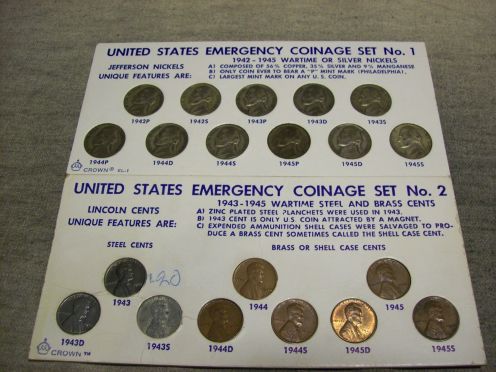 ok I put the cents too... 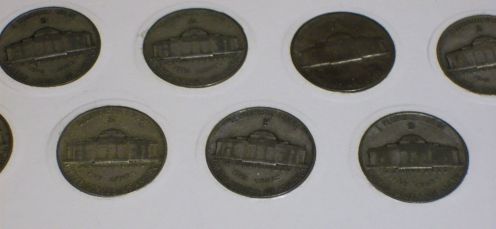 |
|
Pillar of the Community
Canada
2805 Posts |
Hey, I am going to bend the rules again because a) my other coin was zinc, these are silver b) I try to include a nice story with each one c) I have started a Dutch theme and so it's my duty to keep it going.  Netherlands, 10 cents, 1944P Curaçao, 1/10 gulden, 1944D These are really the same coin - same composition, same denomination, same nation, same queen. But for some reason, Curaçao got fractional denominations starting in 1944 (1/2, 1/4, 1/10), where the Netherlands proper got cent denominations (50, 25, 10). Suriname, another gulden-using Dutch colony, got nothing but cent denominations - after it became a republic, 1 and 2.5 gulden coins were issued as 100 and 250 cents! Curaçao coins actually were meant for the whole Netherlands Antilles, and the administration of these little Dutch colonies off the coast of Venezuela is an interesting story. Curaçao made nothing but silver coins until 1942, and in 1941 the U.S. mints began making coins for these islands (although the Dutch Mint re-started operations there in 1947): 1941 to 1943 were "10 cents", but 1944 to 1948 were "1/10 gulden". The 1/10 gulden coin from 1948 is made of silver, but the mainland Dutch 10-cent coin from 1948 was the first year to be made of nickel... so the colonials got better coins than the mother country! In 1954, Curaçao became part of the overarching colony of the Netherlands Antilles, which made silver 1/10, 1/4 and 1 gulden coins until 1970... three years after all silver had been removed from proper Dutch coins. Maybe silver was just cheaper to get there. In 1986, the island of Aruba split from the Netherlands Antilles and issued its own coins, which have neat minimalist designs. In 2010, the Netherlands Antilles split up for good: Curaçao was independent (as a colony, that is) once more, joined by Sint Maarten and the Caribbean Netherlands. Plans for an island currency are still up in the air: the Caribbean Netherlands just adopted the U.S. dollar, while Curaçao and Sint Maarten are planning to create a brand-new Caribbean gulden that was supposed to have been phased in last year. They will continue to issue coins, meaning more opportunities to abandon your loved ones to sift through change when on vacation there  The store-owner who sold me the 1/10 gulden coin was very shady. He said that this little dish of silver world coins was being sold at melt, so I thought "all right!" and picked out a pile. He then let me know that "at melt" meant "as if the coin was .999 pure silver". This meant that Mexican .100 fine pesos were being sold for $13!! My eyes nearly bugged out of my head. The only silver I ended up picking from that dish was this coin - he spent the rest of the day calling in his pals to watch a documentary about the fluoride conspiracy that threatens our children behind the counter. |
|
Pillar of the Community
United States
1234 Posts |
Hey, I am going to bend the rules TOO, because a) my other coin was Silver, these are PAPER b) I try to include a nice story with each one too... c) It's been hours since a new one and I want to get this thread buzzing again (I have to wait a few weeks on my Dutch East Indies one thou) One thing about War, it can be good for business after all it made me a MILLIONAIRE! 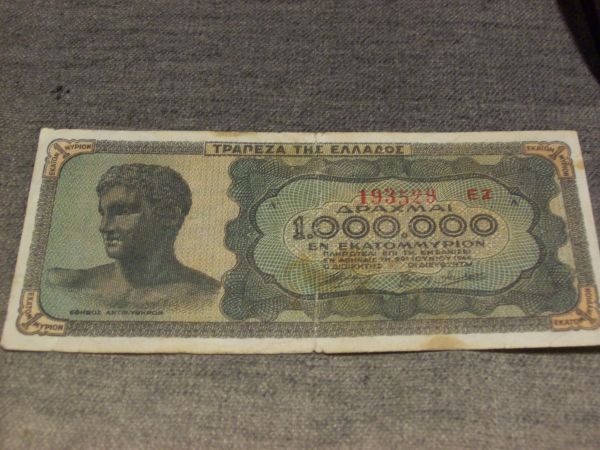 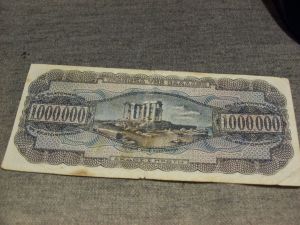 The date is not easy to see but here's a few of the better shots. 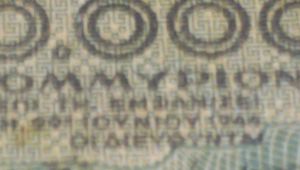 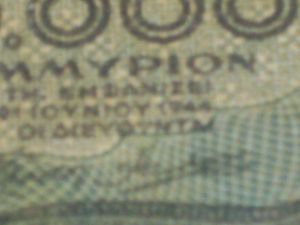 Rampant inflation and wartime troubles meant that Greece along with most nations changed not only their coin composition but had to issue larger and larger denominations See what I mean about inflation... 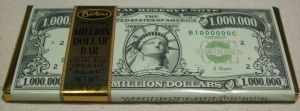 2 ounces of chocolate for that PRICE!?!?!?!  Edit: forgot to mention the SCREAMING fit my mom had in the store when the price of a candy bar went to 25 cents! that was in the early '80's that 2 ounce bar cost me a buck... inflation again Edited by ASLAN TVorlon
01/04/2014 6:28 pm
|
|
Pillar of the Community
 United States
1908 Posts |
Thread is buzzing! Did I hear the -bwangbwang- sound of rules bending? Quote:
I too will be vexed as to what coin to show for a few years; specifically 1936 where I have 16 different half dollars. I want to see ALLLL your beautiful halves! 1936 was a banner year for coins. Quote:
we just need to follow jbuck's rules, mostly Not to worry.. he'll be too busy counting his Ike's to notice.  Quote:
unless part of a set. I hereby declare the following coins to be a part of two sets: a)- the set of all coins minted for other countries by a U.S. mint.* b)- the set of all coins minted during my birth year! Forthwith: AUSTRALIA 1944 sixpence, shilling and florin. All three are sterling silver. All these except the un-toned florin on the left have 'S' mintmarks just above the date. *(un-mintmarked specimens were minted in Melbourne.) 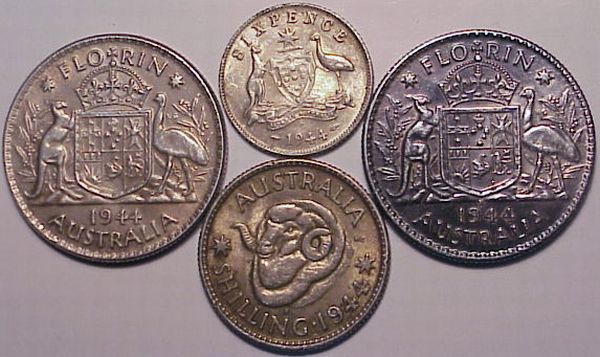 And here are two additional denominations of U.S.-minted Philippines coins, the ten cent and fifty cent versions. These are so common in junk silver tubs due to wartime 'tourist' traffic that they are only worth saving from scrap if they are AU or better. Toning is always a plus. These are relatively low silver for the time period and very prone to corrosion. Also the prominent high spots wear down very quickly. 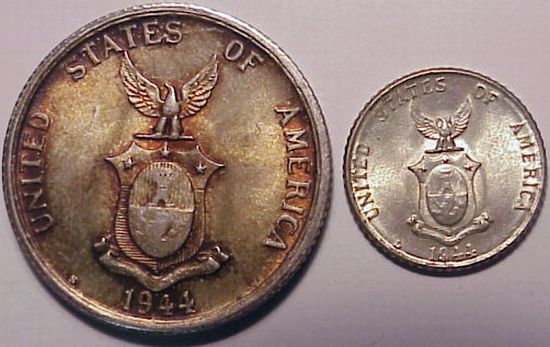 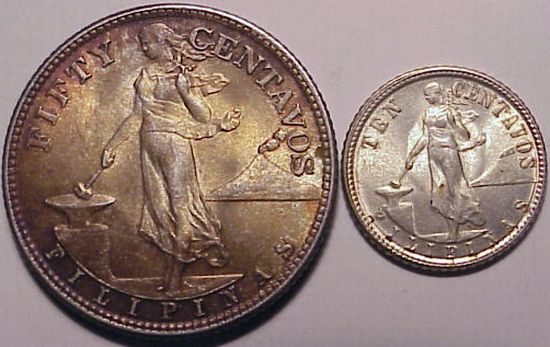 Edited by mysilveryears
01/04/2014 7:09 pm
|
|
Pillar of the Community
United States
1234 Posts |
Quote:
These are relatively low silver for the time period I said 80% earlier but looked it up and the coins issued in the Philippines were 75% after 1907 and 90% before, The US also issued 1/2 and one centavo coins in Bronze and a 5 centavo in copper nickel. The US won the Philippines in a card game, err I mean a war the Spanish American war 1898. That is why these are Centavos and not Cents, so that means silver dollar coins were not produced but silver Pesos were with the same content percent's. In 1958 they became an independent republic and began dropping silver from coins, after monetary Reform in 1967 there was no silver in coins from the Philippines. |
|
Pillar of the Community
United States
2858 Posts |
|
| |
Replies: 3,989 / Views: 392,532 |








 First Page
 Previous Page


 Posted 01/04/2014 01:00 am


