| Author |
 Replies: 10 / Views: 4,032 Replies: 10 / Views: 4,032 |
|
|
New Member
United States
40 Posts |
Edited by Clinton
11/02/2013 04:46 am
|
|
|
|
New Member
 United States
40 Posts |
|
|
Bedrock of the Community
United States
62064 Posts |
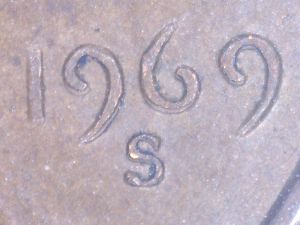
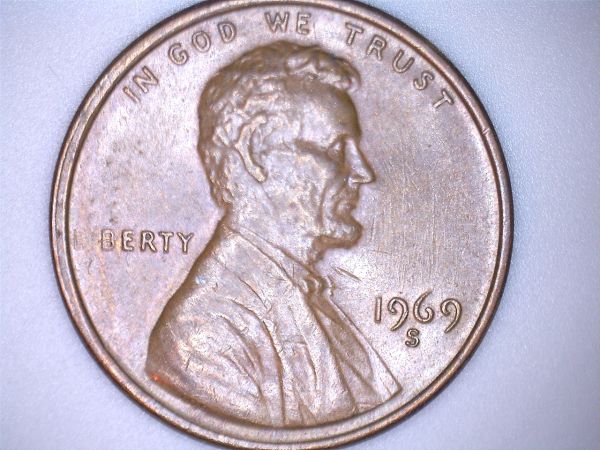
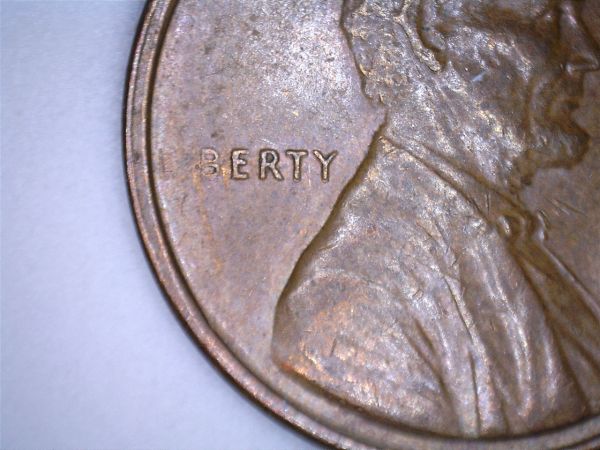
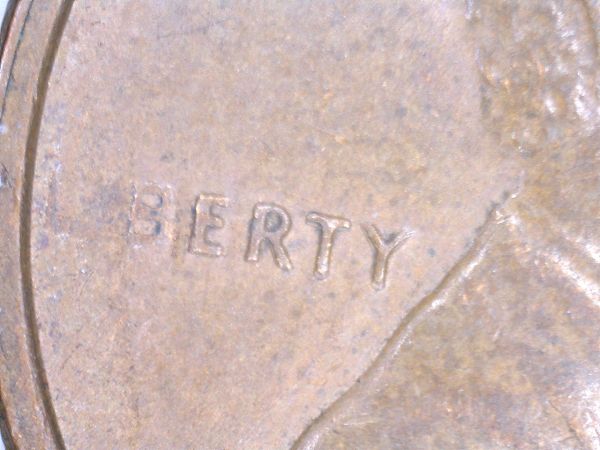
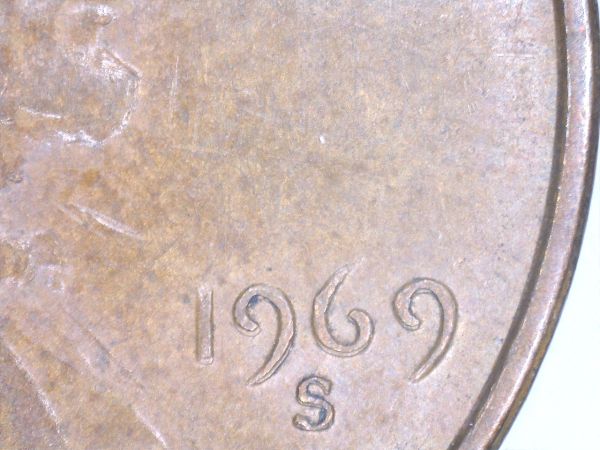
It is Machine Doubling on the date which happens a lot on the 1968-1972 cents. The LIB was Struck Through Grease error, but minor. Probably no premium for it. When a higher percentage of the devices are missing, they get more interest. |
|
New Member
United States
40 Posts |
@Coop, Could this be the result of a "Class IV Doubling" or "Offset Hub Doubling"? "A Class IV doubled die is produced when the centers of the hub and die are not in alignment during one of the hubbings. Either the hub or the die will be "off-center" or "offset" with respect to the other. That is why the class received the name "Offset Hub Doubling." For those familiar with error coins, the setup is very much like that which produces the error coin known as a "misaligned obverse die" error. Here, when the dies are set up in the coining press their centers are not directly opposite each other as they should be. The obverse die is slightly offset. When the planchet comes in and rests on the reverse die (older press setup) and is then struck by the obverse die, the reverse will be normal but the obverse will be slightly off center. As a result of the off-centered alignment between the hub and the die for one of the hubbings, overlapping images or doubling will occur. All of the doubling will be spread in the same direction on the die and thus on all of the coins struck by that die." -Wexler My coin has many of the same characteristics Wexler describes. I will post an example of class IV doubling on my original page. What makes you lean towards Strike Doubling? I would like to learn how to tell the difference. Thanks, Clinton |
|
Bedrock of the Community
United States
62064 Posts |
Machine Doubling is not a die issue. It is a machine issue. The dies move slightly between strikes. When the operator notices this he re-adjusts the machine and the coins are normal again. It may differ from strike to strike. Note this example. The markers are all the same on the coins. They were all struck with the same die pair. The doubling varies from strike to strike. 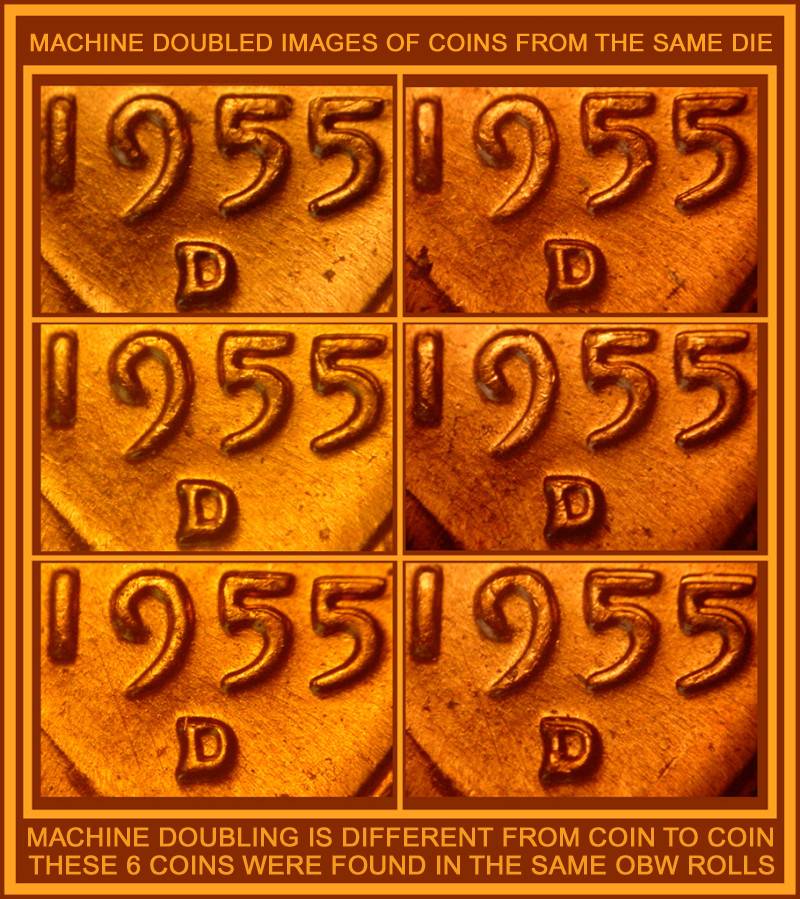 after the machine is fixed, then the coins are normal again. So it is not a die issue.
|
|
Bedrock of the Community
United States
62064 Posts |
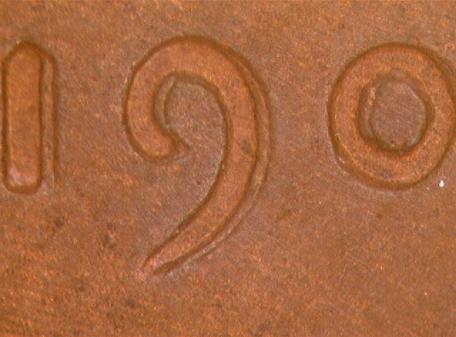
The 1909 you put up is a doubled die. When you see Machine Doubling it is usually flat shelf like. On the 1909 it looks flat shelf like, but notice something different about it. Machine Doubling reduces the sizes of the devices. Hub doubling enlarges the devices. The 1909 may look flat to the right of the devices, but note that the devices are enlarged and not reduced like you would find on Machine Doubling. 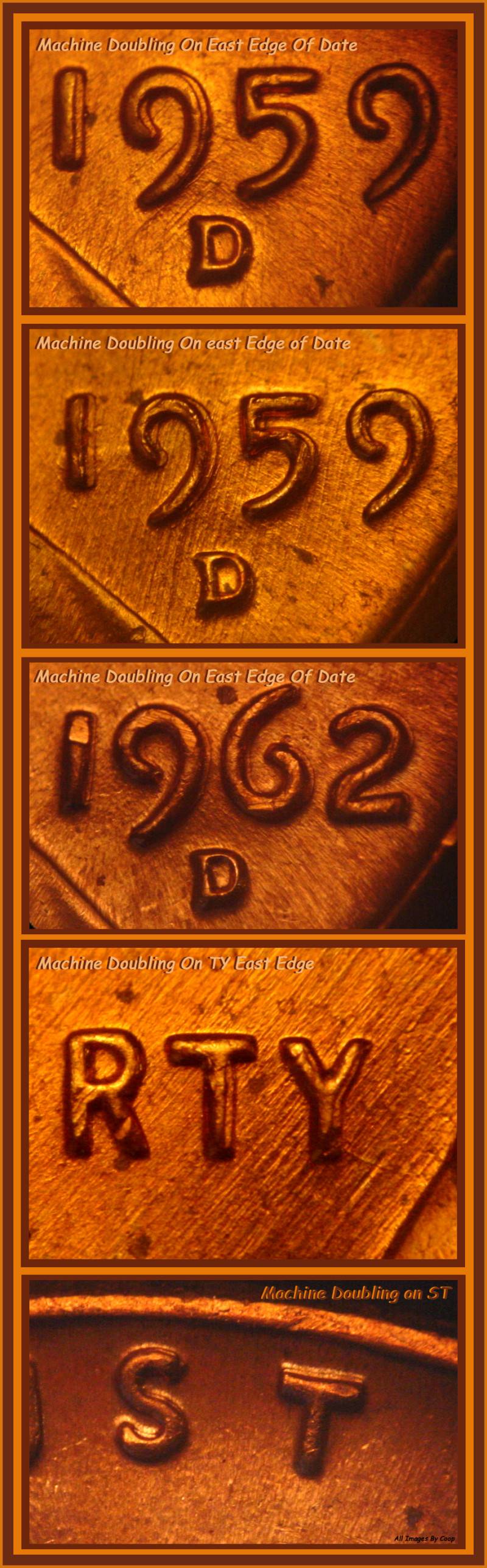 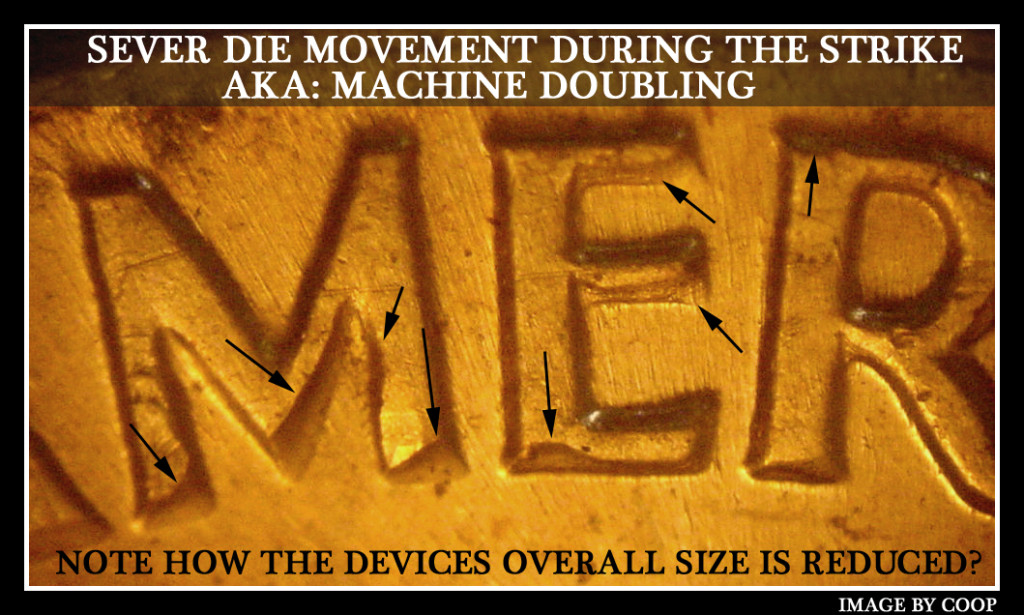 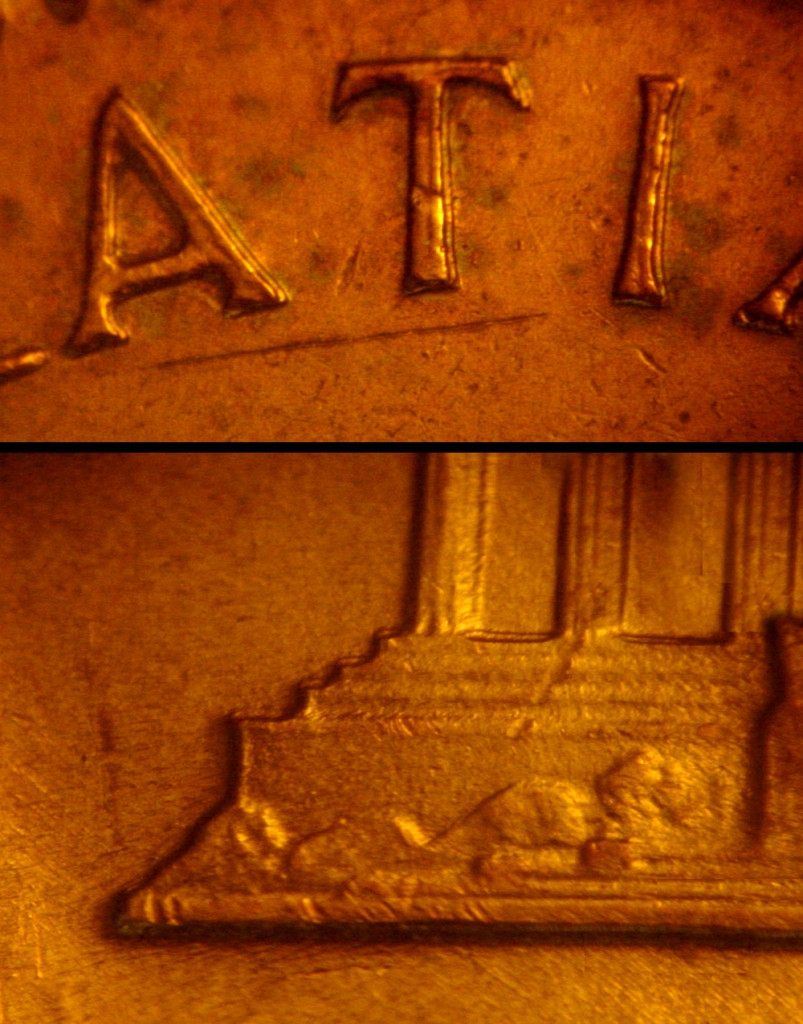 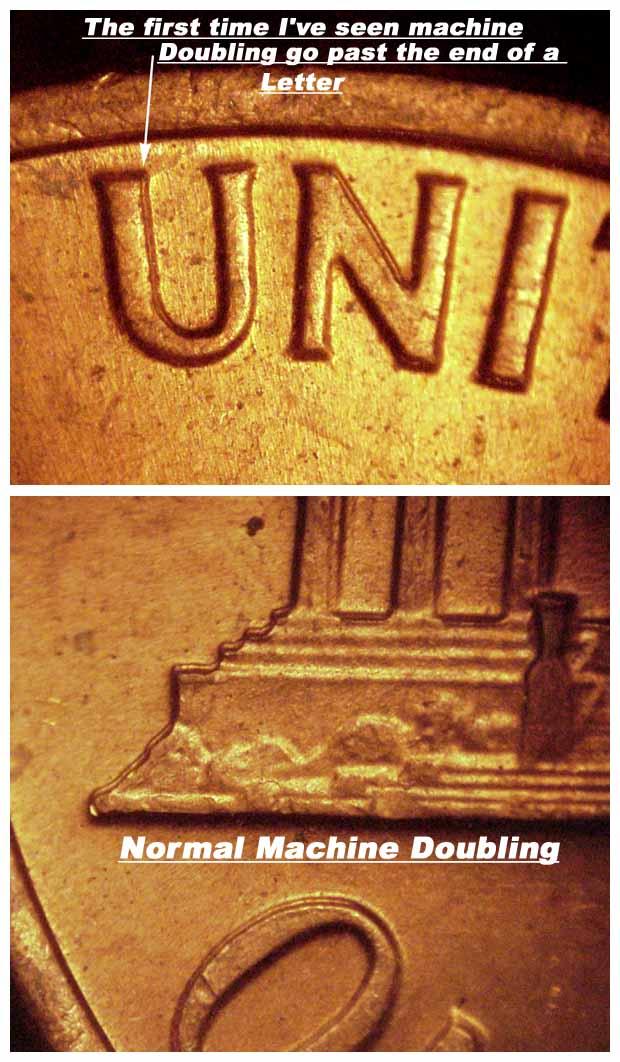 |
|
Bedrock of the Community
United States
62064 Posts |
On a doubled die, the hubbing enlarges the devices on the die:  Each coin struck with this die will make the exact thing. Machine Doubling will vary from strike. Hope this helps. |
|
New Member
United States
40 Posts |
I understood the differences between the errors. I wanted to know how one tells the difference between a Machine Doubling and class IV doubling? |
|
New Member
United States
40 Posts |
|
|
New Member
United States
40 Posts |
Edited by Clinton
11/02/2013 06:11 am
|
|
New Member
United States
40 Posts |
@Coop I have read several different articles regarding the ways to spot the difference in the two. Rounded doubling, split serifs, unblemished mint marks are all associated with double dies. Flat shelves, triple or quad strikes, untouched serifs, doubled mint marks associated with Machine Doubling. I also found an exact picture of my coin on Wexler's site. If any other newbies are not sure how to tell the difference between the error and the variety, please check out his site. Thank you for your help Coop. You were on point as usual. http://doubleddie.com/mediac/450_0/...0date$29.jpg Edited by Clinton
11/02/2013 07:45 am
|
| |
Replies: 10 / Views: 4,032 |
|












 Posted 11/02/2013 03:51 am


