| Author |
 Replies: 12 / Views: 1,655 Replies: 12 / Views: 1,655 |
|
|
Valued Member
Australia
236 Posts |
Hello this is my first visit to the UK thread. Can anyone give me an opinion on whether it is worth trying to save this 53 halfpenny? Also any info on why this is a thicker coin than the 44, 47, 51, 52 I have? It appears to be slightly more than 2.5 mm thick, the others are around 2mm. 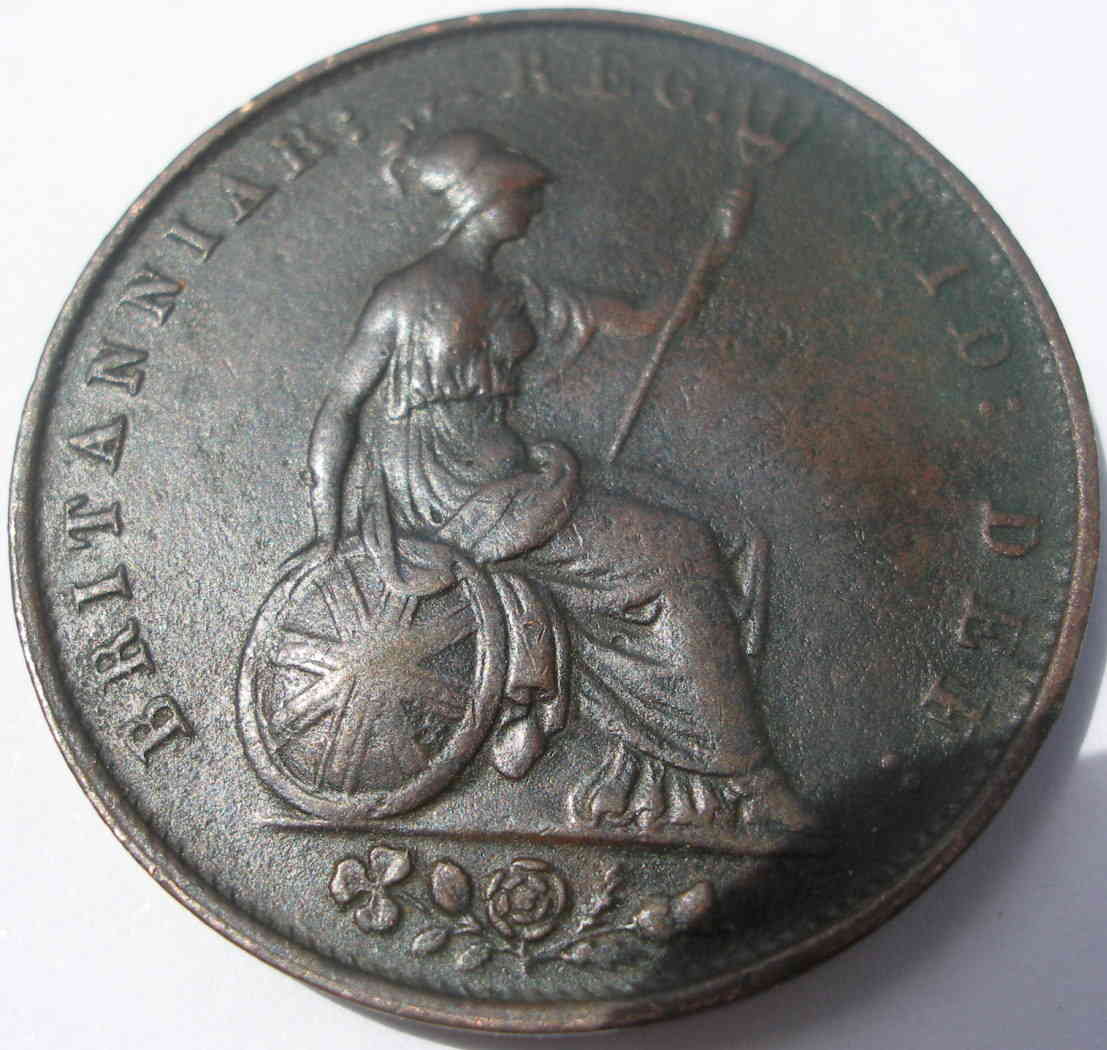 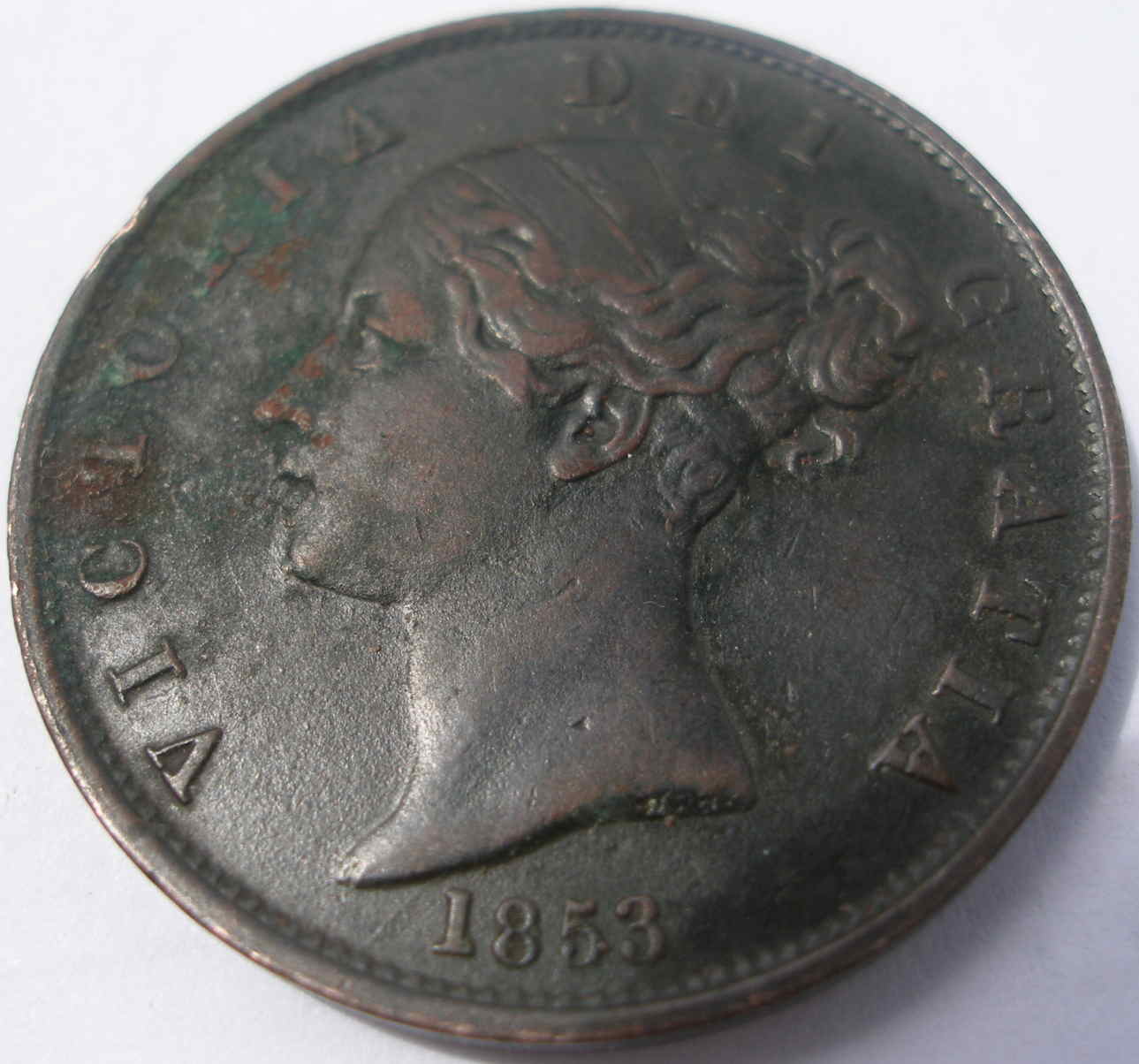 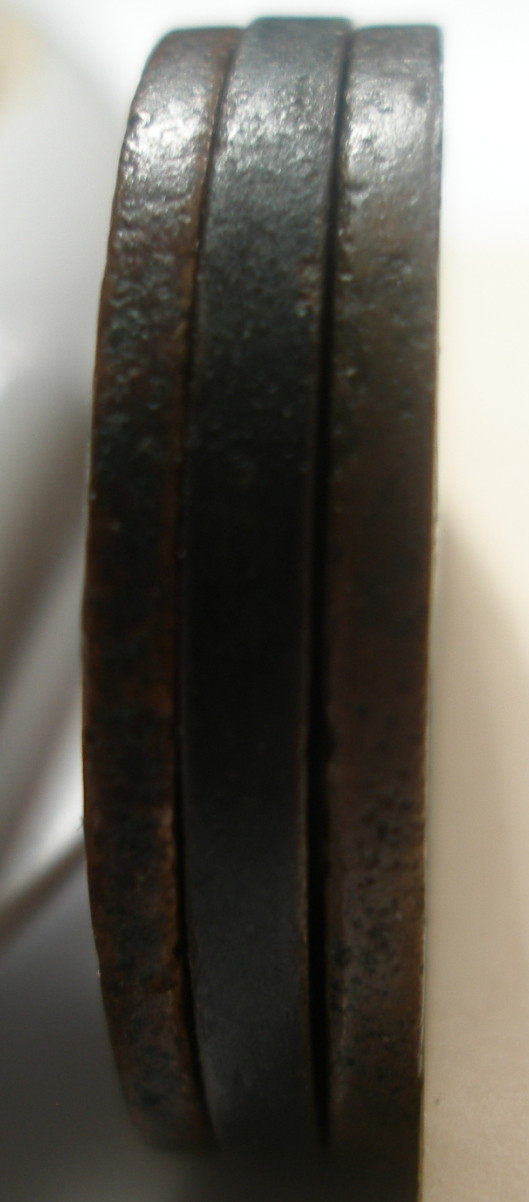 Edited by darge
11/05/2013 9:42 pm
|
|
|
|
Pillar of the Community
United Kingdom
4208 Posts |
Very odd. Perhaps a Magicians coin (i.e hollow) or some sort of proof. My catalogue lists only 1 1853 coin issued to circulate and it was an overdate (3 over 2). The only other coin issued was a proof, known only in UNC. However, Clayton does list an 1853 for about £5 in this condition. No word on its thickness. |
|
Valued Member
 Australia
236 Posts |
Hello BenByfield thanks for your input.
The coin weighs 9.5/6 grams which is about .4 - .7 gram heavier than the other halfpennies of that era I have. Most of the extra thickness appears to be in the rim which is higher than the others and crisp/sharp compared to slightly rounded. [not sure if this is from wear on them or not]
The profile of the rim could be described as a square you compared to a round U. (hope that makes sense)
The coin is a lot better than the photos show, looking uncirculated to the naked eye except where the verdigris/corrosion is.
Perhaps someone here will have struck one in their travels. Fingers crossed.
Edited by darge
11/06/2013 6:43 pm
|
|
New Member
United Kingdom
34 Posts |
The normal weight range given in Peck is 140.2 - 148.9grains. That's about 9.65grams at the top end. Depending on whether 9.5/6 means 9 and 5 sixths or 9.5 to 9.6 grams it is slightly overweight or just under the top value respectively. However, the amount of crud seen could easily amount to 0.2g. The weight limits are not set in stone. The normal thickness is 2 - 2.25mm with the proofs slightly thicker on occasion. FWIW, my 1839 proofs are all 2.35mm and the 1853 is 2.5mm thick. It is highly unlikely that a proof would get into circulation given the limited output and then get lost as well. 1853 is a much rarer date for the proofs than 1839.
The rims are not those of a proof, and even if it started out life as one, its present condition would make this irrelevant. 1853 is one of the commonest dates along with 1838, 1841, 1854, 1855 and 1858, so personally I would get rid of it and find a decent one as the coin is nothing like uncirculated. I'd give it around the VF mark allowing for the corrosion. You have lost the shield detail in parts and the hair strands are quite flat.
The 3 over 2 is only known from a couple dies and is genuinely scarce in UNC.
|
|
Valued Member
Australia
236 Posts |
Battersea Dogs Home that is exactly what I needed thank you. I wanted to do some experimenting with acetone to see what effects it had on verdigris and gunk so I can do that with this one now. And then I will throw it away. Much appreciated.
Any tips re acetone greatly appreciated. I only bought some to remove fingerprints from coins I buy, so many have them unfortunately.
Thanks again.
|
|
Pillar of the Community
United Kingdom
2490 Posts |
darge, it's late here and I'm tired but, as far as I remember acetone has little effect on copper/bronze or verdegris.
|
|
Valued Member
Australia
236 Posts |
Thanks alganbagerap. If there is something to remove verdigris that is only a one word answer I would love to hear of it.
Otherwise good night. Sleep easy.
|
|
Pillar of the Community
United Kingdom
2490 Posts |
Long, long soak in acid free olive oil. Here we are talking months and then try to dislodge the verdigris with the softened end of a wooden toothpick.
It's good practice for when you have to do it on that really special coin you're maybe going to save one day.
|
|
Valued Member
Australia
236 Posts |
Thanks alganbagerap. I'll give that a go.
|
|
Pillar of the Community
United Kingdom
2145 Posts |
I haven't found that acetone removes fingerprints - it seems to have no effect on them - perhaps I'm, not leaving it long enough. Do you leave the coin in the acetone ?
If so, for how long ?
How do you do it without the acetone evaporating ?
I haven't had success using acetone on copper coins, it seems to leave them looking unnatural.
|
|
Valued Member
Australia
236 Posts |
Hi Pertinax I have never used it, I was going to have a try. A dealer I bought a coin from told me that acetone on a cotton bud would remove the fingerprint, but that is all I can tell you. I have no experience with it, Sorry.
|
|
Pillar of the Community
United Kingdom
4208 Posts |
Acetone will remove most organic compounds and any polar substances. Verdegris wont be affected unless you take advantage of some other chemistry - in light, Acetone photocatlyses with copper to Acetic Acid, which gives it some cleaning power. Negative effects to patina? I have no idea. But it will remove stuff quicker and start to eat away at verdegris (and patina, I suspect).
For an easier job, use BadThad's Verdicare. It removes verdegris and dirt and leaves a protective layer and it actually works.
|
|
Valued Member
Australia
236 Posts |
Thanks BenByfield I will give that a go. That was a high tech response, chemistry background or just a googler like me?
|
| |
Replies: 12 / Views: 1,655 |
|










 Posted 11/06/2013 6:41 pm


