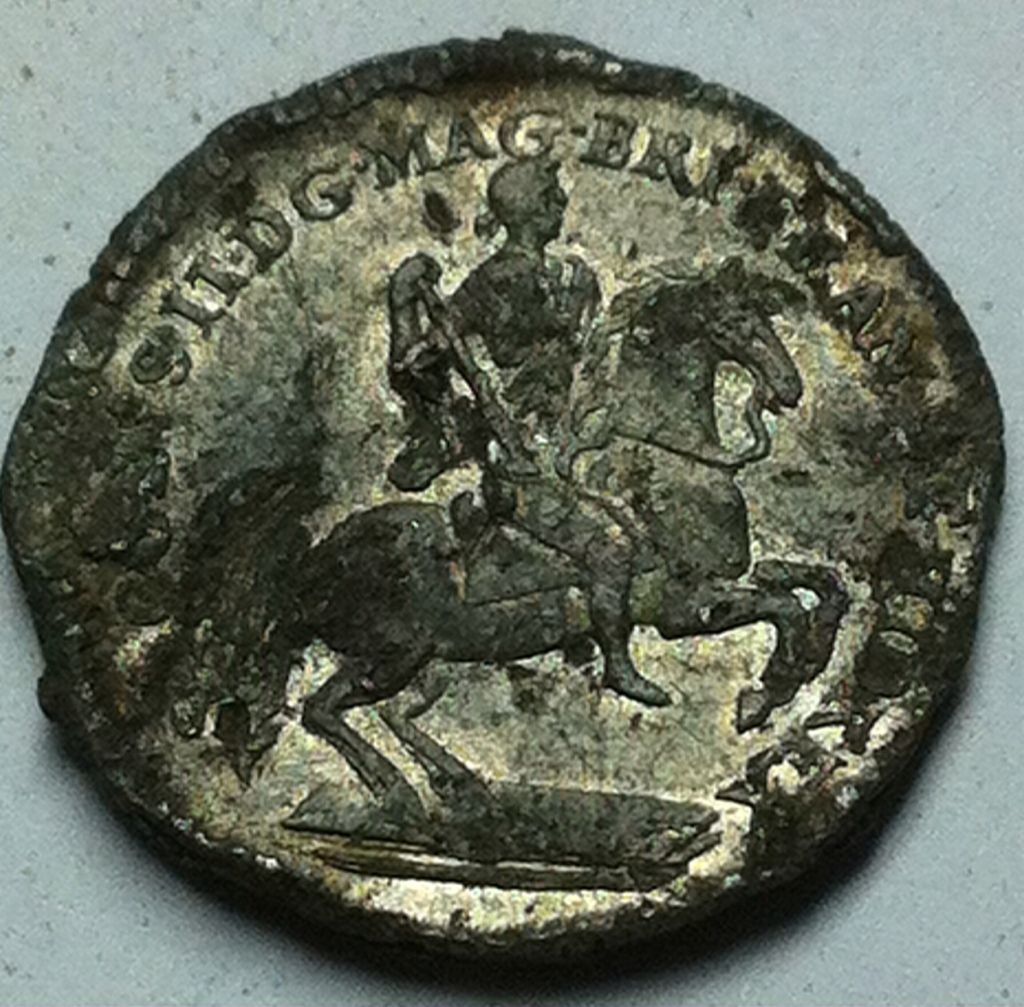
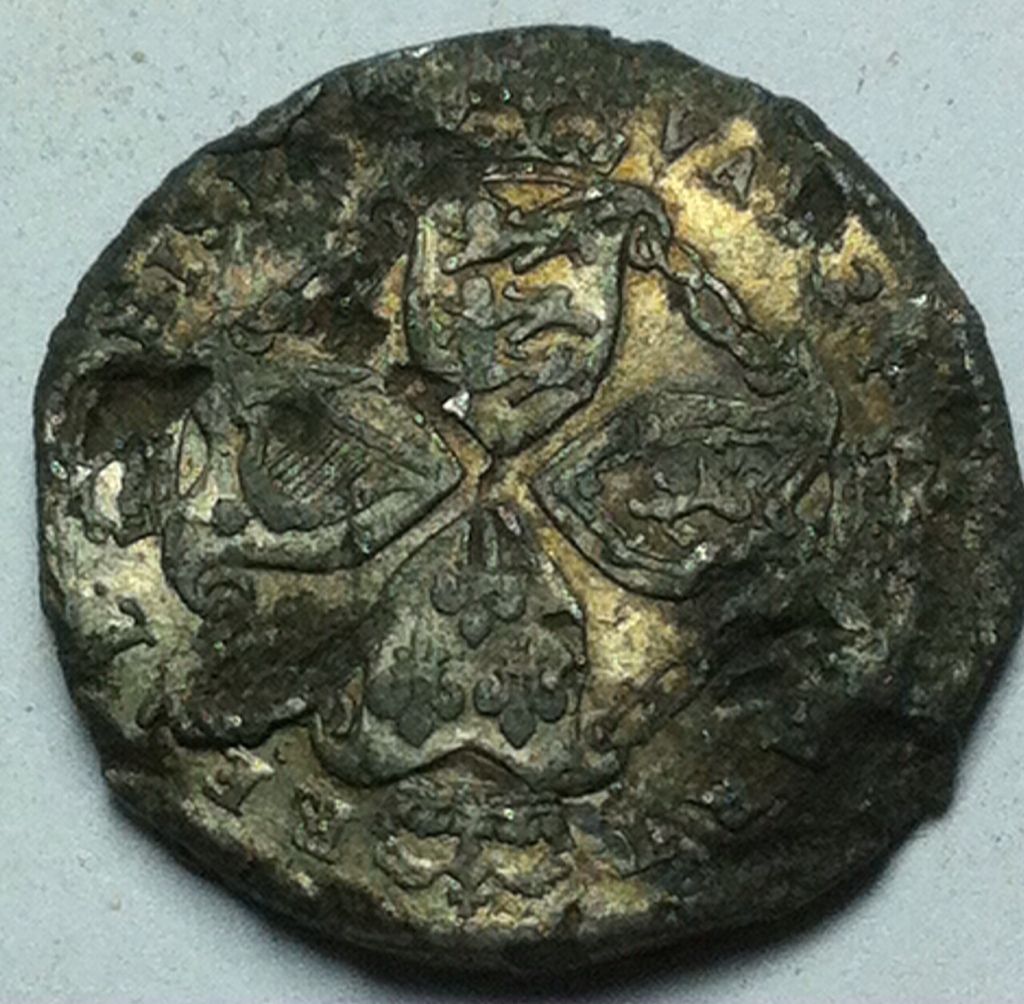
This coin is a NewP for me found in a dealer inventory in the UK. The history of this issue is incredibly interesting, from how and why TIN was used, King James II fleeing England (hence stopping the coinage) to the restriking of certain varieties in 1828. Essentially an unmolested, uncirculated and lustrous sharply struck coin.... It HAS suffered "tin pest" which causes the metal to decompose under low temperatures. Tin is an incredibly soft metal, almost like lead. It's rated 1.5 on the Mohs mineral hardness scale. Talc is 1, silver and gold 2.5 and copper 3. When we really study the surfaces for marks and nicks, none are seen. The letters are sharply formed. There is no surface corrosion (pest is different) and the fields show luster. The irregular rims are fully beaded and the weight is 144 grains. ~~~~. Strangely, no accounts of real circulation exist. The coins were made, and then... Nothing. So we see an incredibly delicate coin that has been residing in collections for 325 years! Enjoy!
.










 Posted 11/26/2013 11:01 am


