| Author |
 Replies: 21 / Views: 4,973 Replies: 21 / Views: 4,973 |
|
Pillar of the Community
United States
1302 Posts |
*Special thanks to SsuperDdave for helping me privately, I hope to continue to work with you and any other advanced shooters to help me on my way 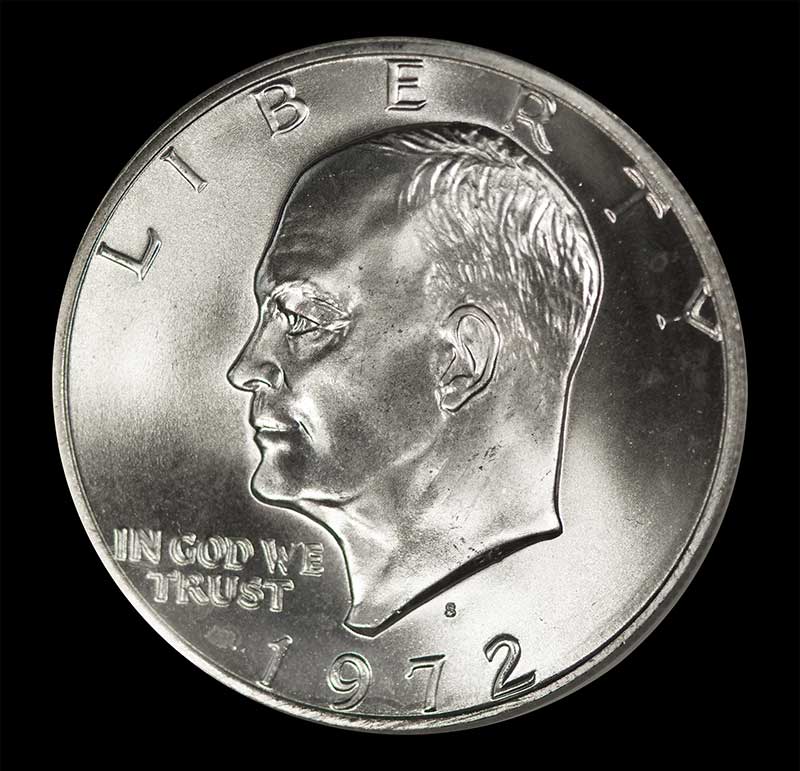 I just graduated from the Nikon D5200 to the Nikon D800 DSLR, in search for the ability to take tack sharp coin photos that retain their three dimensionality, texture, and color. The D800 is still very new to me and just enough camera to be too much for my current skill set. That said, I study voraciously and am not intimidated by the challenge. This first photo was taken with the mirror up and a 3 second delay shutter release hoping to crack down on camera vibration. The camera was suspended on a copy stand. The light was two small LED lamps (weak) and two weaker LED lamps that came with the stand (weaker). Shot without a flash at night in a lit room. Color was corrected by reducing yellow and red in Photoshop. There's just enough glare on the PCGS holder to make me really dislike this image- lighting has been the real killer for me and any real actionable advice with images would be greatly appreciated. I'm also more than willing to share any details or information about the camera and the lenses I use. Edited by cc99999
12/03/2013 02:44 am
|
|
|
|
Moderator
 United States
23522 Posts |
1) Are you familiar with mining EXIF data? It'll contain all of the photographic parameters, which might be relevant to the advice given. Your postprocessing workflow strips that data from the image file. Here's an EXIF panel from Windows - right-click on the file > Properties > Summary > Advanced: 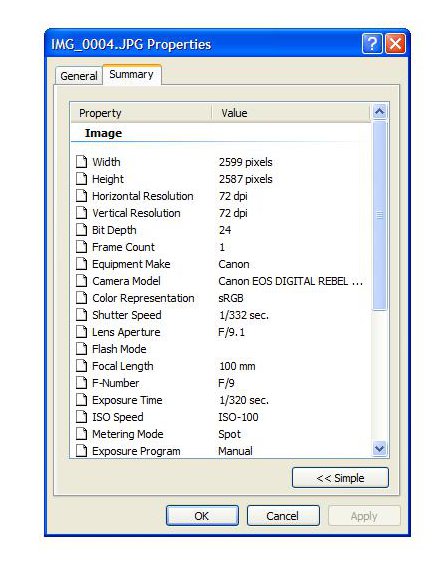 2) I sense your camera is rotated along the 10:00-4:00 axis. The coin seems out-of-focus at 2:00 and 8:00. Try that mirror technique I mentioned to see about better alignment. |
|
Pillar of the Community
United States
4051 Posts |
What lens and aperture setting are you using? The D800 has sensor pitch of 4.8um, slightly larger than the recent Canons (4.3um) but on same order that a lot of the issues with aperture and lens quality apply. You can expect a DLA of around f7.5, which is the effective, not nominal, aperture. Your FF sensor requires 50% more magnification than APS-C sensor to have same sensor coverage, so your dollar will require a magnification of 0.6 instead of 0.4 to cover the sensor. This means your nominal aperture for optimum performance is 7.5/(1+0.6)=f4.7. Anything larger (smaller number) is wasted on the sensor and only gives reduced DOF. Anything smaller (larger number) starts to degrade resolution and sharpness. You can probably get away with f5.6 without much degradation but I would not go to f8 with this camera.
Did you get the D800 or 800E?
Contact me for photographic equipment or visit my home page at: http://macrocoins.com |
|
Pillar of the Community
2087 Posts |
Say what? sensor pitch? DLA? Can you please explain in basic terms...given you can calculate the ideal F stop I want to understand this! eg I have just received a NOS Minolta rokkor X 50mm macro lens. How do I work out the ideal F stop for that lens?
|
|
Moderator
United States
23522 Posts |
DLA is Diffraction-Limited Aperture, that aperture setting at which diffraction begins. It's a function of sensor pixel pitch - smaller pixels mean diffraction rears its' head at wider apertures. The pixel pitch of a D800 indicates DLA is reached at f/7.5. Wider apertures - lower numerically - show no diffraction but lessen depth of field.
Magnification also has a bearing on actual aperture, as per the formula Ray used above - the actual aperture you're getting is the numerical aperture setting divided by (1 plus the magnification). That means greater mags force tighter (numerically higher) apertures, pushing you towards that undesirable DLA point all the faster.
The lens itself really doesn't have much bearing on all this - your sensor pixel pitch and magnification are far more important.
|
|
Pillar of the Community
2087 Posts |
|
|
Moderator
United States
23522 Posts |
It's important to note that we're talking about absolute pixel-peeping obsession here. A little diffraction has no real bearing on a full-face image you had to shrink to 24% just to post at Coin Community. However, we as coin photographers are probably more likely to make use of 100% crop, full-size details than almost any other niche of photography, to show error/variety features. And that's where this talk about miniscule advantages like working within DLA, electronic first shutter curtains, apochromatic and flat-field lenses become genuinely relevant.
It's in the nature of what we do, to push the limits.
|
|
Pillar of the Community
 United States
1302 Posts |
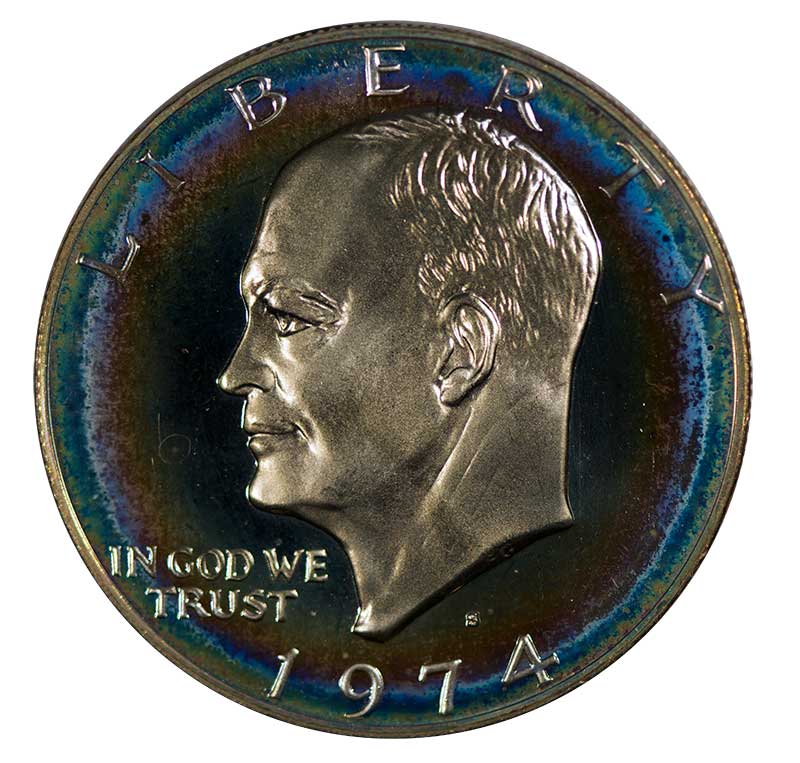 This was shot at ISO 100 using the Nikkor 105mm f/2.8G at f/3.5 at 1/2000. I'd really love to see an image of a proper light set up- bulbs in play, etc... because I think light really is the thing here. 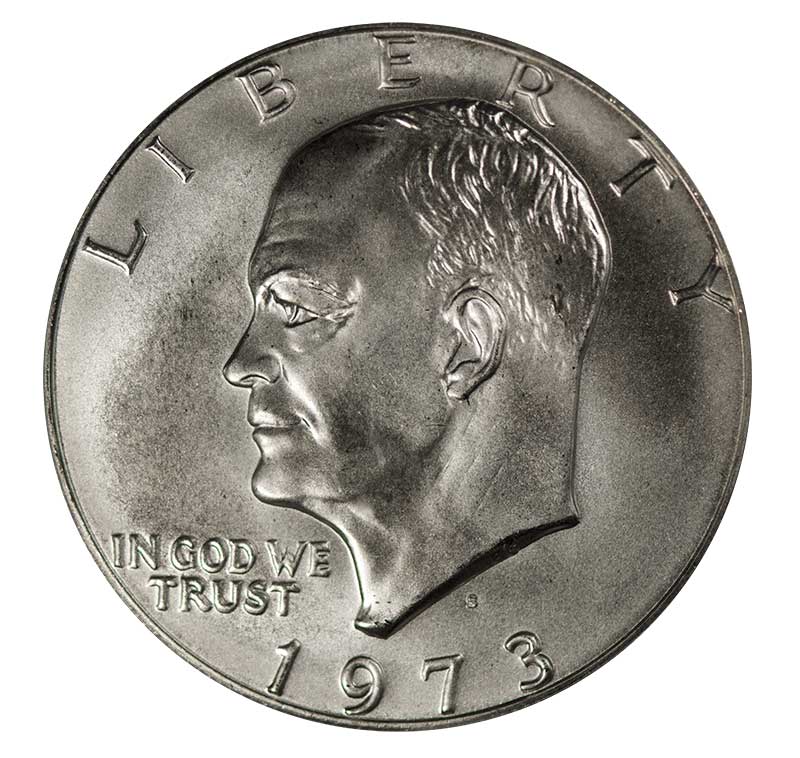 same settings. Edited by cc99999
12/03/2013 4:30 pm
|
|
Pillar of the Community
United States
4051 Posts |
I'd still recommend a smaller aperture, as it seems your depth of field is suffering. I don't have experience with the D800, but my D7000 has a tendency to shake when in MUP mode. I highly recommend Live View rather than MUP as I've had better luck with the D7000 in LV and you can view live on screen for critical focusing using a tethering program. Camera Control Pro 2 is pretty expensive, but ControlMyNikon is cheap and actually more functional.
Contact me for photographic equipment or visit my home page at: http://macrocoins.com |
|
Pillar of the Community
United States
1302 Posts |
I think most of my problems start here: 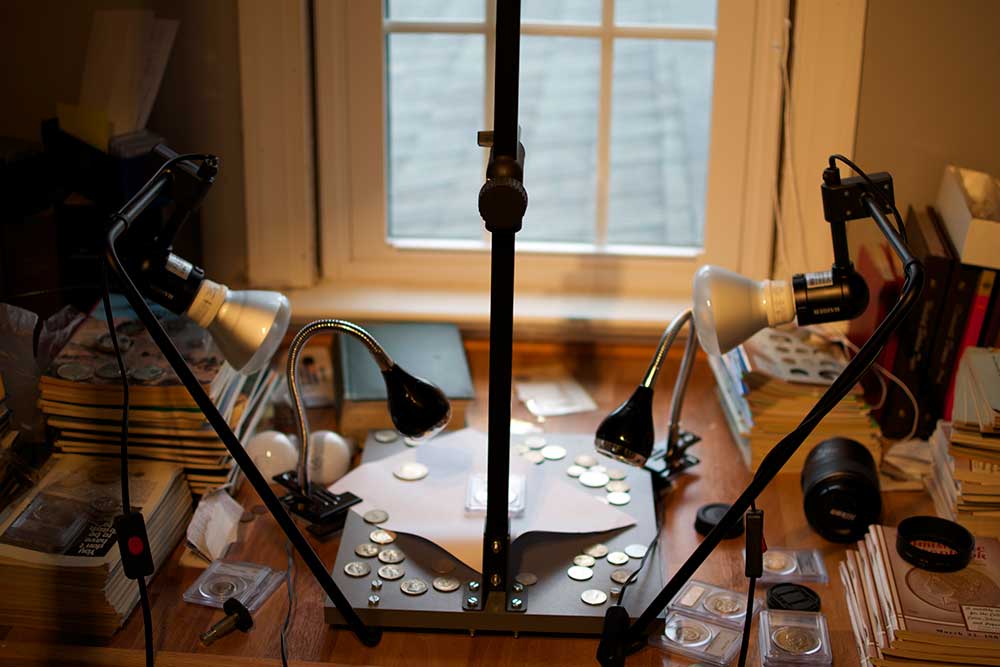 The two lights attached to the copy stand are too weak to project much light. I've tried replacing the bulbs but for some reason only these bulbs work on it. the small lights clipped onto the sides are led lights. all of these lights plus the ambient overhead light keeps things too warm. I know how to adjust white balance but i'd rather have things pre-shot work out better. any ideas of better light bulbs, lighting, etc would be put to use. *The white blank paper I use on the bottom of the stand is typically flat during production.* Edited by cc99999
12/04/2013 2:45 pm
|
|
Pillar of the Community
2087 Posts |
|
|
Moderator
United States
23522 Posts |
Sensor manufacturing is much like LCD manufacturing - few individual fabs, lots of customers. 80% of Sony's sensor production is for external customers.
|
|
Pillar of the Community
United States
1302 Posts |
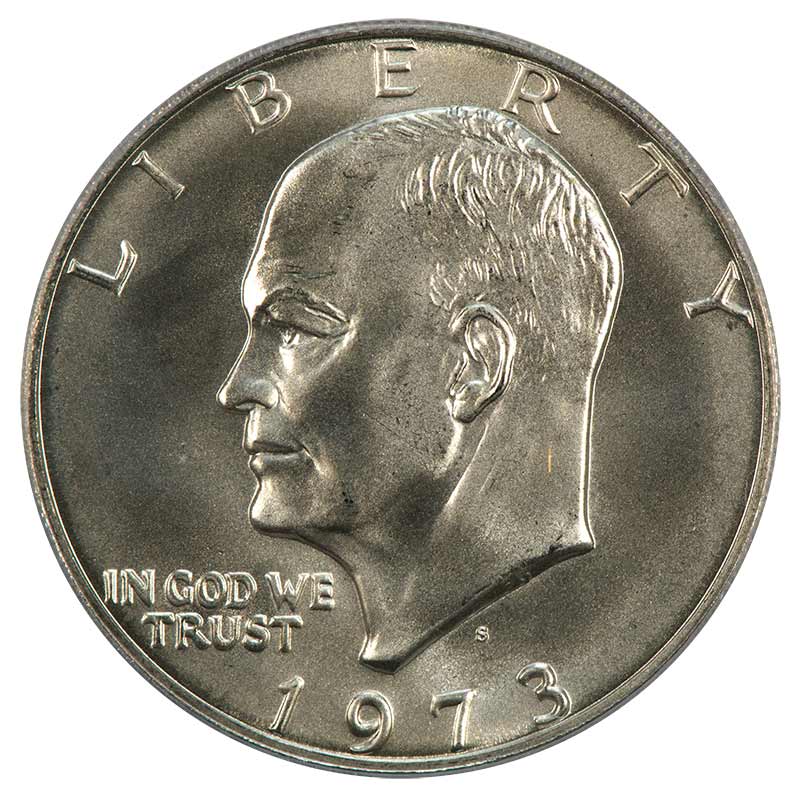 So I haven't solved the light problem yet. Image above was shot with natural light from a nearby window at F16 1000 ISO 1/100. But I did figure out that you have to turn off VR on stands and tripods- something I never realized before- because it creates shake (to counter manmade shake). I think the image is sharper. now onto lighting. |
|
Pillar of the Community
United States
4051 Posts |
f16 is overkill and is likely causing some unsharpness. I would still recommend f5.6 or f8.
Agree on VR. It is not recommended for Macro.
|
|
Pillar of the Community
United States
1302 Posts |
Close but no cigar... 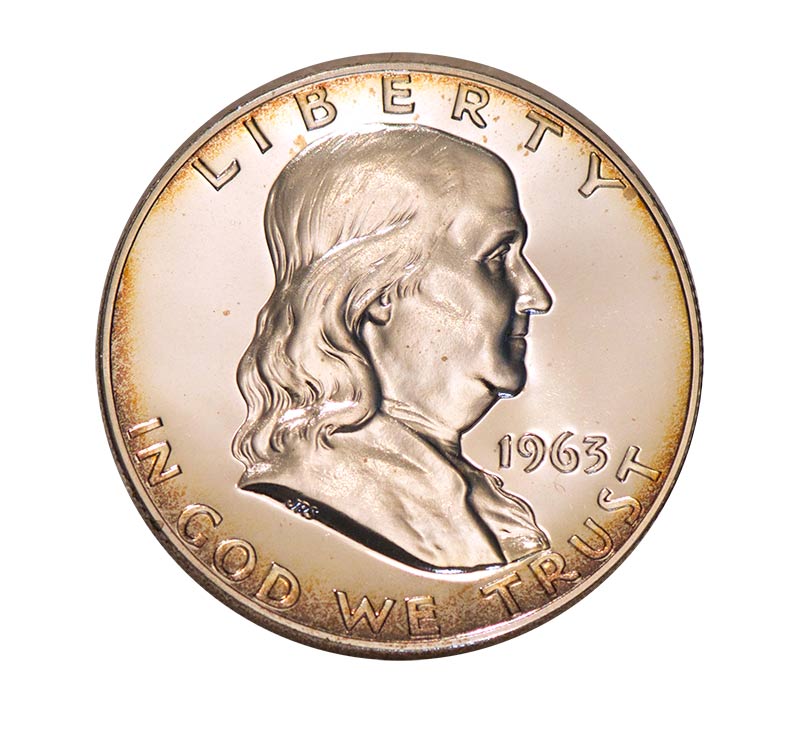 F/8 - 1/100 - 1SO 1000 - This was shot in aperture priority mode. This proof was shot with over head light, coin tilted at a 30 degree angle on a home-made stand. Camera was mounted on a tripod. Image distortion is very minimal- to non-significant. I liked the image until I noticed the top of Franklin's head and a few other points where the image was too white. This is one of the better toned proof images I've ever taken however. |
|
Moderator
United States
23522 Posts |
I'm not seeing any problems. Proofs are tough, very different than any other coin, and getting one with as little washed out as you managed is an achievement. That one's not close, it's there. I really like it from an aesthetic standpoint, and you're plainly at a point where the only quibbles are purely aesthetic. Which means opinions about the quality of your shot aren't based on technical issues any more.
Keep in mind, the greater the luster, the greater the headache. You're going to find any circulated coin an absolute pushover after what you're going through.
|
| |
Replies: 21 / Views: 4,973 |










 Posted 12/03/2013 11:35 am


