| Author |
 Replies: 80 / Views: 16,640 Replies: 80 / Views: 16,640 |
|
Pillar of the Community
United States
1130 Posts |
Does anyone else on here scrap out computers to get the gold etc. from them?
|
|
|
|
Pillar of the Community
Australia
1874 Posts |
I do but I have not actually refined the gold to pure form yet but I intend to do so in 2014
|
|
Pillar of the Community
 United States
1130 Posts |
Same way with me, I haven't refined the gold, but still take them apart. Do you do cell phones or cordless phones? What else do you do besides just computers?
|
|
Pillar of the Community
United States
589 Posts |
There is silver and palladium in the monolithic ceramic capacitors, found in most modern-day electronics (computers, cell phones, regular phones, cameras, etc.). They don't contain much, but with palladium being over 700 an ounce, it doesn't hurt to remove them and hoard them for future refining. The gold seems to be too much of a hassle, even though I'd love to start hoarding what little there is on circuit boards...problem for me is that I can't find a decent easy way to remove the pins (don't have a soldering kit, and don't want to acid bathe the limited numbers of boards I find), and other than those the only things I know of that are gold is the gold printed directly on some circuit boards.
How do you remove the gold, if I may ask?
|
|
Pillar of the Community
Australia
1874 Posts |
I have been dismantling flat screen TVs, computers, phones, medical laser systems and anything I can get my hands on.
I have been saving the monolithic ceramic capacitors (MLCC) as well as tantalum capacitors and all gold plated items, I have not bothered with silver plated items though.
To remove the gold from the circuit boards I will use Hydrogen Peroxide and Hydrochloric acid.
To remove the gold from the pins and other metals that have been plated in gold, and the gold that has been removed from the circuit boards (see above) I will use Hydrochloric acid and nitric acid.
There are some good websites that I have used but I don't think I can post them here.
PM me if you want the links.
|
|
Pillar of the Community
United States
1130 Posts |
What is the difference between monolithic and tantalum capacitors? How can you tell which is which?
|
|
Pillar of the Community
United States
2764 Posts |
Some interesting information you are providing. Thanks for sharing. I may have to look into this since I have quite a few ex-computer and ex-cellphone over the year. What about those old cd/dvd players, are there much PM in those?
|
|
Valued Member
United States
78 Posts |
old computers use to have a lot of precious metals.
how much gold do you think you can extract from one computer?
Edited by My Silver Destiny
12/30/2013 5:28 pm
|
|
Pillar of the Community
Australia
1874 Posts |
There isn't much in CD/DVD players but it all adds up. A monolithic Caramic Capacitors look like this: http://4.bp.blogspot.com/-IOPM4NI2q...apacitor.jpgWhile Tantalum capacitors look like this: Tantalum Capacitors have a little + on them. If it has no + it is not tantalum, to my knowledge. Of cause there is an exception. The Orange and the yellow little rectangular boxes are always tantalum. 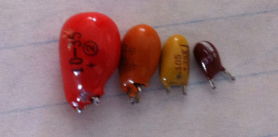 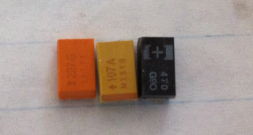 |
|
Pillar of the Community
Australia
1874 Posts |
I have no idea how much gold is in a single computer, but I think it varies on age and model.
|
|
Pillar of the Community
United States
1391 Posts |
With modern computers your better of pumping the septic tank after someone drank a Goldschläger. If you can get an older computer, like one of the early mainframes, there is a lot of gold in them.
There is platinum in hard drive platters too. You know what I do? I pull the platters and electronics, then toss them and keep the aluminum casing. There is a thousand times the value in the aluminum casing then there is in the rare earth elements on the patters and electronics. At work we have to destroy the drives because of the potential for data leaks. You can quickly get a pound of aluminum with the empty cases.
|
|
Pillar of the Community
United States
589 Posts |
Quote:
To remove the gold from the circuit boards I will use Hydrogen Peroxide and Hydrochloric acid ... I will use Hydrochloric acid and nitric acid. That's what I thought...problem with that is the need to hoard them until you have enough to run a batch (profitability standpoint). Or am I thinking that wrong? Quote:
Tantalum Capacitors have a little + on them. If it has no + it is not tantalum, to my knowledge. Of cause there is an exception. The Orange and the yellow little rectangular boxes are always tantalum. I first heard of Tantalum the other day on TV...thanks for posting stuff about it. But, I think that Tantalum Capacitors don't need to have a + on them (or at least, I don't see any +'s on some of them...but some do have them): 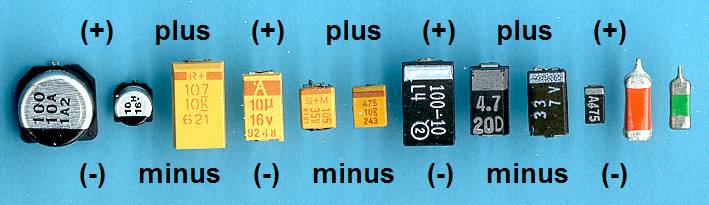 (Wiki) |
|
Pillar of the Community
Australia
1874 Posts |
Not all of the capacitors in the picture you posted are tantalum.
The first 2 are Aluminium, the next 4 are tantalum, the four after I dont think are tantalum, I have broken those open before and they have a copper core, not tantalum. The little black box I posted a picture of has a tantalum core. The last 2 are Monolitic Ceramic Capacitors
Although I say tantalum, I mean tantalum oxide. It is not pure tantalum so it can't be sold as such. It is a very dificult and energy sapping process to convert the tantalum oxide back to tantalum.
|
|
Pillar of the Community
United States
1130 Posts |
Is it dangerous to open up a cell phone and get the boards out of them? By the way, you ought to stack up the platters and the magnets inside of the hard drives. You can sell them on ebay. |
|
Pillar of the Community
Australia
1874 Posts |
I don't think it is dangerous to open up a cell phone, as long as you don't break the battery.
I dont have many platters and neodymium magnets but I have been keeping them as well.
|
|
Pillar of the Community
United States
1130 Posts |
I am thinking that I will probably just remove the batteries of the cell phones and cell them whole on ebay. Is that where you guys sell yours? |
| |
Replies: 80 / Views: 16,640 |







 Posted 12/29/2013 7:51 pm





