| Author |
 Replies: 34 / Views: 8,530 Replies: 34 / Views: 8,530 |
|
Valued Member
United States
110 Posts |
Recognizing a fake doesn't get much easier than this - you can still see the casting sprue on this bogus William Henry Harrison token... 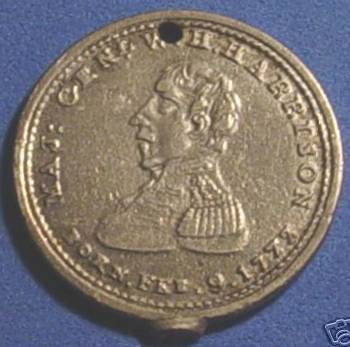 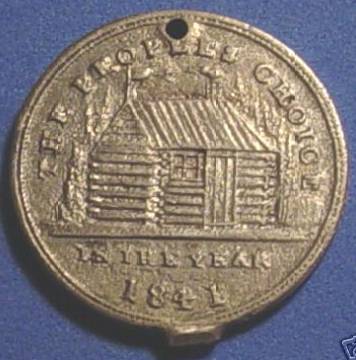 These are old auction images from 2006. The seller offered it as genuine and white metal, and it sold for $48.60. I had contacted the seller but he just replied "You might be right" and let the auction on ebay run to completion. It was obviously never intended to reach the marketplace in its unfinished condition, perhaps the forger didn't think it was good enough to invest more effort on it. |
|
|
|
Pillar of the Community
United States
3079 Posts |
It is a souvenir item, from some location that has a tie in with him. They generally aren't finished as well as the originals.
|
|
Valued Member
 United States
110 Posts |
Well that is interesting. I collect WHH tokens and I've never seen another in this condition, so I'd really be interested in more information. If they are recent in origin, they would be in violation of the Hobby Protection Act, since marking them COPY would be required.
Because of the price paid for this one, it is quite possible the buyer thought he was buying a vintage white metal variety. That, and it took two bidders to push the price up.
-Duncan
|
|
Pillar of the Community
United States
3079 Posts |
Don't know if many of the people know about that law outside the hobby. And if it was contracted for being made outside the country The people there wouldn't know and probably not care.
I really can't see any body making these in any quantity as there isn't a large following and I would thing that the more that hit the market the lower the price would fall. But stranger things have happened.
It might be made as a souvenir piece back close to the time, he was know.
|
|
Pillar of the Community
United States
4432 Posts |
Given fifty years of collecting tokens, I've not before seen this copy.
|
|
Valued Member
United States
110 Posts |
This is probably a second copy, sold in 2008... 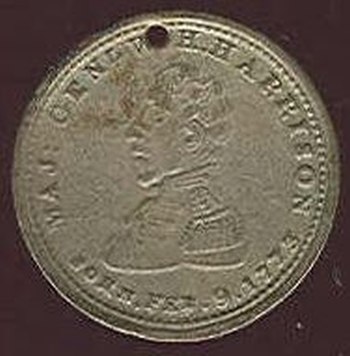 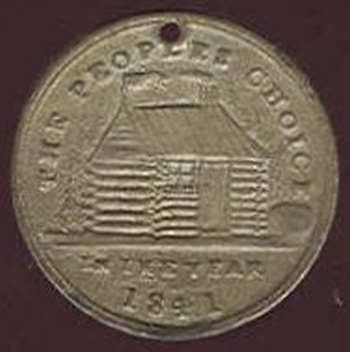 There's not enough detail in the crummy auction photos, but 1) The hole, looking identical, is a clue because they were not carefully drilled or punched on genuine tokens - anywhere between 11:00 and 1:00, close to or far from the rim, and in different sizes. It's obvious on the first example that the hole was part of the casting. There would've been a hole in the original, so cast copies would all be the same. 2) The color - these were brass tokens, and we know the first one is a fake. 3) Poor details despite some features that indicate little genuine wear. The fields have that same rough cast appearance too, unlike the well crafted originals. 4) Indications at the bottom of the second example where the sprue was removed. Incidentally, there were vintage William Henry Harrison tokens made perhaps in the 1860's, not really sure of the date, back-dated to this era (plus some larger undated medals) but they were from new dies and well struck, not cast, not intended as counterfeits. -Duncan |
|
Valued Member
United States
110 Posts |
Here's a supposed genuine WHH 1840-56 for comparison... 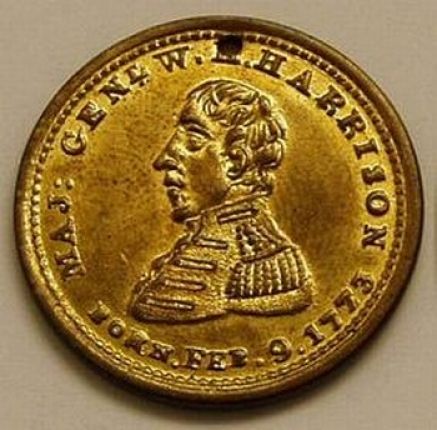 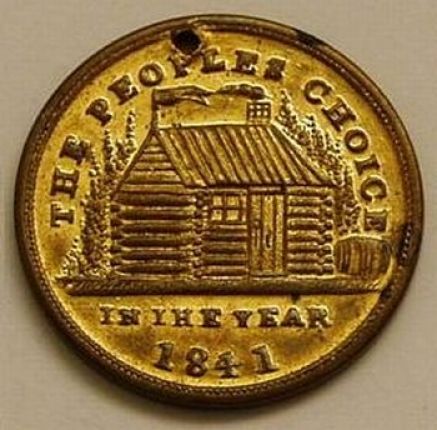 After looking at the reverse designs of the known and suspected fakes, I see the same clutter above the date on both of them, including a horizontal dash over the 4 in the date. That, and other defects, make me quite sure they are from the same source. -Duncan Edited by Duncan_Doenitz
01/26/2014 01:37 am
|
|
Valued Member
United States
321 Posts |
This makes me want to post pictures of my WHH. Now I question if it's a fake. So, these were minted between 1840-56?
|
|
Pillar of the Community
United States
1758 Posts |
Duncan - not being a HTT connoisseur - but these look like casts of the period - moving forward don't confuse casts with tin pieces or off-metal tin alloys. BTW - these both look like bronzed cast pieces in this thread and 19thC. Could be wrong ... in terms of the time period only ...
John Lorenzo
United States
|
|
Valued Member
United States
110 Posts |
I hope I didn't mislead anybody by calling the last images "supposed genuine"; it was just a good pair of pictures from my files, typical of genuine WHH 1840-56 tokens among my records. Comparing that one to the cast fakes makes it easy to see the flaws in the cast fakes. Satxwd, WHH 1840-56 is the DeWitt catalog number for the particular variety, although the "1840" is an indication of the date it was released, for the 1840 political campaign era, and usually that date is found on the tokens (some were optimistically dated 1841 instead, in anticipation of his inauguration date!). In the same way, tokens for Andrew Jackson's campaigns are catalogued as AJ 1824-xx and AJ 1828-xx. I purposely chose to collect Hard Times tokens because there were very few known fakes, and the few common fakes were well documented. A couple fakes are listed in the Rulau catalog, not because they are of any particular value, but rather mostly because they are common enough that collectors need to be able to identify them. The political campaign tokens of the Hard Times era are just a sub set of the tokens from that time period from roughly 1828-1846, depending on how strict one chooses to be when defining what to collect. What has happened, though, is that ebay a few years ago added a listing category for these, when previously they were lumped under "other". There seems to be quite a bit more activity now that they can be found under their own "Hard Times" heading. I'll try to pull together some examples of the known fakes in another thread; I picked up a few examples when they were cheap. Most are offered as genuine, of course, but even the common ones that catalog for $2 to $5 often sell now for $20 or more. The whole field of Hard Times tokens, including the political tokens, has done quite well value-wise in recent years, despite a funky economy. -Duncan |
|
Pillar of the Community
United States
1758 Posts |
I studied HTTs due to their connection primarily with Benjamin True, Troy, NY and Canadian Blacksmith Tokens.
John Lorenzo
United States
|
|
Valued Member
United States
321 Posts |
Oh no. There are AJ 1824 fakes, too? I had no idea. I just bought an AJ token. When I get it in the mail I'll post pictures. This takes the fun out of my collection. One of the reasons I started collecting HTT and campaign tokens was because I thought they were rare with little to no fakes. Well, that and the fact that I love History.
|
|
Pillar of the Community
United States
652 Posts |
satxwd - which AJACK did you get?
|
|
Valued Member
United States
110 Posts |
Oh, no, satxwd, I'm not saying there are AJACK fakes - I was just giving another example of how the DeWitt/Sullivan numbering system works!
I'd love to see your tokens from that era, can you post them here?
And colonialjohn, I'll track down scans of my Hard Times tokens marked "T" or "TRUE" or "TRUE/ALB" or "TROY".
-Duncan
Edited by Duncan_Doenitz
02/11/2014 1:15 pm
|
|
Valued Member
United States
110 Posts |
Here are a couple Bucklin's tokens marked for Troy, NY and with a "T" on the reverse, HTT-353 or HTT-354... 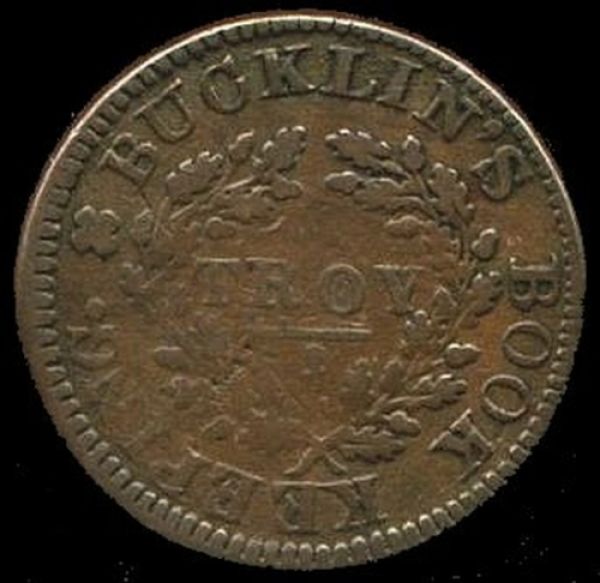 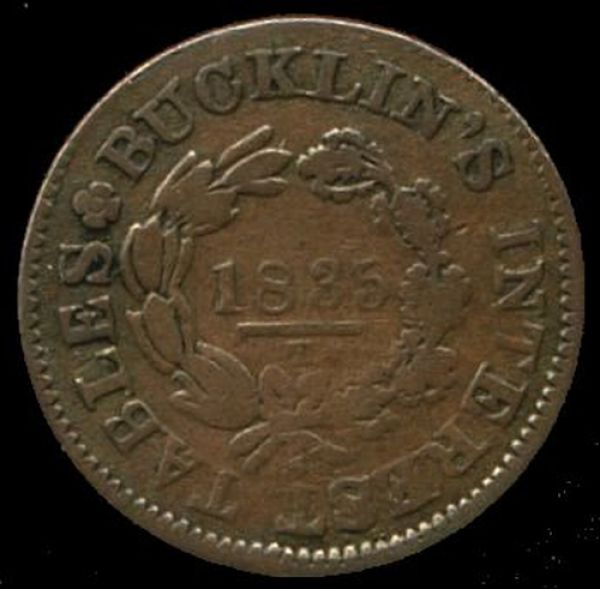 The "T" is under the date. Another, from the auction scans, with a nice clip... 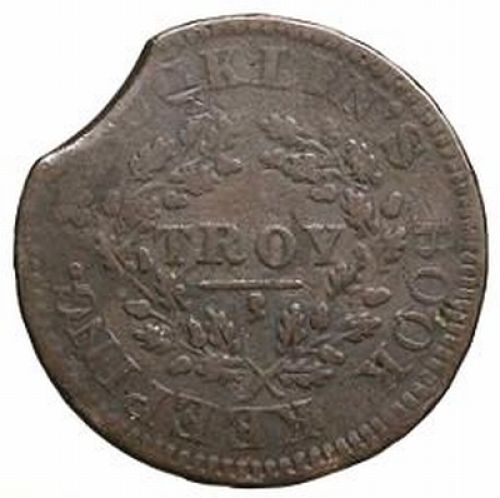 And you can tell by the location of the clip that there's a little bit of rotation of the reverse.. 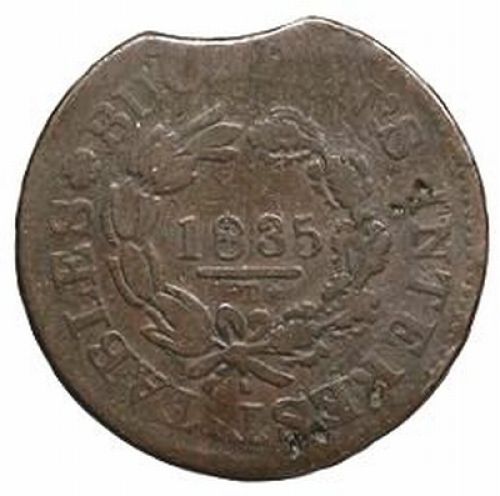 These Bucklin's tokens are notorious for weak strikes (easier on the presses); and maybe when workmen were punching blank planchets they tried to guess how fussy the customer was, and would intentionally punch each planchet from the flat bar as close together as possible, or even a bit more if the customer wouldn't complain about the clips. Some of the Bucklins have double clips. -Duncan |
|
Pillar of the Community
United States
4432 Posts |
Quote:
There are AJ 1824 fakes, too? I had no idea. These 1960's era replicas, all dated 1824 instead of 1834, are constantly showing up on ebay. Oftentimes, there will be an "R" counterstamped on the reverse. Here's one that's currently listed: http://www.ebay.com/itm/1824-Anti-U...em3cdc4cdb87 |
| |
Replies: 34 / Views: 8,530 |








 Posted 01/25/2014 1:22 pm


