

 Posted 01/27/2014 5:23 pm


Hello and welcome. Hope we can help.
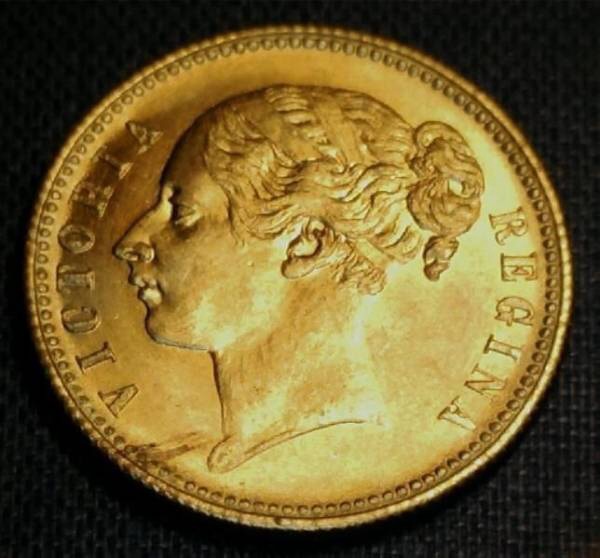
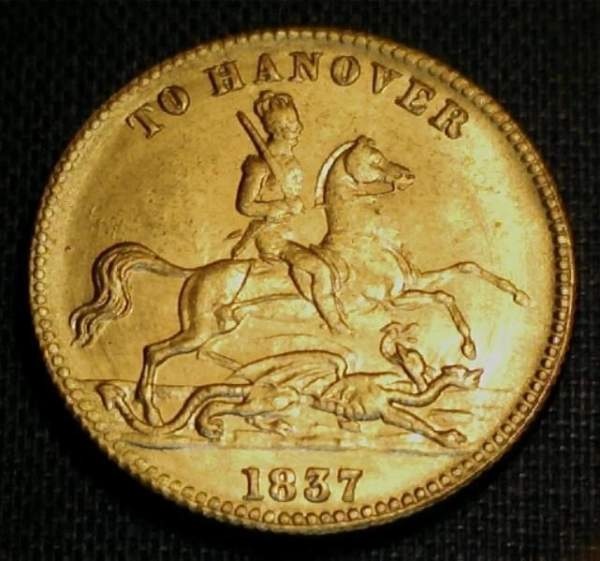
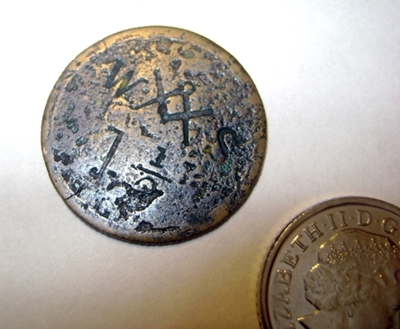
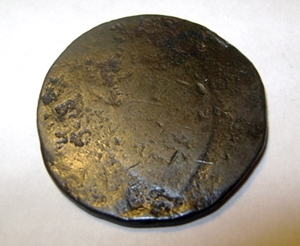
For the top coin, I'm not sure what kind of coin or token it originally was; I don't think "Victoria Regina" was ever used on any actual coinage of Britain or the colonies, but was very frequently encountered on medals and card-game counting tokens. How large is it? The British coin you've placed next to it is obverse-up, so I can't tell which denomination it is. As for the meaning of the stamp or engraving, "1 1/2" (or maybe 1 1/3) implies intended use as a token, perhaps a one-and-a-halfpenny token, or maybe a weight - there appears to be a "G" below the numbers, but I'm not sure if that "G" is engraved in, or part of the original coin/token/medal design, or simply an accidental arrangement of corrosion-spots that looks like a "G".
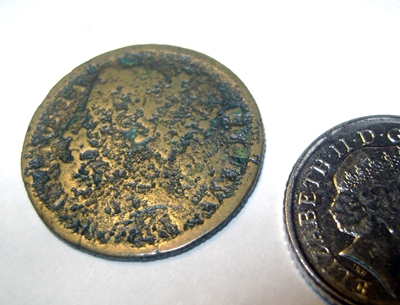
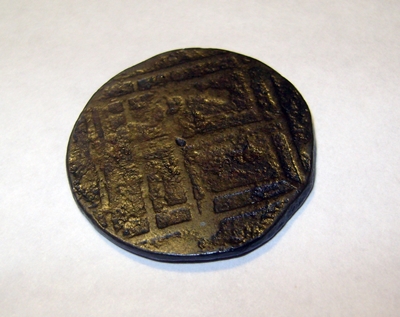
Your bottom coin is a 1790s tradesman token, a class of object known in America as a "Conder token", so named after an early cataloguer of such pieces. The square-shaped apparatus on the reverse is a loom. In better condition, it would have looked more like this example.
For the top coin, I'm not sure what kind of coin or token it originally was; I don't think "Victoria Regina" was ever used on any actual coinage of Britain or the colonies, but was very frequently encountered on medals and card-game counting tokens. How large is it? The British coin you've placed next to it is obverse-up, so I can't tell which denomination it is. As for the meaning of the stamp or engraving, "1 1/2" (or maybe 1 1/3) implies intended use as a token, perhaps a one-and-a-halfpenny token, or maybe a weight - there appears to be a "G" below the numbers, but I'm not sure if that "G" is engraved in, or part of the original coin/token/medal design, or simply an accidental arrangement of corrosion-spots that looks like a "G".
Your bottom coin is a 1790s tradesman token, a class of object known in America as a "Conder token", so named after an early cataloguer of such pieces. The square-shaped apparatus on the reverse is a loom. In better condition, it would have looked more like this example.
Don't say "infinitely" when you mean "very"; otherwise, you'll have no word left when you want to talk about something really infinite. - C. S. Lewis