| Author |
 Replies: 8 / Views: 1,889 Replies: 8 / Views: 1,889 |
|
|
Valued Member
United States
215 Posts |
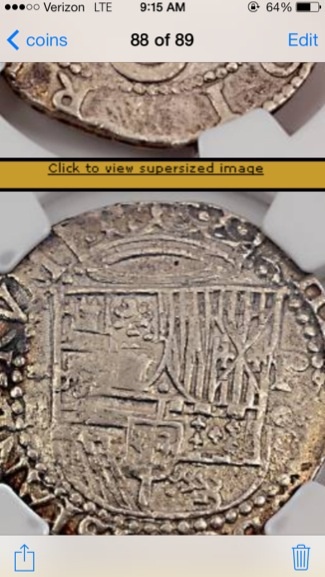
I recently purchased a vf 35 peru 2 reales marked pod but you can make out the oxd on the right side of the reverse, are these rare? I think the new strike was struck over the older coin 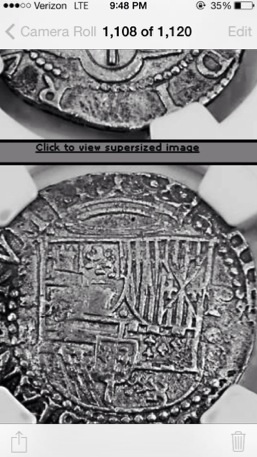 |
|
|
|
Valued Member
 United States
215 Posts |
|
|
Pillar of the Community
France
1591 Posts |
This coin is not from essayer X.
I think it's from Lima, minted by the essayer Diego de la Torres (*oD usually)
On the right, you see the P for Peru, I think the small o for Diego under it.
On the left the star from his mint mark (which he only used in Lima as well), and below it the denomination II.
Diego's cobs are among the most well struck, and finely designed - they are usually priced more than regular essayers (B for example).
I remember X is very scarce but I think I also remember he did mint coins for a later king, not for Felipe II.
|
|
Valued Member
United States
215 Posts |
I mean you can make out this style oxd, to the right of that. 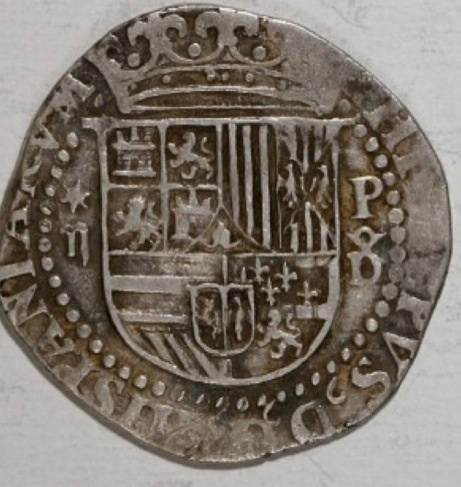 |
|
Pillar of the Community
France
1591 Posts |
I didn't knew that variant - that's interesting. The small o looks complete on the first coin. It's actually possible to have Diego re-used Xines matrices - even though there were other essayers working in-between. Here is Lima's essayer list under Felipe II (just missing the previous page, with Rincon's first coins) 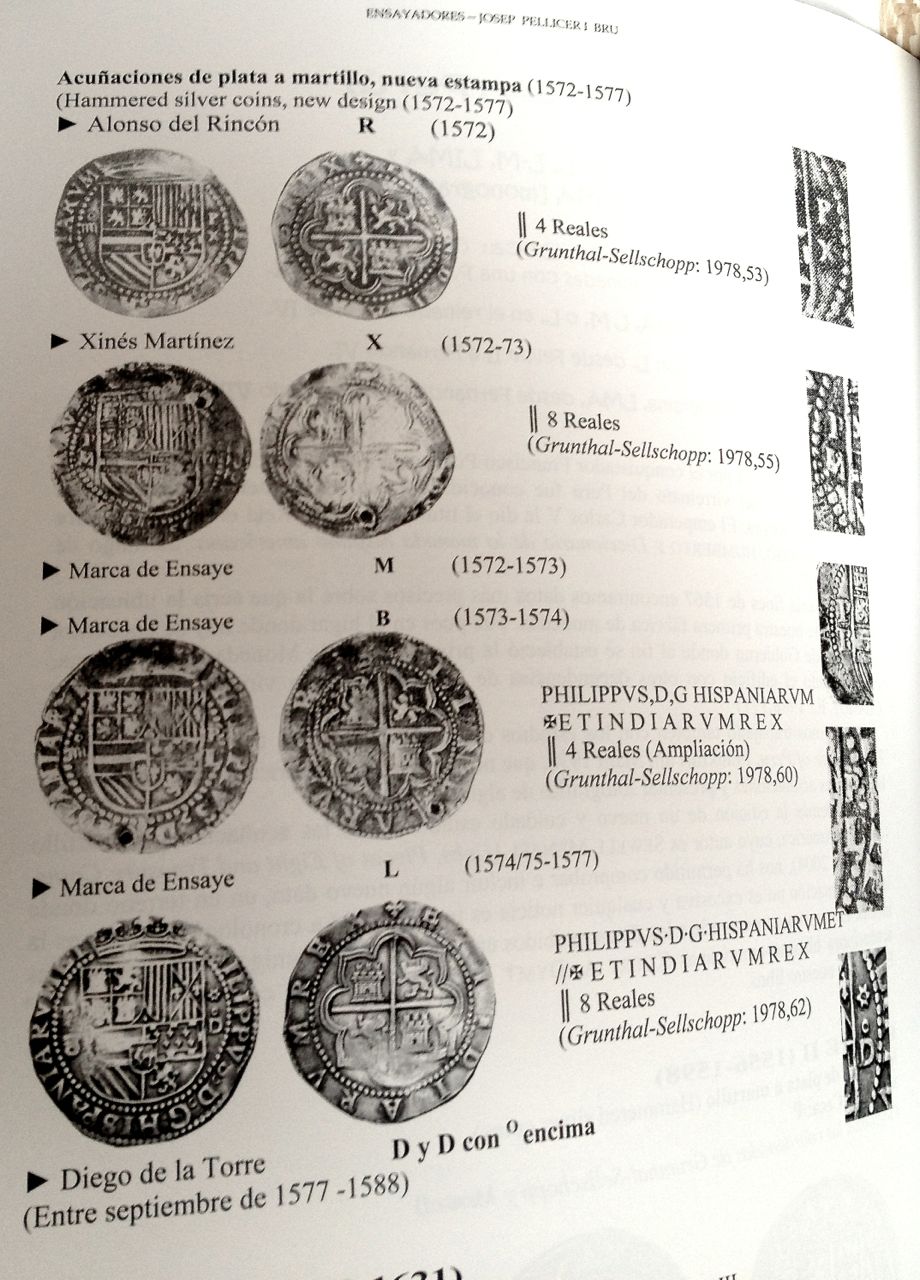 PS : I highly recommend this book, written by Josep Pellicer y Bru, for the ANE. |
|
Pillar of the Community
United States
1962 Posts |
Mat, that arrangement of the assayers (all as "Lima") in no longer considered accurate, stemming from further research into, die punches, historical records, etc. Some of those have been reclassified as Potosi. Assayer X and assayer Do, however, ARE still (presumably now definitively) classified as Lima. Regarding the coin first posted - given that the original poster was himself able to locate an example of this assayer Do over X variant (or even just that he has an idea to look for underassayers), I'm not sure how much help he really needs! Anyway, I'm not a specialist on the 1570s Lima/Potosi timeline or collecting, but off the top of my head, I would think valuewise, they're not as desirable/pricey as normal assayer X pieces, but certainly more interesting than your typical Diego 2R. The first step would be to browse through the Lima sections of Sedwick's online archives, or try iCollector's kind of clunky search of those. BTW, if you're going to ask about properly attributed/described ebay pieces (or even pieces from the usual highly visible auctions) that anybody who's curious can see for themselves, may as well just link those better photos. Even seeing the original-size pic... it kind of looks like the upper serifs/bars of the "X" are there (at least the upper left one), but due to the combo of the doubling and the weak detail impression in that area of the coin, it's not immediately obvious or in fact certain. Even if it IS there, you're not going to achieve the same value as for a well-struck, clear overassayer like the 2nd piece you showed. At the price you bought for, if it was purchased JUST as a typical assayer Diego piece and you just happened to notice this after the fact, you went quite high for this piece. If you paid that as a cherrypick... eh. |
|
Pillar of the Community
France
1591 Posts |
realeswatcher : My bad ... that book is recent, it was published in 2010 by the ANE. I only picked the page for Lima, not from Potosi :/
Indeed, Sedwick's 4th edition of his "Pactical book of cobs" lists R X M B L in Potosi (R and X in Lima as well for the first period), plus R in La Plata.
From what I understood, oD is always in lima, and X can be in Lima or Potosi.
Considering *oD has always been known to work in Lima ... I would suppose that an X over this essayer would be from the first period, in Lima.
There is something puzzling me though : I don't see the X on the first coin, is it visible ? (looks like the regular *oD mark)
|
|
Valued Member
United States
215 Posts |
this is what I thought I saw and was more visable in the grey shading 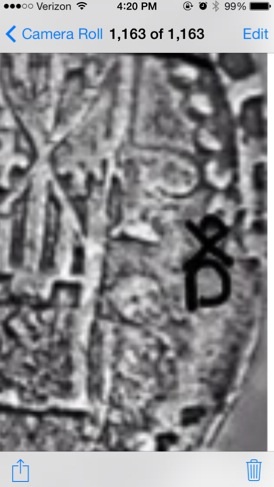 |
|
Pillar of the Community
United States
1962 Posts |
Mat, for some reason, some of the Spaniards seem to stand by the earlier notion of which assayers produced where... what Pellicer I Bru is showing is basically, I believe, what Sellschopp had laid out. By the time Sellschopp's collection sold in I think 1988 (followed a few years later by Karon's collection, which contained many of Sellschopp's pieces he had acquired from that previous sale), the reattribution of these early Lima/Potosi (+ La Plata) assayers had begun to gain acceptance, at least here. Karon notes this in the Ponterio catalog for his collection's sale (and I think the Swiss Bank/UBS cataloguers of the Sellschopp sale also made mention of it). The full-size pic of the 2R in question is below... Note that this is a complete different shield-side (obverse) die compared to the reference piece that was posted. Seller asking $500+ for an average grade example of what to this knowledge is surely no more than a typical Diego 2R... and buyer trying to cherrypick it. What's the old song - "He's got, hiiii-igh hopes..."?  |
| |
Replies: 8 / Views: 1,889 |
|









 Posted 02/15/2014 09:40 am


