| Author |
 Replies: 10 / Views: 2,814 Replies: 10 / Views: 2,814 |
|
|
Valued Member
United Kingdom
287 Posts |
Any ideas on this coin? small and chunky and looks like I have a crab or Lobster? I am guessing its not roman? What do you think this is made from? unsure hows best to clean... or if best to leave it be. 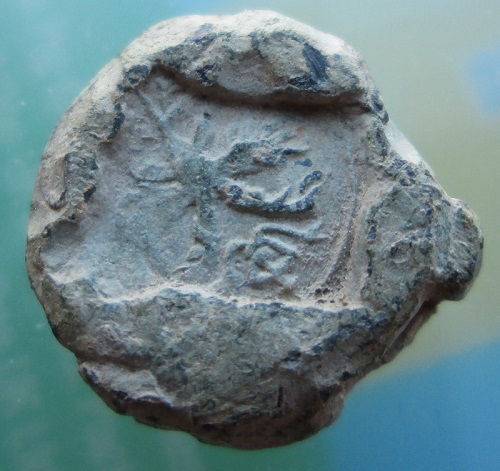 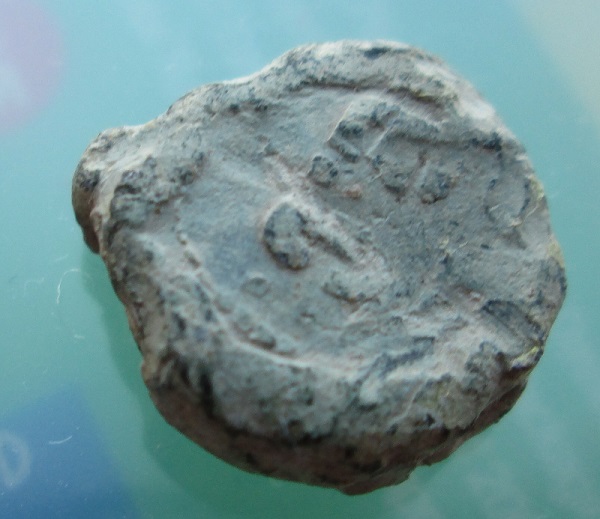 |
|
|
|
Pillar of the Community
United Kingdom
4208 Posts |
Thats a lead bag seal. Does look a little like a lobster, could have been a seal on a bag of the things. Does look ancient to me - I think it mostly dirt and the white lead oxides havent had a chance to form yet.
These can be cleaned like a regular roman coin, but dont use anything metal on it, lead is very soft and will scratch easily.
|
|
Moderator
 United States
23731 Posts |
It does appear to be some type of seal. What is the size and weight. If you rotate the first image to the left a bit, it looks like a double headed eagle so I'm thinking not ancient but maybe medieval. Maybe Austrian.
|
|
Pillar of the Community
United States
5010 Posts |
how about a russian seal? 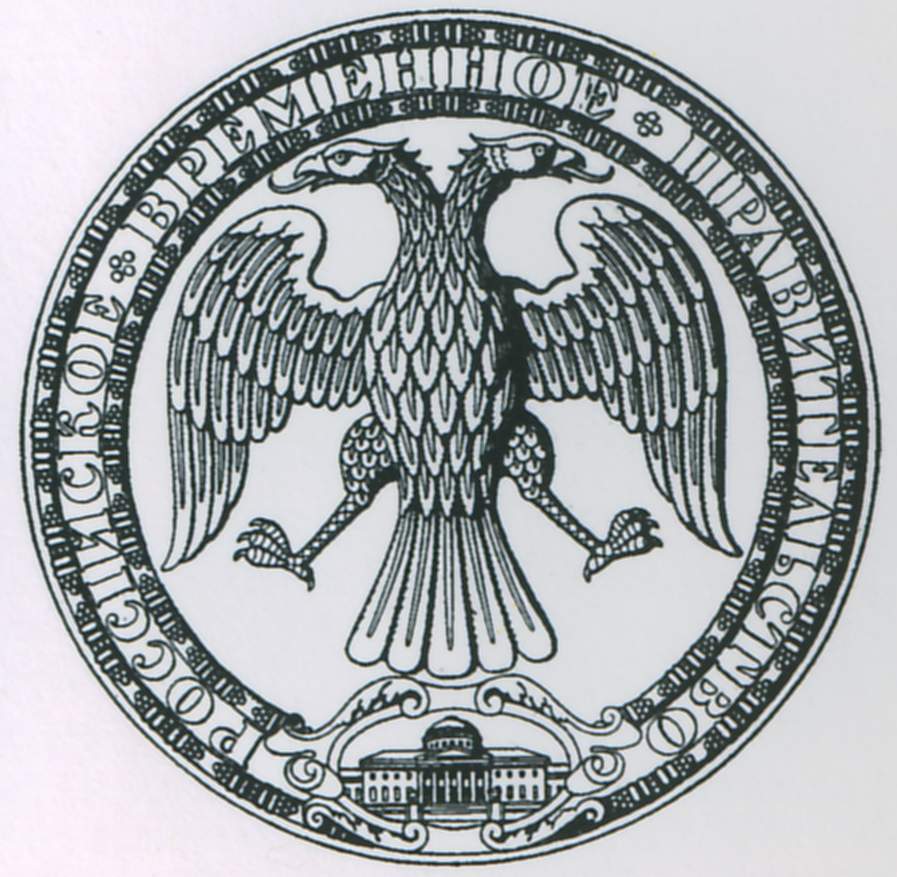 double headed bird instead of lobster? |
|
Valued Member
 United Kingdom
287 Posts |
It didn't even cross my mind that it wasn't a coin. I can make out an eagle just about, silly question, is it literally a way they sealed a bag? I had never heard of a 'bag seal'
it is quite small, 12-13mm about 4-5mm thick, weighs 4.15grams
Are there collectors for this kind of thing? I am guessing its not worth much?
|
|
Pillar of the Community
United States
940 Posts |
mashisback, Researching "Imperial Eagle" may be helpful. Here's a Finland 20 Markkaa coin with an imperial eagle that has some similar features:  Edited by Classic Coins
03/09/2014 12:04 pm
|
|
Valued Member
United Kingdom
287 Posts |
I never knew anything about seals, but they do seem to have quite a similarity in history to coins, I don't think I am going to be able to ID it, but if I hold it at the same angle, I see similar to this: http://www.ebay.co.uk/itm/Antique-l...047675.l2557 |
|
Pillar of the Community
United Kingdom
3626 Posts |
And look at the price it went for!
|
|
Pillar of the Community
United States
940 Posts |
From Numiswiki: During the Byzantine period, lead bullae (singular, Bulla) were widely used to seal and identify the sender of correspondence and containers in shipment. An iron, pliers-shaped instrument, a boulloterion, was used to impress the designs on a lead bulla seal. After the cord was wrapped around the package or document and the ends inserted in a channel in the blank seal, the seal was placed between the disc shaped engraved dies on the jaws of a boulloterion. The boulloterion had a projection above the jaws, which was struck with a hammer to impress the design on the seal and close the channel around the two ends of the cord. With a bulla in place a container cannot be violated without visible damage to either the bulla or the cord, ensuring the contents remain tamper-proof until they reach their destination. http://www.forumancientcoins.com/ca...r=1935&pos=0Edited by Classic Coins
03/09/2014 1:16 pm
|
|
Valued Member
United Kingdom
287 Posts |
I think this may be a keeper, interesting item. Will give it a clean and see if I can bring out some more detail, I assume there isn't forums for 'Seal collectors', would be interested in finding out ID, fingers crossed something crops up... or someone crops up who knows them like the back of there hand. Just found a byzantine image, although it doesn't look the same engraving, if you look above the eagles head, I think there is another feature, which could be the same feature as above the head on this: http://www.doaks.org/resources/seal...55c2f51.jpeg |
|
Valued Member
United Kingdom
287 Posts |
Thanks CC, that's interesting, I was struggling to understand what they were, that made it make more sense.
Interesting!
|
| |
Replies: 10 / Views: 2,814 |
|










 Posted 03/09/2014 07:15 am


