Biggest difference between this and a
Grease Filled Die:
Your coin has all its details, they are just moved around. Note the hard edges to the scrapes and how it actually looks "scooped up"...that's because it is. The edges of your problem areas are actually lifted higher than the normal design would be.
Something obstructs a die in a strike and its edges will be sharp (like a staple or thread), but the critical difference is that it will not have metal any higher in relief than the normal relief of the coin - because the die hits the planchet and the obstruction and the metal of the planchet flows all the way around the obstruction and meets the die - but will not and cannot go any higher up than the surface of the die.
Additionally, grease filled or otherwise obstructed dies often occurs in a larger yet usually single area and will flatten details straight down - it will look something like a weak strike in those areas. Critical difference between the
Grease Filled Die and the weak strike is that the
Grease Filled Die usually either affects only one side of the coin or will affect lower areas of the relief of the coin - like the fields. A weak strike ALWAYS affects both sides of the coin (because both sides are struck at the same time with the same pressure) and ALWAYS affects the highest parts of the relief first, and usually ONLY affect the highest parts of the relief.
As an addendum, a die trial strike is a weak strike - an extremely weak strike, in which only the lowest parts of the relief show. This is usually relegated to the outline (or part of the outline) of the bust or main device and a few letters toward the center of the design. I saw a
Peace dollar trial strike once where the only detail the coin had was the crevace of the neck and part of the back of the head, and a piece of the outline of the eagle on the reverse.
The difference in appearance between a die trial strike and a heavily worn coin is that a die trial strike will still have the upset rim (placed on the planchets before strike), and the rim, as well as the edge, of a heavily worn coin will be flat and rounded off at the edge.
So...there it is. The difference between damage and a
Grease Filled Die, then the difference between a
Grease Filled Die and a weak strike, then the difference between a die trial strike and a heavily worn coin. Looks a little like that British TV show, "Connections." I miss that show.







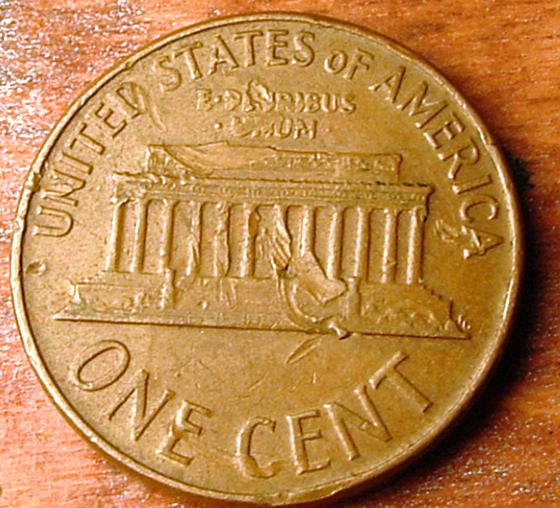 Grease1.jpg
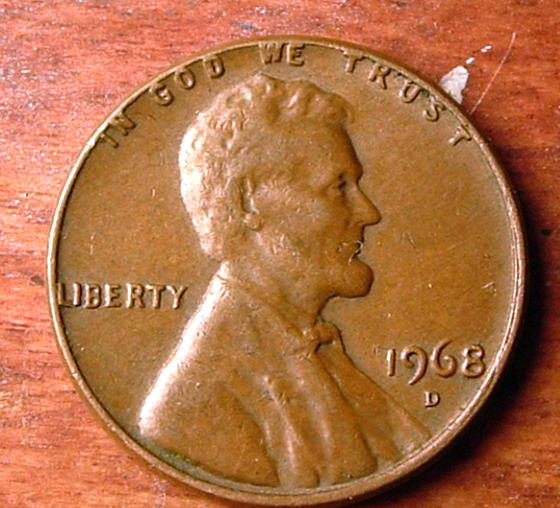 obverse2.jpg


 Posted 07/22/2007 10:19 pm





