If you're sure it's Phrygian, that's more than I can tell just by looking at it - I can't even tell if it's a Greek or Latin legend, there's so little left of it.
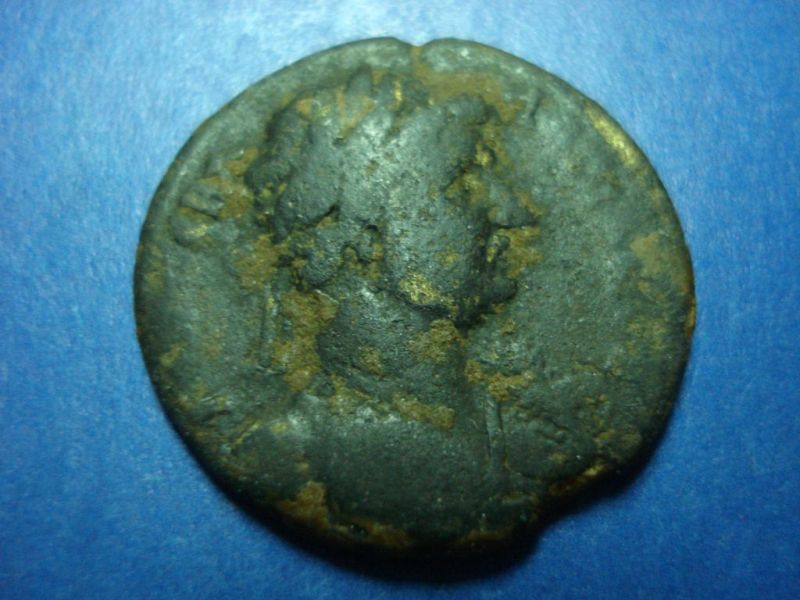
The portrait is probably the best clue for narrowing it down. It looks like a typical "Golden Age" portrait, either emperor Trajan or Hadrian, depending on whether he's got a beard or not - I'd guess "not", so I'm assuming Trajan.
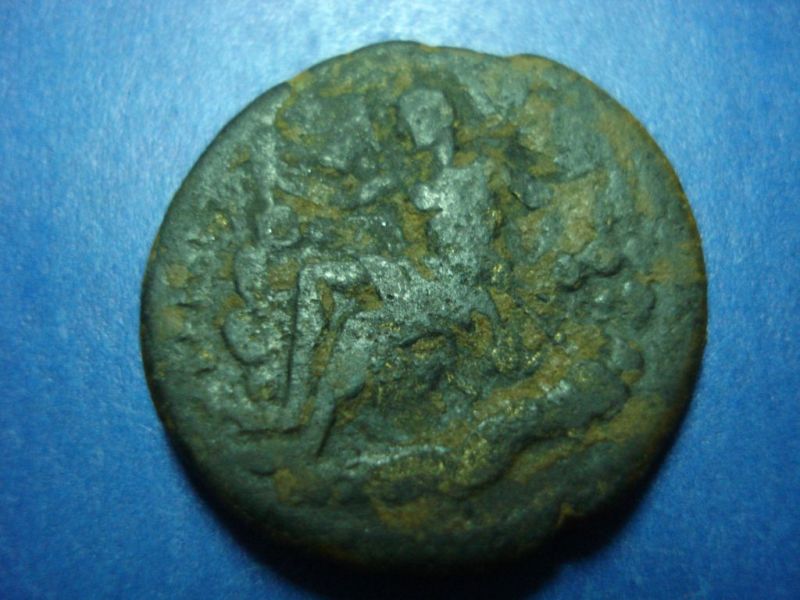
"Cybele seated on throne" was a common motif for citied throughout the region to put on their coins, but the seated figure on yours looks far too "casual" - I'd be more inclined toward "reclining river god". Several cities commemorated the Tembris River on their coins in this way; Appia and Midaeum are two mentioned in Sear's "Greek Imperial" catalogue, though I can't find a picture of either to compare it with.
You may be asking, "Why am I wasting my time with identifying it, when you only asked for the value?". That's because a coin which can be attributed to a particular city is easily worth double what an "unknown Greek Imperial" is worth. This value can go even higher if the city is "famous", for example if it's mentioned in the Bible. At present knowledge, $20 would probably be a fair estimate for this coin.
Don't say "infinitely" when you mean "very"; otherwise, you'll have no word left when you want to talk about something really infinite. - C. S. Lewis










 c3_a.jpg
 c3_b.jpg


 Posted 07/24/2007 07:11 am


