| Author |
 Replies: 6 / Views: 1,920 Replies: 6 / Views: 1,920 |
|
|
Pillar of the Community
United States
595 Posts |
I have a question for everybody. I have some 1935 D Buffalo nickels that are beautifully light amber toned and quite pristine. Technically, they should grade pretty high (MS 65 - 66). The problem is that the strikes on them are terrible - virtually the entire braid of the Indians hair is flat as is much of the buffalo. The strikes are so weak that on the flat areas, you can see all the little scratches and marks that were on the original planchet. How does such a weak strike on an otherwise beautiful coin affect the grade from NGC, PCGS, or another TPG? Also, how much can or does it hurt the value? Here is an example of one of the nickels.  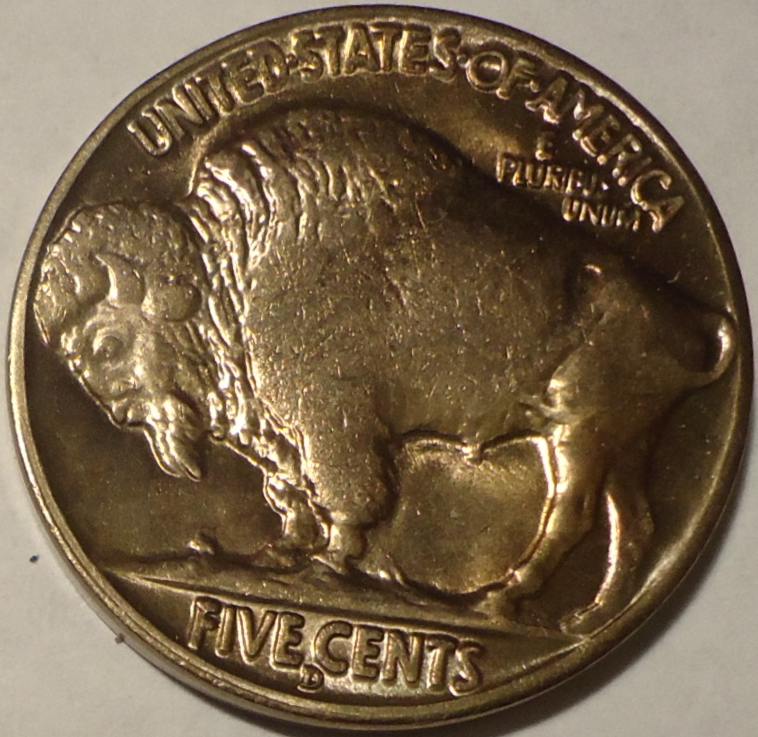 |
|
|
|
Pillar of the Community
United States
5825 Posts |
You're right, nice coin except for the strike.
IMO you'd get at least a -63 if not a -64.
|
|
Pillar of the Community
Korea, Republic Of
1881 Posts |
I'd say good luster, but no way over 64 with that strike.
|
|
Pillar of the Community
United States
1531 Posts |
Ok. I have some questions, too.
What causes a weak strike?
What grade would this coin get, in your opinion, if it had a sharp strike?
It's an attractive coin, IMO!
|
|
Pillar of the Community
United States
1291 Posts |
You can't mentally superimpose a better strike over a poor one and come up with a grade for it. A better strike might actually not grade as well as this one, depending on other factors. It could actually grade lower, and still have more overall appeal. Frankly though, there just aren't many 35-Ds with real good eye appeal. I'm actually pretty impressed with the reverse on this one. 63 for me!
|
|
Pillar of the Community
 United States
595 Posts |
Quote:
What causes a weak strike?
What grade would this coin get, in your opinion, if it had a sharp strike? Weak strike is normally a result of insufficient die pressure when the coin was made. In other words, the die was not pressed into the coin blank hard enough to squeeze metal into the deep portions of the die. So, the high points of the coin never received the intended image, but instead retain the original surface of the raw planchet. You can do a similar thing with an ink stamp. If you ink a rubber stamp and press it very lightly on paper, you will not recover the full image. If you press really hard, you will. This coin is very nice in hand in terms of luster and eye appeal, and the struck portions are free from marks, nicks, and rubs. I would expect it to grade MS-65 or maybe 66 if it was well struck. Unfortunately, it is quite poorly struck. |
|
Pillar of the Community
United States
1531 Posts |
Ohhhh, I see! That's why when a coin is struck weakly, the area appears scratched. But that's just the original form of the blank. Cool.
|
| |
Replies: 6 / Views: 1,920 |
|






 Posted 04/18/2014 10:22 am





