| Author |
 Replies: 14 / Views: 6,519 Replies: 14 / Views: 6,519 |
|
|
Pillar of the Community
United Kingdom
709 Posts |
I learnt a lot recently from some helpful comments on this forum re a suspicious error coin. Knowledge often comes at a price, and it is better to learn at somebody else's expense if at all possible. So I thought I would display my collection of error coins, ( and quite likely my ignorance ), to give myself and any other novices a chance to learn. With each set of photos are my comments on what I think has happened to cause this error. Please feel free to comment/contradict. Some of the coins are rather suspect - if it helps another forum member avoid a pitfall that caught me, then it is worth it. First the coppers. 1. 1976 half penny 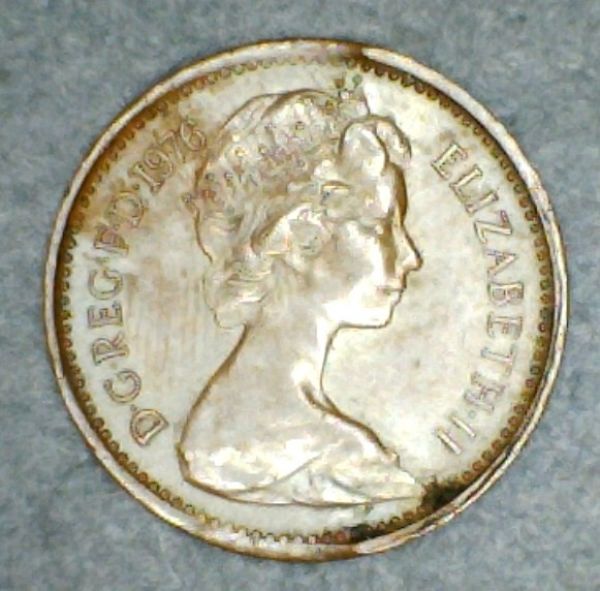 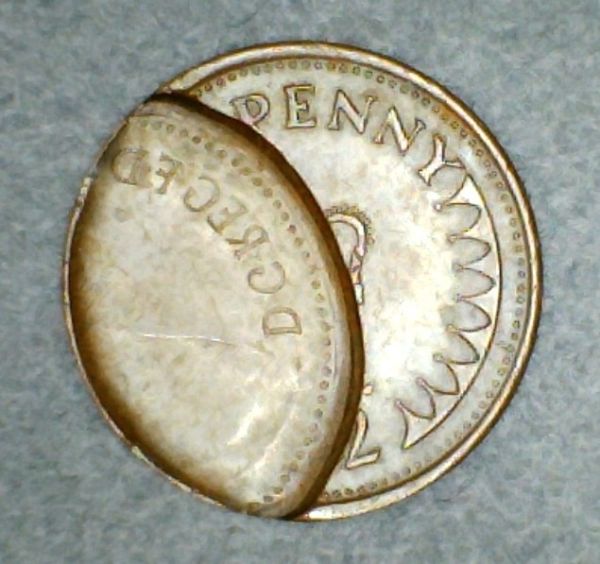 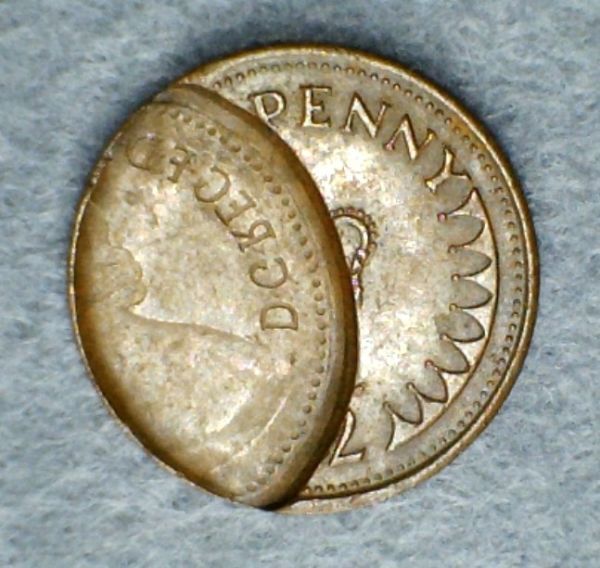 This coin is quite flat, and is thinner where the 2nd image has been pressed onto it. I am not sure if this is genuine. I would imagine that the previous coin in the press somehow got partially stuck on the die, and left a trace of itself on this one. If it is a PMD vise job, how can you tell? 2. blank half penny 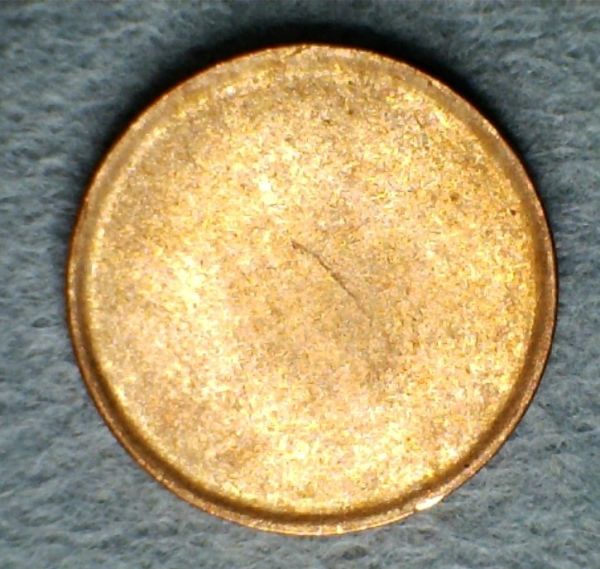 Size and weight are good. The flan has been rimmed in preparation for pressing. I believe this one is genuine. 3. 2001 one penny - suspect vise job 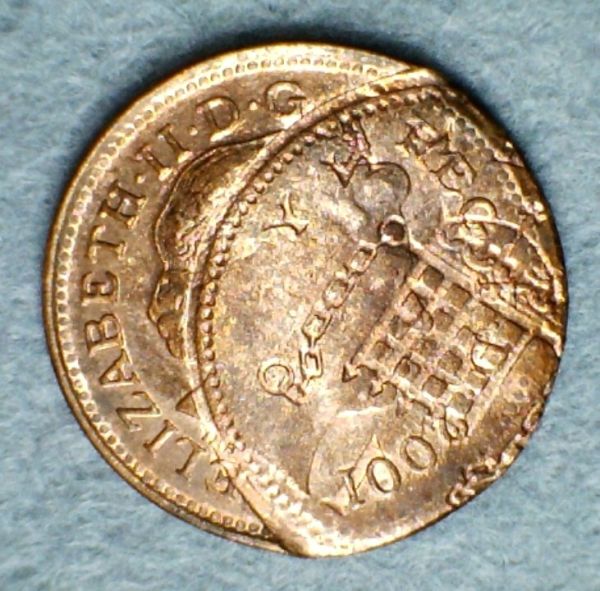 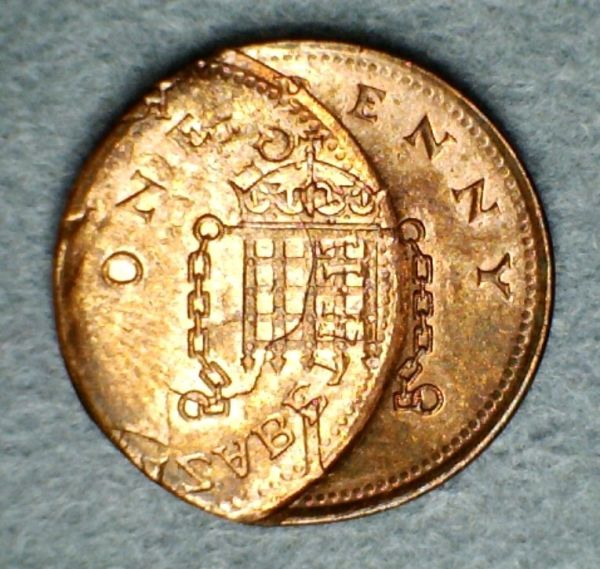 This one is so similar to a recent 5p I posted a short while ago. https://goccf.com/t/178760When looked at edge on, the flan is bent in the same way where the images overlap. 4. blank flan, no rim 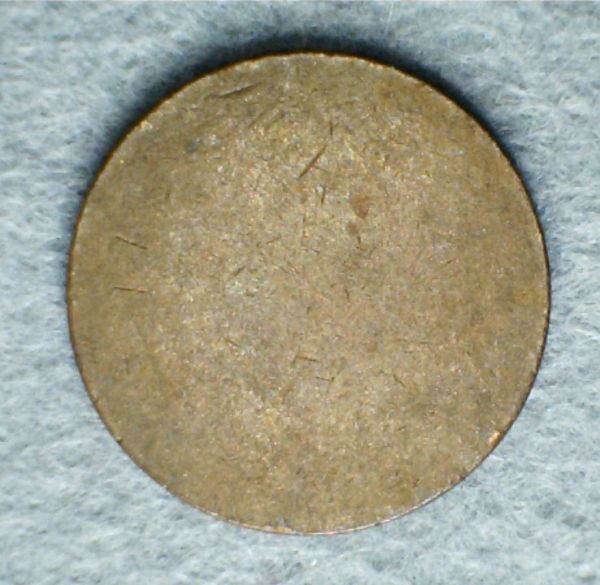 5. blank flan with rim Coins 4 and 5 are the correct size and weight for a 1p coin. The surface colour of the flan has changed after the rimming process. If somebody could explain this I would appreciate it. More to follow...
|
|
|
|
Pillar of the Community
 United Kingdom
709 Posts |
6. 1980 two pence coin - thin flan 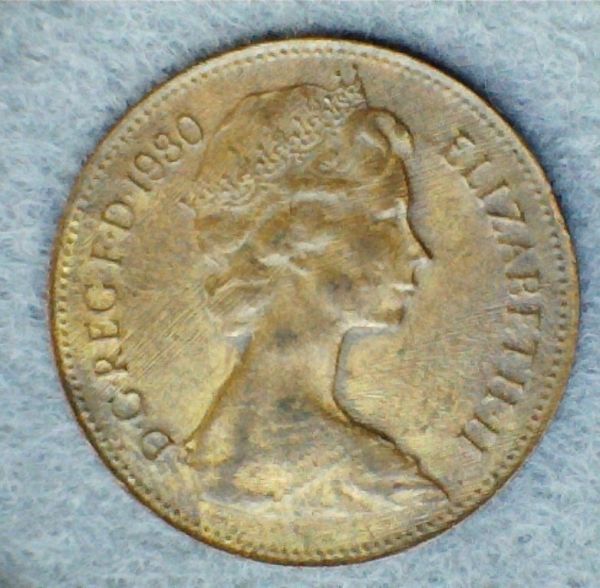 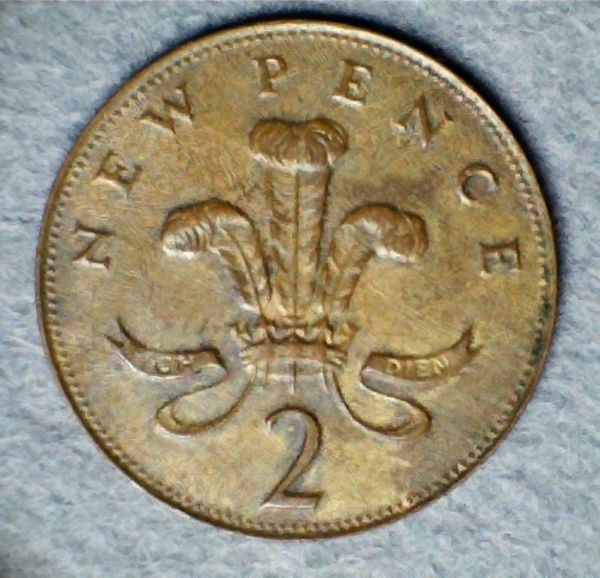 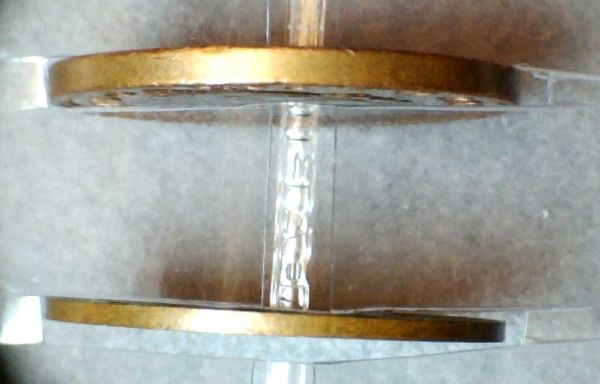 The strike is quite weak. The last photo shows the thin one and a normal 2p in comparison. Weight of normal coin = 7.2g. Weight of this one = 4.3g. I believe this one to be genuine, the weakness of the strike being caused by not having quite enough metal to flow into the die when pressed. |
|
Pillar of the Community
United Kingdom
709 Posts |
7. one penny broadstrike 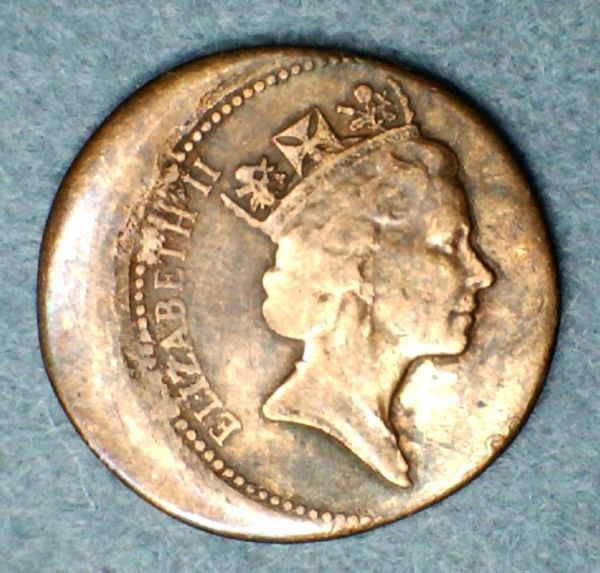 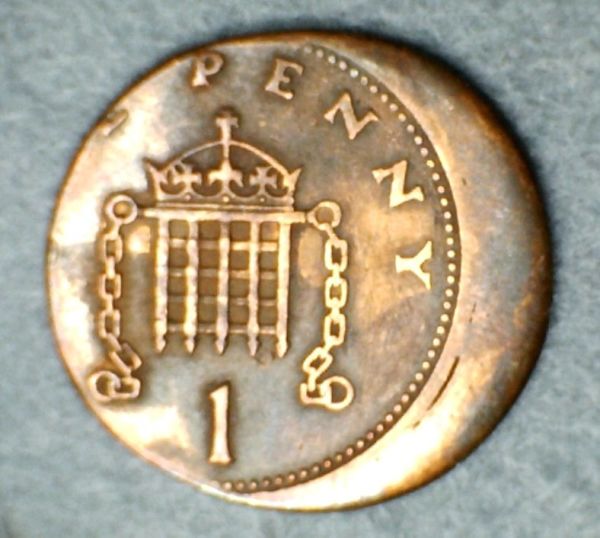 I have already posted this one, but it is one of my favourites, so no apologies. I believe this was caused by a failure of the collar to engage when the coin was struck. 8. 1971 2p clipped flan 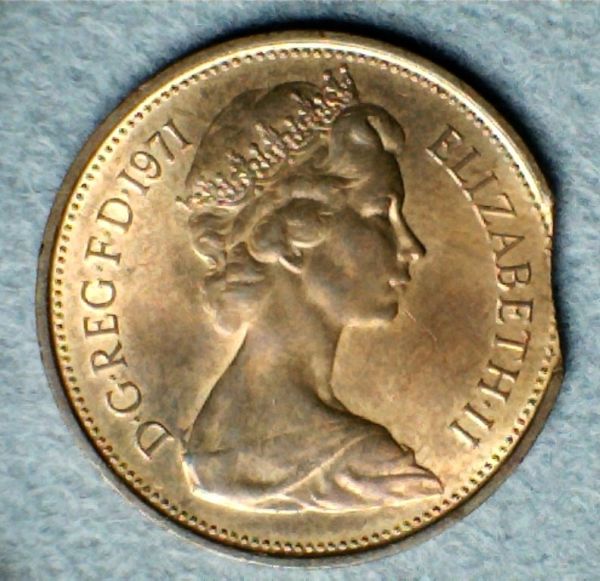 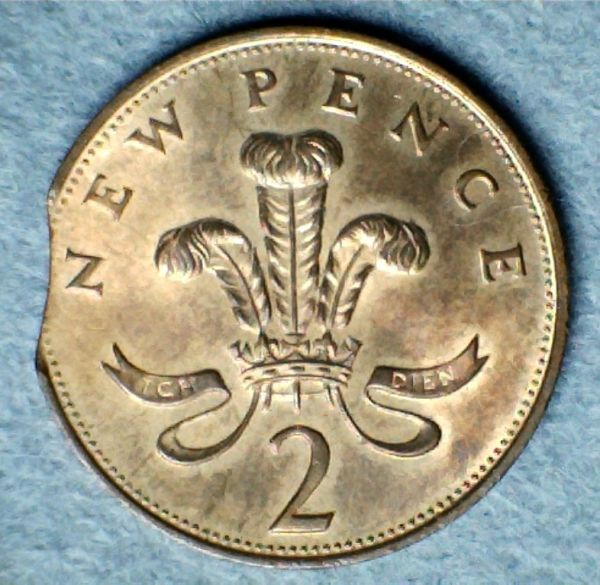 I believe this one is genuine, because the design fades slightly around the clip. |
|
Pillar of the Community
United Kingdom
709 Posts |
9. 1971 2p clipped flan with Blakesley effect 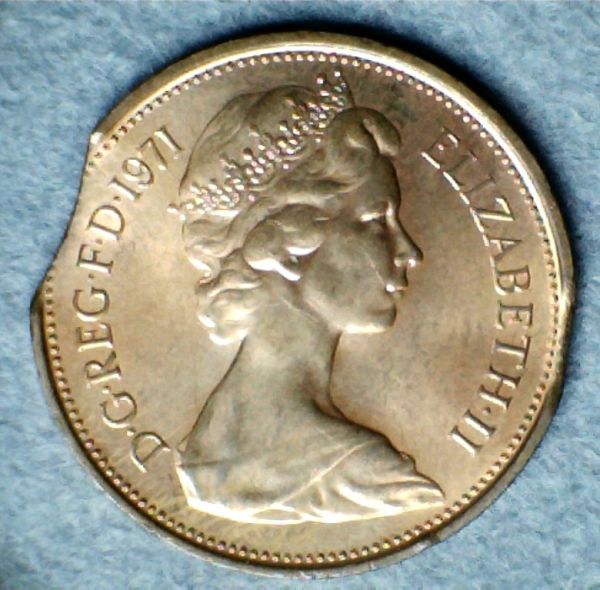 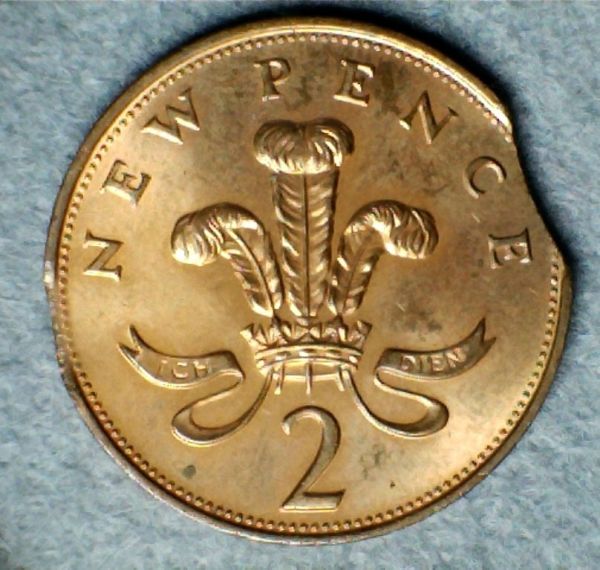 10. blank flan 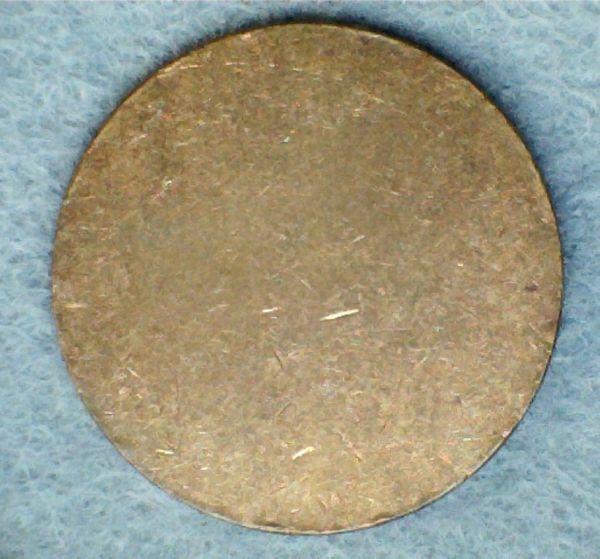 Weight and size correct for 2p. No rim. Silver to follow... |
|
Pillar of the Community
United Kingdom
837 Posts |
OH WOW !  I am extremely fascinated by the 1980 & 1971 2 pence coins  .Firstly regarding the 1980 2 pence, you are the first person to emerge with that thin one , all thin 2 pence coins I have seen were from 1971 & I have only heard of less than half a dozen ....iI am intrigued,were did you get your lovely coin from ?  |
|
Pillar of the Community
Australia
1041 Posts |
|
|
Pillar of the Community
Canada
4912 Posts |
coin 3 is a vise job and coin 9 actally looks like a double clip.
lovely coin.
Feel free to call me Will.
|
|
Pillar of the Community
United Kingdom
709 Posts |
Thank you for the comments. Coin 1 weighs 1.7g. Standard 1/2p coins weigh 1.8g, and the diameter is the same. I don't think this is an error on a wrong flan. 11. 1989 large 5p 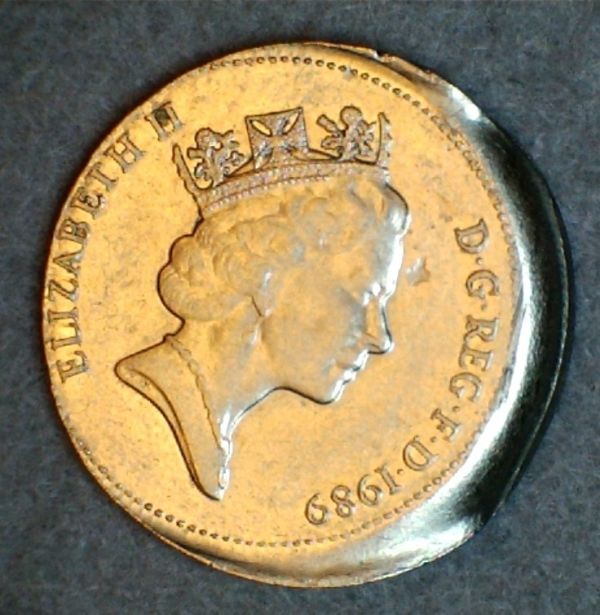 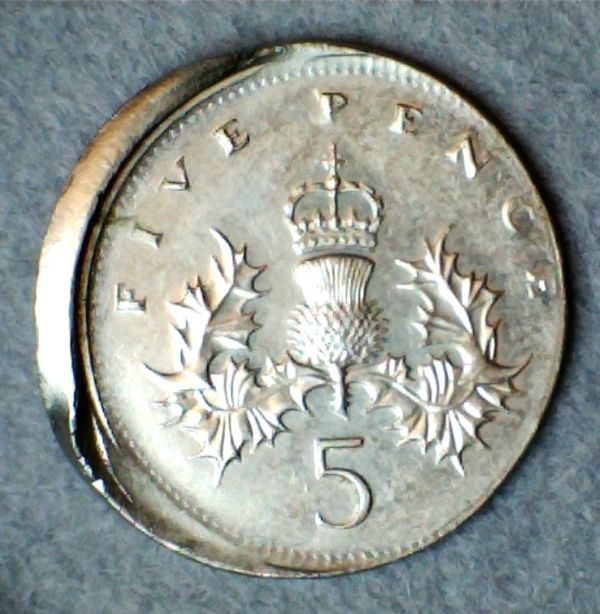 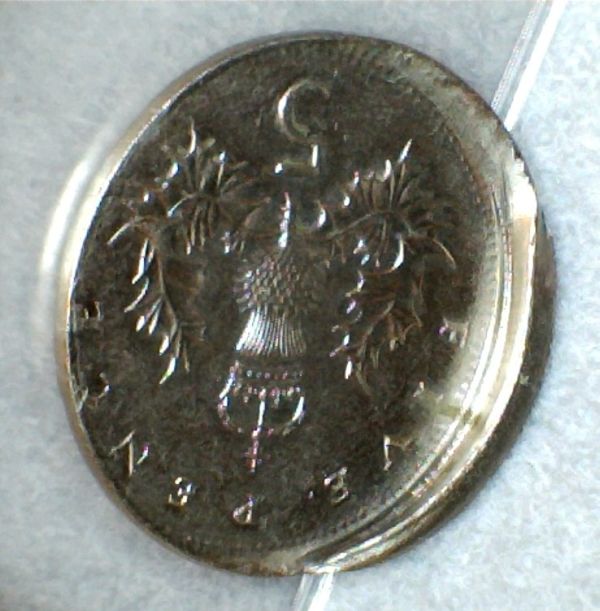 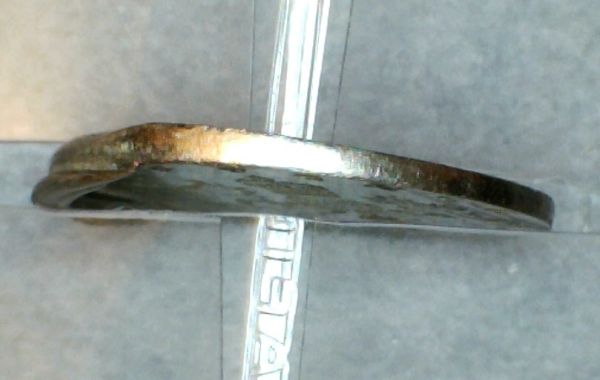 Weight 5.6g. All my other large 5p coins weigh 5.6g or 5.7g, apart from my 1968 which weighs 5.8g for some reason. I believe this one was caused by the coin being struck off-centre and squeezing partly up around the die. More... |
|
Pillar of the Community
Australia
1041 Posts |
yeh I'm with Dollarman coin 3 shed job for shore
|
|
Valued Member
United Kingdom
183 Posts |
I'm thinking that all the mirror results like coin 1 and 3 are
post mint defects.
HH
|
|
Moderator
 Australia
17006 Posts |
#1 is, I think, genuine - a partial brockage. If it's a squashed coin, they somehow did it in such a way that completely eradicated whatever design was underneath the squashing. I'm not seeing any trace of the word "HALF", for example.
#3: definitely a "vise job".
#6: I hate to break it to you, but this coin shows all the hallmarks of an acid-etched coin. Being placed in something mildly corrosive - Coca-Cola ought to do it - eats away at all points of the surface evenly, mostly preserving the design though with the "thinnest" design elements such as the lettering serifs and the . One way to check this hypothesis: is the coin noticeably smaller in diameter than a normal 2p? If it's an acid job the edge should have been attacked as well and losing over 1/3 of its mass should mean a millimetre or two should have been lost.
#11: yep, it's an off-centre.
Don't say "infinitely" when you mean "very"; otherwise, you'll have no word left when you want to talk about something really infinite. - C. S. Lewis
|
|
Valued Member
United Kingdom
183 Posts |
sap, how would you account for the reverse lettering of coin 1? also, the beads at 12'o clock seam alot more worn than on either side. this may be a good time to borrow some of the kids playdough? HH Edited by HawkHybrid
06/09/2014 04:55 am
|
|
Pillar of the Community
Australia
1041 Posts |
HH no 1 is a brockage from an elliptical clip. as I just have found one my self
|
|
Valued Member
United Kingdom
109 Posts |
As some people have already posted, half of these are genuine errors but unfortunately half clearly are post-mint. I do quite like the 5 pence "cap". That in my opinion is the nicest example here.
|
|
Pillar of the Community
United States
1699 Posts |
Although this is a dug-up thread, I'll still add a little bit. Quote:
HH no 1 is a brockage from an elliptical clip. as I just have found one my self The first coin is not a brockage from an elliptical clip. It is just a partial brockage. There are differences between the coin you posted and the OP's first coin. |
| |
Replies: 14 / Views: 6,519 |
|










 Posted 06/06/2014 5:14 pm


