| Author |
 Replies: 7 / Views: 1,485 Replies: 7 / Views: 1,485 |
|
|
Valued Member
United States
352 Posts |
are the "S" quarters a different composition than the business strikes? they are shiney-er 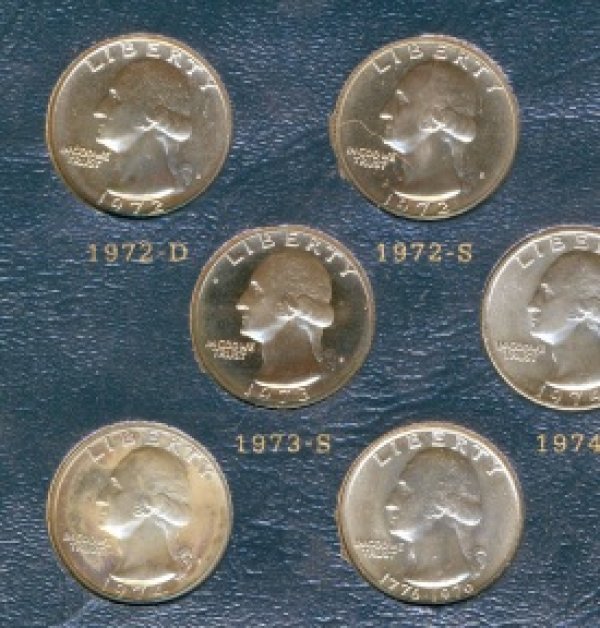 Edited by frodo
06/08/2014 6:22 pm
|
|
|
|
Pillar of the Community
United States
5231 Posts |
The S mintmarked quarters made after 1954 are proofs.
They are the same copper nickel clad as the circulation strikes up until 1992 to present when the proofs were issued in both copper nickel clad and 90% silver.
Also some 1976 S proofs and S uncirculated finish quarters were also struck in 40% silver.
Edited by jack jeckel
06/08/2014 6:31 pm
|
|
Pillar of the Community
Korea, Republic Of
1881 Posts |
No, mirror-like surfaces do not mean necessarily that they were struck in a different composition. The cameo and the mirror-like qualities come from the multiple striking and specially prepared dies. All Washington quarter proofs were 90% silver from 1936 to 1964. There were only clad proofs minted until 1992, when the silver proofs also started to be minted (with an exception of the bicentennial proofs, which had both the clad and the 40% silver version). |
|
Valued Member
 United States
352 Posts |
how do I tell the difference?
take them out of the album and upload here?
|
|
Pillar of the Community
United States
5231 Posts |
Quote:
how do I tell the difference?
take them out of the album and upload here? As I stated if it has an S mintmark and is 1969-1991 (other than 1976) it has to be clad. If it is 1992-present and has an S mintmark you would have to check the rim to see if it was silver. |
|
Pillar of the Community
United States
6130 Posts |
Expanding on the above posts, proof coins look different because they are prepared from polished dies and struck with extra pressure. In modern proofs (starting in the 60s if memory serves) the high points of the coin are frosted to achieve the cameo effect.
|
|
Pillar of the Community
United States
1300 Posts |
Proof coins: all metals,the dies are specially prepared typically double struck the planchets are high polished to give them a cameo proof appearance. Proofs are the best of the best and are collector pieces. The pre-1971 proofs the science wasnt mastered yet, so a cameo appearing coin was a nice and semi rare find after 1970 the proofs became very well done. And a non cameo coin became near non existant. Overall luster and brilliance whether the coin is 40%,90%or CuNi composition are intended for all purposes to be the best of the best. There is a modern marvels episode on the san fran mint when they were preparing Statehood Quarters for proof sets. The overall appearance of a cuni vs a silver coin are intended to be virtually identical. The only true and real difference can be found in the silver glow. The coin you inquired about in the OP is indeed a proof coin |
|
Pillar of the Community
United States
1300 Posts |
If ever in doubt as to whether or not a coin is silver composition there are several tests you can do at home,drop test a silver sounds different grab any quarter out of you pocket and grab a silver coin to hear the difference note: dont abuse numismatic value coins!! #2 view the rim and check for a copper core unless the coin is plated with something you will see copper #3 tissue test place a CuNi coin and a silver coin side by side..one will "shine thru" one will not make sure its a well lit area where you do it at..this always works unless the coin is gooey and or blackened. Silver will shine through in most cases!! As previously stated for simplicity's sake 1950-present quick history, 1950-1964 all proof coins were struck at the Philadelphia mint. 1965-1967 all special mint sets were supposedly struck everywhere there fore no mint marks from 1965-1967,1968 the reopened san franscisco mint probably due to public outcry for numismatic coins again,started striking proof coins, the composition of the proofs other than 1975-1976 bicentennial years was CuNi the bicentennials were struck in both compositions this year being 40% silver often called the silver clad coin, this year had both silver and non silver proof sets the silver proof set being a 3 coin and the cuni proof set being a 6 coin set plus the "blue" ike which was a 40% silver Non proof strike..so from 1968-til today there is CuNi proof sets..BUT in 1992 the san fran mint started striking the Silver Proof Set.. The coin holder (lens) was identical as the other proof aside from 1992-1998 they were had the word silver on them somewhere..in 1999 the mint changed the overall packaging although the lens stayed the same the coins were in a either blue or red holder the red holder had silver proofs in historically correct denomination half dollar dime and quarters. The process stayed the same although the packaging and lens colors varied from year to year slightly the major change is from 1992-present the mint offers two proof sets one is a silver proof set!! Hope this helps! I should note: the Eisenhower dollar coin,released in 1971 was offered in silver proof only from 1971-1974 called the brown ike the blue Ike was a MS or circulation strike although not intended for release to circulation blue "mint set"brown "proof" ikes contain just one silver coin.. After 1976 there was no silver coins minted until 1992 except for the commerative dollars and a few half dollar commeratives..those coin sets...were notable by the regular proof coins and the additional commerative dollar coin added in!! I can go on and on!! I am very passionate about these sets and have al ost put together a entire collection of these!! Aside from comms. Anyways hope this was helpful |
| |
Replies: 7 / Views: 1,485 |
|







 Posted 06/08/2014 6:30 pm


