| Author |
 Replies: 9 / Views: 2,431 Replies: 9 / Views: 2,431 |
|
|
New Member
United States
37 Posts |
This one has been a puzzler to me. It is a noticeably thin copper planchet struck in collar with a normal reverse. I don't have a scale now but it is considerably less in weight than a normal copper LMC. The obverse (wire) rim is lower in height than the field, with the area between the rim and the field lower still. I believe it to have been struck with a blank planchet between it and the obverse die, but I am guessing. Anyone? 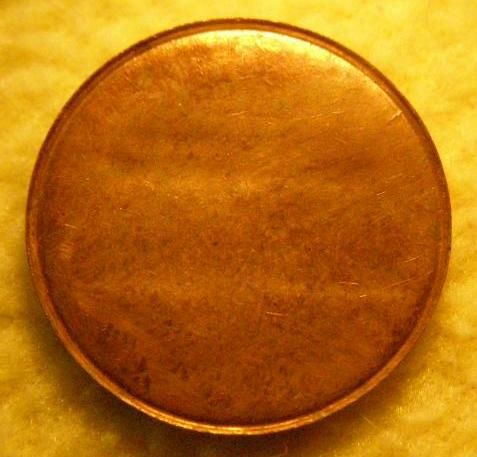 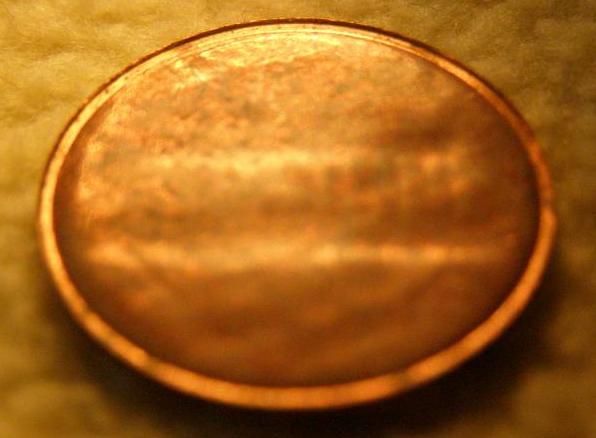 |
|
|
|
Pillar of the Community
United States
1699 Posts |
Can you post pictures of the reverse? - Is there a strong wire rim on the reverse? If so I would guess an in-collar uniface strike on a thin/split planchet.
I'm just thinking that because of the rim on the obverse of this piece, that it was possibly struck as one planchet and later detached. A strong wire rim on the reverse would rule this out - I would think.
At this point, with no reverse photo, I'm leaning towards the latter of the two.
Edited by ErrorCoins222
06/21/2014 11:29 am
|
|
Pillar of the Community
United States
8533 Posts |
Yes, both sides and an edge pic would be nice also.
Oregon coin geek.....*** GO BEAVS ! ! ! ***
|
|
Pillar of the Community
United States
2752 Posts |
It's a rolled-thin or split planchet that was struck in-collar beneath a presumably normal planchet. In other words, an in-collar uniface strike delivered to a thin planchet.
Error coin writer and researcher.
|
|
New Member
 United States
37 Posts |
Photo of the reverse: upon closer examination it has a thin "wire" rim.  Photo edge-on (bottom coin) compared to a normal 1974 LMC (top coin). It weighs 23.5 grains compared to a normal LMC at 47.995 grains (3.11 grams). Obverses up in photo.  Sounds like Mike is spot-on. |
|
New Member
United States
37 Posts |
EC222 is correct with first impression, also. (Sorry, I haven't figured out where the "edit" button is.)
|
|
Pillar of the Community
United States
1699 Posts |
Quote:
It's a rolled-thin or split planchet that was struck in-collar beneath a presumably normal planchet. So the "valley" on the inside of the wire rim is a result of being struck against the proto-rim of another planchet? I assume the strike helps form this as well. How can you tell that this piece was struck against another coin as opposed to being struck as one piece and detaching after-strike? |
|
Pillar of the Community
United States
2752 Posts |
I would presume the shallow gutter around the perimeter of the obverse face was generated by the top planchet's proto-rim. This cannot be a split-after-strike error because there is no trace of striations on the blank face. Additionally, the finning you can see on the reverse rim is indicative of the increased striking pressure produced by two stacked planchets.
Error coin writer and researcher.
|
|
New Member
United States
37 Posts |
I would love to see the "upper" error coin of the two. Would it have a partial collar "railroad rim"?
|
|
Pillar of the Community
United States
2752 Posts |
There's no way to determine if the top coin was struck fully within the collar. Most examples I've seen were.
Error coin writer and researcher.
|
| |
Replies: 9 / Views: 2,431 |
|







 Posted 06/21/2014 11:37 am





