| Author |
 Replies: 9 / Views: 1,627 Replies: 9 / Views: 1,627 |
|
|
Valued Member
156 Posts |
Second opinion please? Look at the nose, mouth and chin.. 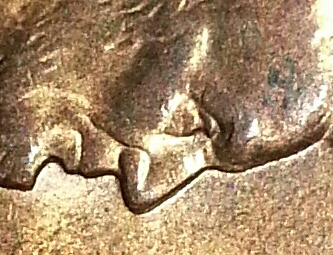 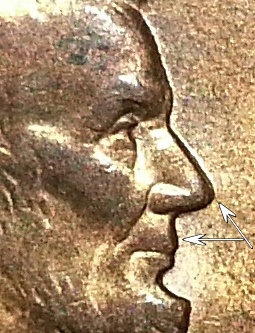 Edited by bkh2015
07/04/2014 11:32 am
|
|
|
|
Valued Member
United States
199 Posts |
Yep, that's a Lincoln  |
|
Pillar of the Community
United States
4809 Posts |
LOL!! That's him alright. I think what you are seeing is some Machine Doubling on Lincolns profile. I see this often enough and also Jefferson (could be that I CRH cents and nickels). I suspect found on all minted coins. |
|
Bedrock of the Community
United States
62064 Posts |
If the damage/doubling is on the outside of the bust design is present, almost always, it is machine damaged. There are a couple of dies that show the hub doubling on the outside profile of the bust, but even then, it is not on the outside edge of the bust design. 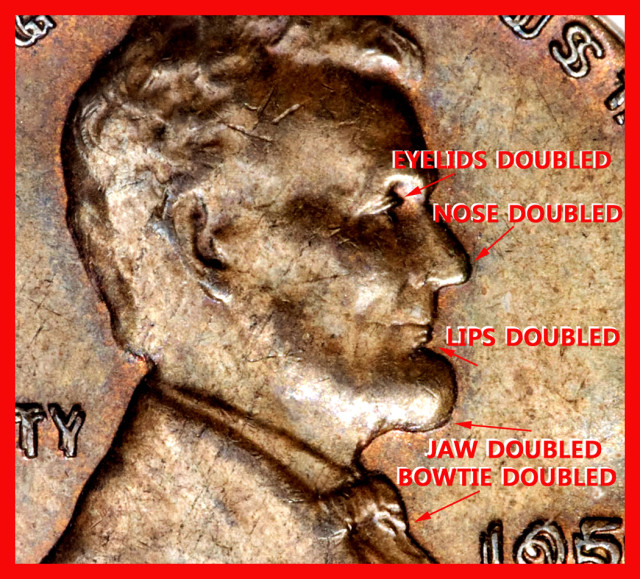 Note the doubling is spread to the south. 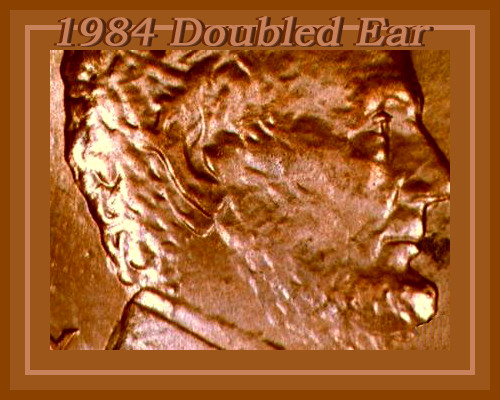 Extra ear, but also extra beard. Also spread to the south. These two show the hub doubling on the outside bust area, but not of the outside edge of the bust. Machine damage is caused by die movement during the strike that alters the devices/bust. |
|
Pillar of the Community
United States
4809 Posts |
I like the 1955 DDO pic with the labels; I think my eye tends to go to the doubling in Liberty/IGWT/Date and I miss the other important doubled features. |
|
Bedrock of the Community
United States
62064 Posts |
When you look closely as coins with side by side images, you start to notice the differences. The 1992 & 1993 differences I found on the obverse was found this way. I didn't have a book, so a side by side, looking closely at differences help me see the differences. Same way with the RDV 005 & 006. I discovered the differences in the shapes of the AME. So a closer look helps train the eye.
|
|
Pillar of the Community
United States
4809 Posts |
Yes - slowing it down and studying the specimens. I think that's what was driving my 1964 RDV question the other day. As I look at that specimen, I see what looks like doubling on some of the lettering in AMERICA. But it did enter my mind that there may have been another RDV in play only the dates seemed to make that prohibitive - or impossible.
|
|
Valued Member
United States
374 Posts |
I have typically found that, after looking for a particular variety, when I actually find it it becomes infinitely clearer. Even pictures and descriptions from the internet don't seem to help that much. I just wait until I have a "yeah, that's definitely it" moment.
|
|
Pillar of the Community
United States
4809 Posts |
|
|
Bedrock of the Community
United States
62064 Posts |
Sometimes something happens to a coin in circulation, then we think this is something new? If it is the only example that you can find or anyone else can find, it is not a year variety. It is a coin that was altered by circulation/intentional/or something else. When we are looking a coins, we need to consider the normal for that year. If there are several coins that look like this, then it might be worth a second look. The variety site does a good job of identifying reverse varieties. http://www.varietyvista.com/Lincoln...0Changes.htmWe would expect to find examples like these for the years provided. Note the 1973 reverse. Only one year for this design. So when we think we have found something new, then looking at different resources is a great help. Don't have a second example? I use HeritageCoin.com to find examples that I don't have a second or more example. Always good to get a second opinion. The sites are a great help and it just takes time to find out. |
| |
Replies: 9 / Views: 1,627 |
|










 Posted 07/04/2014 11:51 am


