| Author |
 Replies: 12 / Views: 4,163 Replies: 12 / Views: 4,163 |
|
|
Pillar of the Community
United States
2368 Posts |
How do the TPGs determine whether a scratch on an uncirculated coin is mild enough to only lower the grade a point or two or if it's bad enough to give it a details grade? Kind of a specific question, but I was just wondering. Thanks. Edited by wheatchaser140
08/02/2014 2:25 pm
|
|
|
|
Pillar of the Community
1028 Posts |
This is actually a good question and something I've always wondered.
I think the best answer I can give is what I have thought to myself sending in coins. I think to myself "Would I call thus a scratch or a mark?" If it's a scratch, it's a details coin. Anything longer than about 2mm or deep to see a defined ridge will almost certainly get a details grade.
|
|
Pillar of the Community
 United States
2368 Posts |
Quote:
Anything longer than about 2mm or deep to see a defined ridge will almost certainly get a details grade. What about isolated hairlines? I've seen coins graded 63 and under with a hairline or two longer than 2 millimeters before. |
|
Moderator
 United States
23522 Posts |
It's a completely subjective call on their part. Generally, larger scratches are tolerable as the grade goes lower (reasonable products of circulation wear), and location plays a role.
|
|
Pillar of the Community
United States
2368 Posts |
@SsuperDdave- Let's say the coin in question is uncirculated, and the hairline runs across most of the obverse portrait, but it can only be seen at certain angles/lighting. I know there's no right answer, but what would a TPG most likely do? |
|
Pillar of the Community
United States
4705 Posts |
Does it look like this? 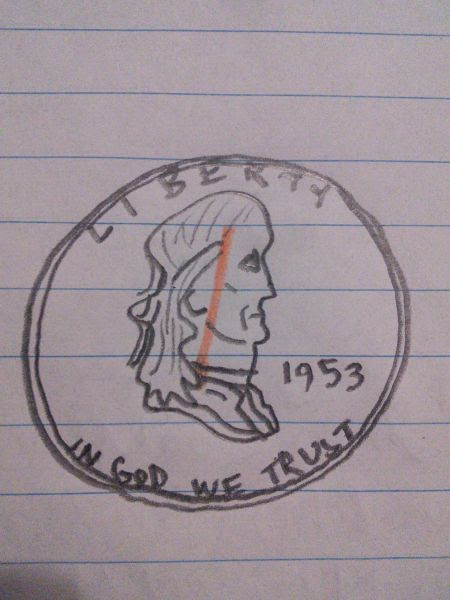 Sorry, I couldn't help myself! |
|
Pillar of the Community
United States
2368 Posts |
Quote:
Does it look like this? I'm hysterically laughing out loud right now! Oh my gosh that was hilarious...if I could high-five you through the screen I would, jimbucks!  |
|
Bedrock of the Community
United States
20753 Posts |
Not sure about a TPGS but I would assume where and how big a scratch is. I minor, hardly noticeable one on the reverse would or should hardly effect a grade or value. Even a minor one on the obverse may not effect anything to much but that too would depend on the size and location. And too if the scratch is sort of a gauge, that too could make a difference. Size, location, amount of and depth are all sort of what a collector, dealer or TPGS individual may consider.
|
|
Pillar of the Community
United States
4705 Posts |
wheat, you need to change your avatar to the sketch.
|
|
Pillar of the Community
United States
1476 Posts |
 DO IT, do it doit doit doit doit! |
|
Pillar of the Community
United States
2368 Posts |
You know what, I will change my avatar. To the Support Forum!
|
|
Pillar of the Community
United States
5825 Posts |
IMO the difference between a scratch resulting is a DETAILS grade or not depends upon its cause.
A scratch caused during the production process at the Mint should not result in a DETAILS grade.
A scratch caused during the post-production process (bag marks) should not result in a DETAILS grade.
Only a scratch caused after release to the public should be cause for a DETAILS grade of an otherwise BU coin.
|
|
Pillar of the Community
United States
5854 Posts |
It is hard to say without seeing the coin and how negatively it affects the eye appeal. As already mentioned, severity, location, number, and the grade of the rest of the coin all play a role. Older scratches that have toned over are going to be more tolerable than fresh scratches. Though you are probably referring to business strikes, I just want to mention that will sometimes find proofs especially those graded in the low 60's that have hairlines and/or scratches in quantity and severity that would almost certainly result in a details grade for business strikes. I think the best way to answer this question would be to go to the archives of one of the large auction houses and look at coins that the TPG's have detailed for scratches. |
| |
Replies: 12 / Views: 4,163 |
|










 Posted 08/02/2014 4:39 pm


