| Author |
 Replies: 12 / Views: 2,981 Replies: 12 / Views: 2,981 |
|
|
Valued Member
United States
136 Posts |
I posted this coin on the forum in January 2014. I put it away because I did not think it had any value. I got it out the other day and did some comparing too other 1944D Pennies. I checked about 10. One was 3.2 grams, most were 3.1 grams. 2 were 3.0 grams. one was 2.9 grams. I checked the diameter, and thickness of the 3.2 grams regular penny against the coin I have pictured here. They were the same. The one I have here weighs 3.2 grams. I took a magnet and slanted it and the regular penny slid off, but the one I have pictured here held to the magnet. This is not a good likeness of the coin, It looks almost U/C. There are spots that have peeled off and there is a silver color under the copper plating. This is either a counterfeit Coin or a altered coin, but if it had been altered with 2 layers of something, it would weight a lot more. I was advised to sand the edges, too find out what was under the copper coin. But, I am not going to do this, If by some far chance it is worth some money. 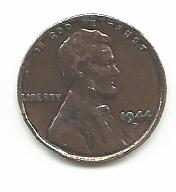 |
|
|
|
Pillar of the Community
United States
4703 Posts |
Let me suggest that you post some good pictures.
|
|
Pillar of the Community
United States
2368 Posts |
Agreed. Can't tell anything from those.
|
|
Pillar of the Community
United States
2189 Posts |
Quote:
There are spots that have peeled off and there is a silver color under the copper plating. Plating Lincoln cents didn't start till 1982. If it's plated then it's been monkeyed tinkered with after it left the mint. PMD |
|
Valued Member
 United States
136 Posts |
I don't have the equipment to send better pictures. I was hoping someone could answer these questions.
1. If it's a counterfeit-----Why would anyone spend thousands to make plates to make a penny?
2. If it is altered, how come the coin does not weigh more or larger than an ordinary penny. If they would have sanded it to make it smaller,(before putting 2 additional layers of plating on it) the letters, numbers and figure would have been removed.
|
|
Pillar of the Community
United States
7730 Posts |
It could be one of three things: 1) counterfeit/altered, 2) struck on a leftover 1943 steel planchet or 3) struck on a foreign planchet. To answer that you will have to submit the coin for TPG. |
|
Valued Member
United States
136 Posts |
What do you mean by TPG ? |
|
Pillar of the Community
United States
2189 Posts |
TPG "Third party grader" such as PCGS
|
|
Bedrock of the Community
United States
62064 Posts |
If it were steel it should stick to a magnate like a 1943 steel cent. If it is steel plated it would be a slight attraction. A steel planchet should weigh 2.70 grams. A copper planchet 3.11 grams.
|
|
Pillar of the Community
United States
4703 Posts |
Coop's answer pretty much puts this question to rest. Apparently someone steel plated it and then copper plated it.
|
|
Pillar of the Community
United States
2752 Posts |
It probably has a double layer of plating, with the deeper layer nickel. Plating doesn't weigh much, and the process of chemically cleaning the coin before plating can subtract some weight. Some plated coins weigh LESS than normal due to surface metal loss during cleaning.
Error coin writer and researcher.
|
|
Valued Member
United States
136 Posts |
Mr.Diamond you just saved me $29.00. I was going to send it to a grading company. Oh well easy come, easy go. I checked a nickel and it has about the same magnetic attraction as this penny.
|
|
Bedrock of the Community
United States
17884 Posts |
A US nickel should basically have NO attraction to a magnet so your cent must be only very slightly attracted to the magnet which would fit with a nickel plating.
|
| |
Replies: 12 / Views: 2,981 |
|







 Posted 08/18/2014 4:00 pm





