|
This page may contain links that result in small commissions to keep this free site up and running.

Welcome Guest! Registering and/or logging in will remove the anchor (bottom) ads and the security checks. It's Free!
To participate in the forum you must log in or register. | Author |
 Replies: 24 / Views: 6,802 Replies: 24 / Views: 6,802 |
|
|
|
Valued Member
 United States
88 Posts |
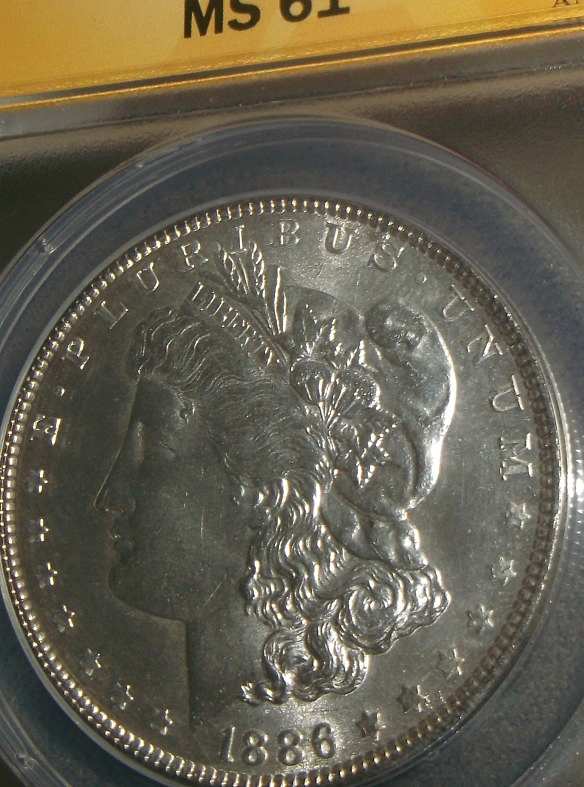
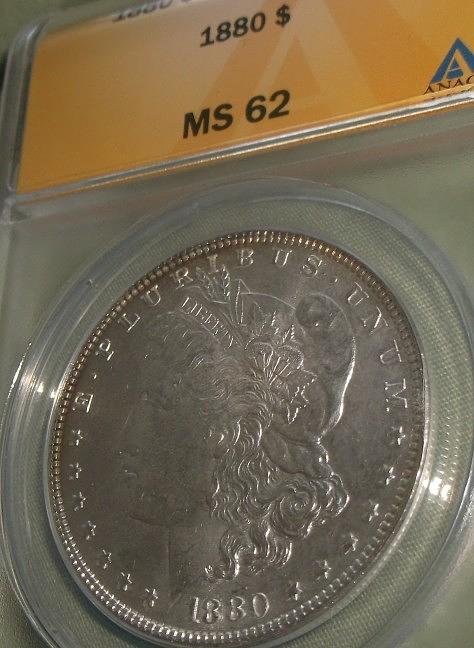
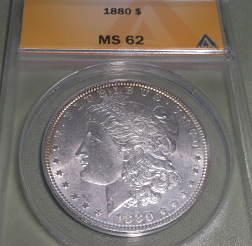
One final note. I INTENTIONALLY submitted alongside this 10-coin submission 2 coins that I KNEW were cleaned coins - they were an 1891-P Morgan and 1991 American Silver Eagle that I bought- they came in a "100 years 1891-1991 Encapsulated display.... The ebay seller refused a refund becasue the grading made the coins go beyond his return policy, despite promising me 100% that these 2 coins were not cleaned. Further, 2 other coins had that strange irridescent blue-green toning (I submitted post here on those 2 coins w/ photos a while back), and I submitted those. It is my opinion that the entire submission made the grader(s) uncomfortable, in that he/they probably thought I was trying to sneak cleaned and/or problem coins through the system....and maybe those stimulated the tentacles of suspicion for my entire submission of 10 coins - who knows? Thus, only 3 of the 10 coins I submitted had a real shot at >MS-64 - high grades, and these 3 coins are the ONLY 3 coins with inexplicable grading results. The blue-green toned coins I submitted are blue-green no more, as I was called mid-submission and asked to if I waned them conserved, not knowing that this meant they would come back as AU-55 and all toning completey gone 100% - that decision is my fault, and I should have done more research. Anyway, live and learn, and at some point, I will have to make a decision on the 1886-P (MS-61) and 1880-P (MS-62), as I believe the 1886-P to be MS-65 and the 1880-P to be MS-64 or better too. Thanks for listening on this long post -EndTheFed |
|
Valued Member
United States
88 Posts |
|
|
Pillar of the Community
Australia
2830 Posts |
quote: "Australian minted Imperial sovereigns ... were certainly recognised and accepted as legal currency in Australia until 1931"
- my understanding is that Sovs are still legal tender, but if you take one into an Australian bank, you'll only be credited AUD $2.00 for it.
quote: "did these gold sovereigns exchange freely in Australia?"
- they certainly did. My other hobby is historical research. I read a lot of Tasmanian newspapers from 1820 to 1850s. I often pass my eye over reports of thefts, whether by robbery, burglary, or otherwise. Even although sovs only began to circulate in England in 1817, they appear in crime reports in Tasmania in the early 1820s. My own ancestor arrived in Tasmania 1821, as a political prisoner. One of his co-offenders carried with him 70 sovs, apparently a gift from family and friends in the old country, to set himself up in the new country.
quote: "the Spanish dollar was de-facto legal tender in Australia ..."
- it certainly was, and in the same crime reports (above), they appear frequently. They also routinely appear in the Government Gazettes when rewards were offered for runaways, or government fees specified, etc.
Occasionally, I see notices specifying the exchange rate - nearly all of them give it as five English shillings for one Spanish dollar, or "Spanish milled dollar" as they are often (but not always) called.
quote: "in the mid to late 1800s, a sovereign could easily have been a month's wages ..."
- in 1907 the Commonwealth Court of Conciliation and Arbitration ruled that remuneration "must be enough to support the wage earner in reasonable and frugal comfort."
A 'fair and reasonable' minimum wage for unskilled workers, supporting a non-working wife and three children, was set at 42 shillings per week. Australian Soldiers who enlisted during 1914~1918 were paid at that same rate.
quote: "does this coincide with the decision ... rendering gold illegal to own in America too?"
- I'm not confident about answering that, but as I understand it, there were restrictions placed on the possession of gold in Australia from the 1930s until after WW2. I gather that these laws were not particularly effective, as there were exceptions for jewellery, and other items.
quote: "please help me understand why - seriously ..."
- in my view, the USD is propped up by its status as the world's "reserve currency". The US Government can export a lot of notes, for value, in the safe knowledge that that money is unlikely to circulate in the USA, and so not having any inflationary effect at home.
The chickens will come home to roost if other countries shift their preference to some other currency.
We've digressed a long way from methods of slabbing coins !
CCF is a wonderful place for lateral thinking.
Edited by Peter THOMAS
08/24/2014 2:38 pm
|
|
Moderator
 Australia
17006 Posts |
As Peter said, Australia never formally withdrew the sovereign from circulation - even today, you can still deposit them for $2 in a bank, if they can be convinced that it is genuine. Of course, they're worth a lot more than $2 in gold, and they have been ever since the dollar was introduced here, but I have bank teller friends who report unaware people still depositing them in the 1970s. We stopped making sovereigns in 1931 but they had never really re-appeared in circulation after vanishing during WWI (when the issue of half-sovereigns ceased and was not resumed) and the sovereign effectively became "obsolete" in 1933. Here in Australia, the banks have always worked with the government to withdraw worn or obsolete coins and send them back to the Mint for melting down; this would have happened to any sovereign deposited in a bank after 1933. Only in America do you have the bizarre situation where vast hoards of "government-owned" silver are sitting around unclaimed in banks and the government not lifting a finger to retrieve it.
In 1933, the government formally abolished the "in gold coin on demand" clause that since 1925 had appeared on banknotes - all Australian notes issued at that time were the equivalent of your "gold certificates".
After WWII, America was able to continue issuing high-quality silver coinage up to the 1960s. Britain was not so fortunate; the money loaned for the war and post-war reconstruction by the Americans was called in, and the Americans wanted their silver back. Britain couldn't afford to both pay America and put silver in the coinage. Australia was partly insulated from this by the large supplies of native silver we were producing; Britain had no silver mines.
Ironically, even though the British pound was an entirely fiat currency by 1947 and the Australian pound was still backed by half-silver coinage, the Australian pound was valued at less than the British pound. This was a deliberate policy of the Australian government, to help improve exports of Australian raw materials to Britain.
Don't say "infinitely" when you mean "very"; otherwise, you'll have no word left when you want to talk about something really infinite. - C. S. Lewis
|
|
Valued Member
United States
88 Posts |
I assume I will have to crack open all 16 of the coins in question that I am to have grsded at NGC, as they will not accept CROSSOVER coins from ANACS....and this is a matter of fact, based on the NGC website - I did not know this.
I was a bit surprised to hear that, when I explained that I was going to crossover ALL of my ANACS coins to NGC, and when I asked whether the ANACS conservation service would render any of my coins as "cleaned", ANACS replied:
While I cannot predict how NGC will describe your coins, I would expect they would only call a coin cleaned if the coin's surfaces showed signs of cleaning. The process we use to conserve coins does not damage the surface. If your coins had this type of damage, we would have called them cleaned. So, the short answer is, I would expect similar results from NGC as you received from us.
I am suprised to see that ANACS was unaware of the fact that they do not perform crossover services from ANACS coins? One would think that they would have known this, or has this policy changed?
-Keith
Edited by EndTheFed
08/26/2014 09:40 am
|
|
Valued Member
United States
88 Posts |
Thanks Peter and Sap. The information you both provided represents 98% of my reason for being in this hobby - it is utterly fascinating to study and learn the evolution of money and credit. Ludwig von Mises and his crew of exiled Austrians really were ahead of the curve in their anti-Kenyesian sentiments. Fiat money is a ticking time bomb, just waiting to implode. Although none of the former money systems were perfect, they certainly worked better than what we live with today...
It is not ridiculous to think that both World Wars, and the collective global military industrial complex's status as the biggest government cash cow al evolved from abandoning the gold standard and/or bimetalism. If governments (especially the US) were forced to stay within AT LEAST a reasonable fractional reserve, much less true hard money reserves.... most of the militray buildups would not have been possible. Perhaps this is a tremendous oversimplification, but the concept is probably valid
- We will never know, but I really do believe this
EndTheFed
|
|
Moderator
Australia
17006 Posts |
Quote:
It is not ridiculous to think that both World Wars, and the collective global military industrial complex's status as the biggest government cash cow al evolved from abandoning the gold standard and/or bimetalism. If governments (especially the US) were forced to stay within AT LEAST a reasonable fractional reserve, much less true hard money reserves.... most of the militray buildups would not have been possible. Perhaps this is a tremendous oversimplification, but the concept is probably valid I think you're getting cause and effect confused, there. It was the war that caused the abandonment of the gold standard, not the other way around. Governments that choose to wage war will find some way of waging that war and paying for that war - whether it's the "modern" technique of simply printing more money (and not all that "modern", since both the French and American Revolutionaries and both sides in the American Civil War used it), or the "old-fashioned" technique of diluting the precious metal content of the coins, or the even older-fashioned technique of finding some small, neutral, wealthy, defenceless tribes and beating the stuffing out of them until they handed over their gold. I'm not entirely convinced that the older ways were necessarily better. If history teaches us anything, it's that a lack of hard currency does not inhibit the tendency towards war - quite the opposite, actually. If a country is flat broke (as we Australians say), then they'd reckon they've got nothing to lose by declaring war on their richer neighbours. And if the rich countries want to prevent their wealth being plundered, they need to spend some of that wealth on maintaining a military force powerful enough to defend it. Don't say "infinitely" when you mean "very"; otherwise, you'll have no word left when you want to talk about something really infinite. - C. S. Lewis
|
|
Valued Member
United States
88 Posts |
Yeah you're right. I did have them flip-flopped. But yes, war ALWAYS causes governments to abandon sound money
ETF
|
|
Bedrock of the Community
United States
17884 Posts |
Quote:
I think you're getting cause and effect confused, there. It was the war that caused the abandonment of the gold standard, not the other way around. US maintained the gold standard through the first world war and abandoned it years before the second world war started. |
| |
Replies: 24 / Views: 6,802 |
To participate in the forum you must log in or register.
Disclaimer: While a tremendous amount of effort goes into ensuring the accuracy of the information contained in this site, Coin Community assumes no liability for errors. Copyright 2005 - 2026 Coin Community Family- all rights reserved worldwide. Use of any images or content on this website without prior written permission of Coin Community or the original lender is strictly prohibited.
Contact Us | Advertise Here | Privacy Policy / Terms of Use
|
| Coin Community Forum |
© 2005 - 2026 Coin Community Forums |
| It took 0.31 seconds to rattle this change. |
 |
|
| |
| |







 First Page


 Posted 08/24/2014 11:08 am