| Author |
 Replies: 24 / Views: 5,182 Replies: 24 / Views: 5,182 |
|
Valued Member
United States
415 Posts |
Hey, So I have picked up $1000 in Eisenhower dollars in my shop over the couple weeks at face value. They are something I just like to put in rolls and stash away. While separating through them and preparing to roll for storage I noticed a strange anomaly that I had seen when I purchased them, but didn't put much thought into it. Anyways, sticking right out was what appears to be a 40% silver Ike but when I look, Its a 1974 business strike. So I looked up what I could find, and all I could find was the very rare 1974-D business ike struck on a silver planchet. Being in disbelief, and noticing the coin appeared to be previously cleaned, I decided to "clean" the rim expecting to see copper. I used a soft Q-tip with acetone, and when that yielded no copper, I used a touch of MS70 coin brightener to the same result. Anyways, I snapped some quick pictures of it and will take make later on. I just want to get some opinions on what you guys think of it. For those who know what the 40% JFK's look like on the rim, this is spot on. Some pictures I took with 1974-D cupro Ike next to it. the coloring is much different then that of the cupro as well. Thanks for any opinions in advance, Matt 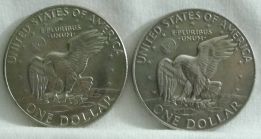 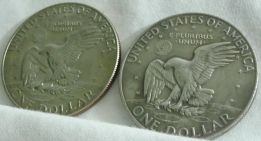  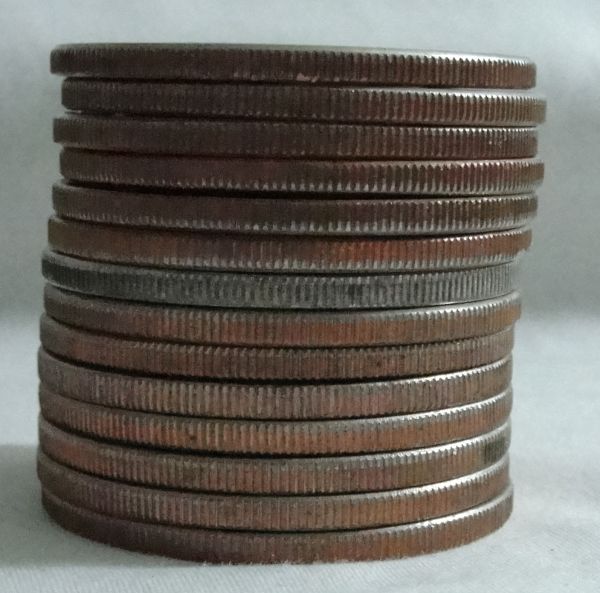 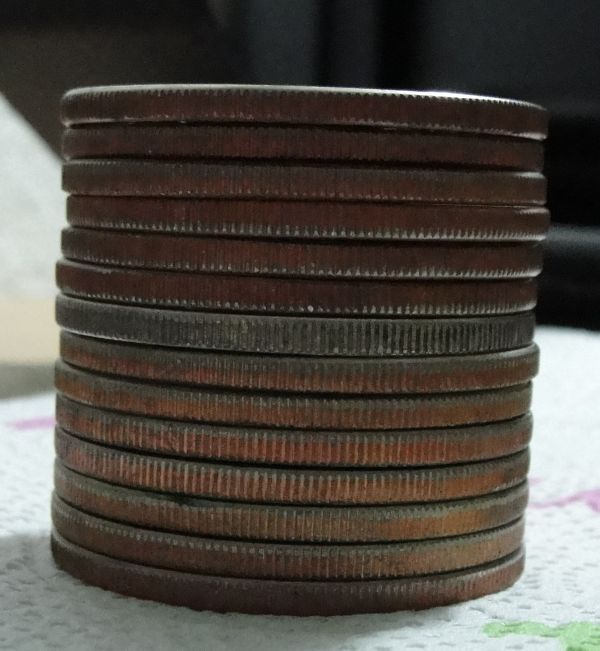 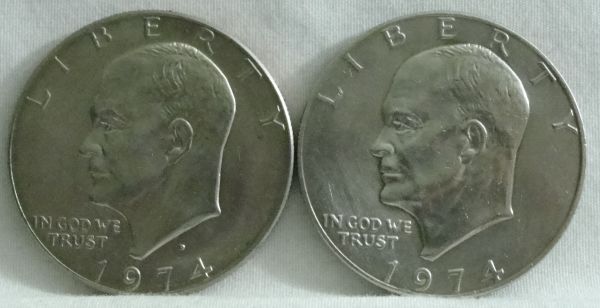 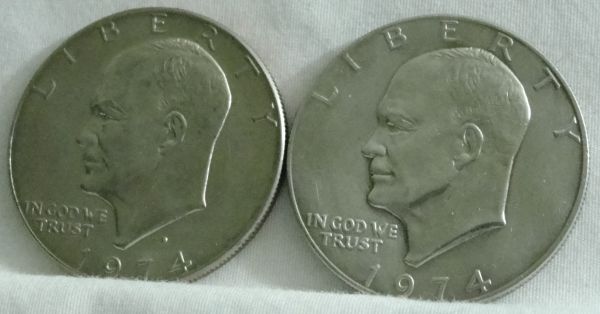 |
|
|
|
Pillar of the Community
United States
1512 Posts |
|
|
Moderator
 United States
56855 Posts |
Try the tissue test and also weight it then let us know the out come. John1  |
|
Valued Member
 United States
415 Posts |
Hey john, for that tissue test, Should I have any specific light over it when I look at it? My scale is at the store and will weigh it tomorrow. Matt |
|
Valued Member
United States
415 Posts |
Hey This is the result I got with a 1 ply Kleenex. While I am not sure what I am doing, I put one over the coins and shot the picture under light. Looks like my 1ply might be half-ply compared to your photo though lol. I must ask, Does this test work with 40% silver or is it a 90% test? Left is the coin in question. right is CLAD 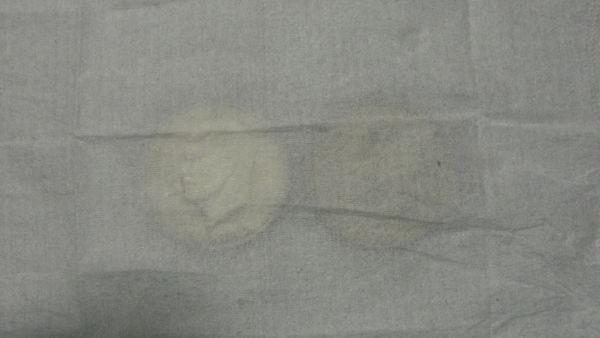 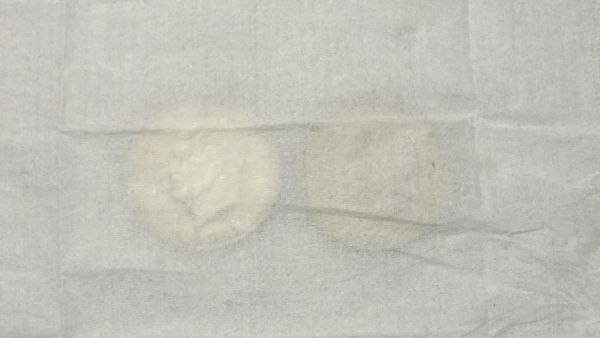 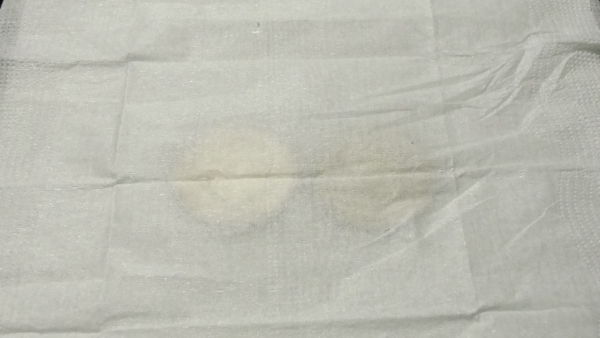 |
|
Pillar of the Community
 United States
2448 Posts |
|
|
Valued Member
United States
68 Posts |
Looks right,  with John, weight would be the kicker for me. I've seen plenty of plated coins, seems to be a new fad. Nice find if it is,  |
|
Valued Member
United States
261 Posts |
The weight in grams will tell the story. Tho I can't imagine how a planchet could be misplaced like that.
|
|
Valued Member
United States
68 Posts |
According to RedBook there are a few 74 and 77 D silvers, made in error |
|
Valued Member
United States
415 Posts |
I may send it to NGC for the heck of it. I have a submission pile adding up anyways. When I looked the coin up, I found 74-D's struck in error but nothing about a philly mint. Coin I can say for sure is not plated. I have a silver and gold buying shop, and silver plate would stick out on this piece like a sore thumb. I even considered scratching it and hitting it with acid, but if it ends up being silver Ill cry lol. It looks like it was polished or cleaned a long time ago. So I am sure it will come back as details, but if its a mint error on a silver planchet, It will still price through the roof. ESP if its a 1/1 POP....I appreciate all the answers guys. I am also going to try an ice test on it. Anyone else who can give opinions or ideas welcome:)
Matt
|
|
Valued Member
United States
415 Posts |
Hey, So the weight is closer to clad then it is to silver. Infact the clad coins are weighing higher then the one is question. This is my old digital scale but regardless of calibration, clad shouldn't weigh more then the silver planchet. Ill get more precise with a digital caliper tomorrow. While weight is a great test, I've learned from the past that when it comes to mint errors, esp ones with very little to compare too, weight shouldn't be used to debunk. but does bring my excitement factor down. I suppose it will come down to NGC. I'm sure they will use an expensive non mutilating test for composition. Does anyone know if they silver planchets have more reeding then the clad?
Matt
|
|
Valued Member
United States
68 Posts |
I don't think so. The design didn't change with material. Same dies.
|
|
Bedrock of the Community
United States
62064 Posts |
You might try taking a razor blade and make a scratch in the reeding on the rim above one letter on the edge of the coin. If it is plated, then the copper would show through on that area. I do this on the plated quarters to show they are plated. This way it doesn't damage the faces of the coin and you will find out it it was plated. The tissue test works on uncirculated coins. It they are toned/off color, the are harder to tell. This even works in an album. You can see which ones are silver without removing the coin from the book. But the above test will tell you quickly if it was plated without ruining the coin. |
|
Pillar of the Community
United States
6478 Posts |
You know, it could just have a little extra plating on it, over the copper.
|
|
Bedrock of the Community
United States
17884 Posts |
tissue test is good but can be fooled by plating. Weight can be inconclusive because the tolerance ranges of the clad and 40% almost overlap on the Ike dollar (They DO overlap on the quarter and half dollar) The next test (before you do a destructive test like scratching it or using acid on it, or spending a lot of money sending it to a TPG) would be to do a specific gravity test on it. THAT should be conclusive if done carefully. Clad SG would be 8.92 and 40% is 9.53 Tt is pretty easy to get accurate to one decimal place plus or minus .1 With care and good equipment you can pretty much nail that first decimal place and get the second to +/- .05
Edited by Conder101
09/17/2014 11:00 am
|
|
Moderator
United States
194606 Posts |
|
| |
Replies: 24 / Views: 5,182 |





 Posted 09/16/2014 8:04 pm





