| Author |
 Replies: 20 / Views: 4,795 Replies: 20 / Views: 4,795 |
|
Pillar of the Community
United States
767 Posts |
I've been eyeballing some colonial coins. I think it would be neat to have a coin from back when everyone wore those funny hats and rode horses and there was lots of cobblestone and stuff. Anything I should know about buying US colonial coins? Are there lots of fakes? Is there any way to know the coin was in the US and not Spain or Britain? Do you have any colonial coins? I want to start small. I''m interested in stuff like this: http://www.ebay.com/itm/231340186446?nav=SEARCHor this... http://www.ebay.com/itm/381005288352Edited by scottk
09/26/2014 8:27 pm
|
|
|
|
Moderator
 United States
16694 Posts |
This is my main collecting interest. When it comes to Colonial and post-Colonial Numismatics, the learning process is always ongoing. You can collect type coins, as I do, or concentrate on a specific series like the Connecticut Coppers where there are over 300 varieties some very common, some very rare to unique.
As a beginner, I would acquire some Connecticut Coppers. Very affordable on most and guaranteed to have circulated in the Colonies. There are fake Colonials out there and it takes time and experience to spot them...that comes in time. It's definitely an area of Numismatics that requires attention to detail and examination, especially when it comes to grading.
swcoin.ecrater.com
|
|
Pillar of the Community
United States
4432 Posts |
Hi Scottk ... You express an interest in U.S. colonial coins, but the pics are of ones that started across the pond. True, they may have spent some time here, but they're not US per se. That can be said of many post-colonial issues that targeted the U.S. but were struck abroad.
IMHO, there are a great many colonial copies bobbing about, mostly emanating from the 1960's, that can easily fool collectors nowadays.
I'd humbly suggest that you invest in the new Bowers (Whitman Publishing) book on U.S. colonials. That way, you can focus on the U.S. colonials. There are early British coins aplenty in the marketplace. If your goal is to simply accumulate a goodly number of colonial era coins, you can probably find many in the $10-$20 range. However, if you want to form a meaningful collection that you can appreciate many years from now, by all means, but the book(s). My personal feeling is that U.S. colonial coins are among the most undervalued coins out there. This is especially true for those that have decent, problem-free planchets. Good luck finding them!
|
|
Pillar of the Community
 United States
767 Posts |
Yes. Thank you. I've been researching the past few hours, and have discovered that very few of the coins on that auction site listed under colonial coins> US are actually US coins. It's alot like all those 1923 Peace dollars listed there as "Rare Key Date!" Oh well... Everyone's a crook. Edited by scottk
09/27/2014 12:11 am
|
|
Pillar of the Community
United States
4432 Posts |
Quote:
Oh well... Everyone's a crook. Hi again, Scottk IMHO, that's not a valid statement. I certainly don't like to think that everyone's a crook, as you say ... including me? I recommended the book to you that you might learn about colonials. Knowledge will take you far in this great hobby. You'll make fewer mistakes and much better purchases if you seek the knowledge. I firmly believe that there are many rare varieties of colonial coins out there, awaiting discovery by studious collectors. These rarities are constantly flowing in and out of dealer stock. Collectors who specialize in one numismatic avenue or another can profit, financially and otherwise, from that knowledge. Buy the book(s) and think positive!  |
|
Moderator
United States
16694 Posts |
I second that book ExoGuy recommended.
Excellent resource.
Those particular coins you linked to may have made it here during the period but there is no concrete proof they circulated. More likely souvenirs from across the pond.
swcoin.ecrater.com
|
|
Valued Member
United States
250 Posts |
English halfpennys and farthings circulated widely in the US colonies as well as other European and Mexican coins. Of course there's no way to prove what circulated where. But for the 2nd link you have above it appears to be a dug coin and the seller is in PA vs overseas. I'd like to think that it circulated over here to some extent and was lost before being found again. Again certainly no way to prove that but it's a valid theory, and at the least you are only out a few dollars for a coin that is almost 300 years old and a neat part of history. I'm far from an expert on colonials but do collect them, this is just my 2 cents...
Edited by kevro22
09/27/2014 09:41 am
|
|
Pillar of the Community
United States
917 Posts |
Something you might want to look into is the post colonial era of coins. Although they are dated after 1776 some of the colonies created their own coinage. The good part is they put the name of the colony on the coin making it easy to identify. There are tons of varieties to be found especially in the Connecticut coins. As others have said they can be very cheap and then varieties can be sold for thousands. Heres an example of a 1788 Vermont copper 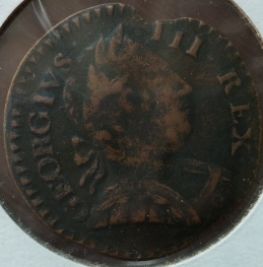 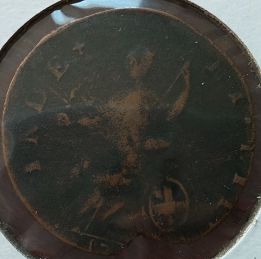 |
|
Bedrock of the Community
United States
20753 Posts |
Also, check out the Red Book by Whitman Publishing. |
|
Pillar of the Community
United States
3229 Posts |
Bowers book published by Whitman is an essential book for colonials and is a great read.
|
|
Valued Member
United States
179 Posts |
This is an area too broad to "collect" without some notion of what you want. Personally, I specialize in two realms, American Plantation Tokens and Vermont Coppers. Reading and research here is equally as important as acquiring coins. Be prepared to work in the 300-2000$ range to get nice coins. Conneticuts can, will and have driven people insane. Tooooooo many varieties!! Vermont Ryder 10 VF about a 600$ coin.   |
|
Pillar of the Community
United States
1211 Posts |
All I can say is... Collecting colonials is an entirely different subset of coin collecting. The rules that most numismatists live by are different in the colonial world. Do some reading and research before you take the plunge. It is rewarding but be prepared to have to "re-learn" the way you collect coins in general.
|
|
Pillar of the Community
United States
4432 Posts |
Quote:
Collecting colonials is an entirely different subset of coin collecting. Certainly true, jerseyben. It took me some time to acquire a genuine appreciation for the colonials with impaired planchets and/or ED. That may sound funny,coming from a guy who likes the counterstamps so much. Ambro51's coin is one that I'd not have given a second look, many years ago. Now, I regard colonials like it as treasure. The more that I study the colonials, the more I appreciate them. I think that they are among the greatest bargains, price-wise, in today's market. Why buy an S-VDB when you can own a decent Fugio for less? If I hit the lottery, I'll be buying early coppers and not gold! |
|
Valued Member
United States
88 Posts |
Here is a must book for the beginning collector that I highly recommend, I've read it 3 times. I have never read a book 3 times, but this one kept me fascinated from cover to cover:
THE LOST COINS OF EARLY AMERICANS!
STILL A SECRET!
by Todd Cook
Xulon Press
Good Hunting!
|
|
Moderator
United States
16694 Posts |
Quote:
Why buy an S-VDB when you can own a decent Fugio for less? Well, exactly. The simple answer, Colonials are undervalued both by collectors and the market (supply and demand ). Not a huge collector base as well as a weak demand. Fugio Cents are amongst the more available post Colonial coins. Grading also comes into play. swcoin.ecrater.com
|
|
New Member
United States
20 Posts |
Hi scottk,
I came to colonials after collecting large cents and other federal issues. I like the variety of colonial coins and designs, the history, and the relative availability of material in collectable grades. The period from roughly 1500 to 1850 gave rise to so many varied attempts at currencies and money systems in the New World, that it could take a lifetime to lean about them all.
I would echo other people's suggestions to the Whitman's Encyclopedia of Colonial and Early American coins. It is a great place to start learning about colonials.
Another good book is Will Nipper's book called "In Yankee Doodle's Pocket". It is just a wonderful mix of numismatic reference material and history, and makes colonial coins come alive.
But I would also put in a pitch for the Colonial Coin Collector's Club (called C4 for short). C4 has over 300 members and they are a fun bunch. They have an award winning newsletter, an annual convention, and a lending library. There is also a Yahoo Group forum dedicated to colonial coins that a lot of C4 members chat on. I am still kind of new to this CCF forum, so I am not sure if I am allowed to post a link to C4's club page, but if you google Colonial Coin Collector's Club, I am sure it will be the first thing that comes up.
Good luck!
Peter Griffin
|
| |
Replies: 20 / Views: 4,795 |










 Posted 09/26/2014 11:35 pm


