| Author |
 Replies: 8 / Views: 1,205 Replies: 8 / Views: 1,205 |
|
|
Pillar of the Community
United States
4337 Posts |
I just received this in the mail. The second I handled it something felt off in its size. It weighs 2.60 grams as it should although there is wear so I would have thought it would come in at 2.5 or so It comes in on my caliper at 19.19 where it should be 18.50 for the issue. Even 1828 and prior are only 19.00. What gives with that? Reverse is rotated 20 - 25 degrees which I believe is typical of a contemporary counterfeit bust dime as extremely rare as they are. Contemporary Counterfeit? Can anyone assist? **edited to ask if "they" would have known to make it a small 10C variety?** 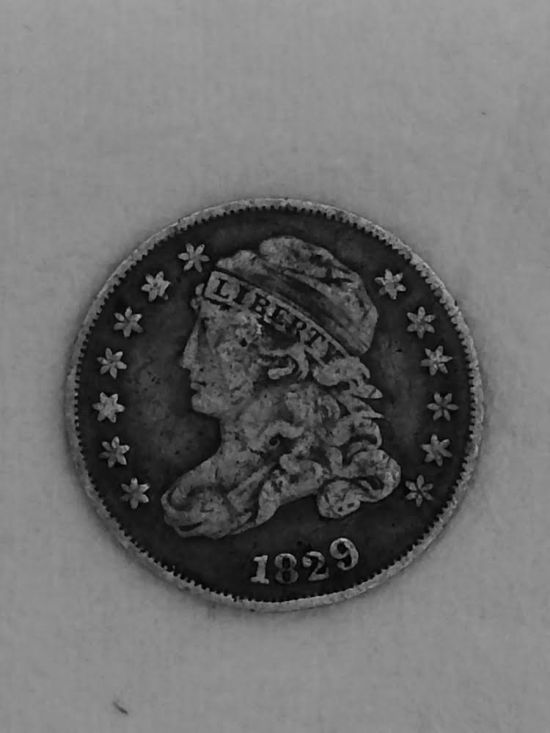 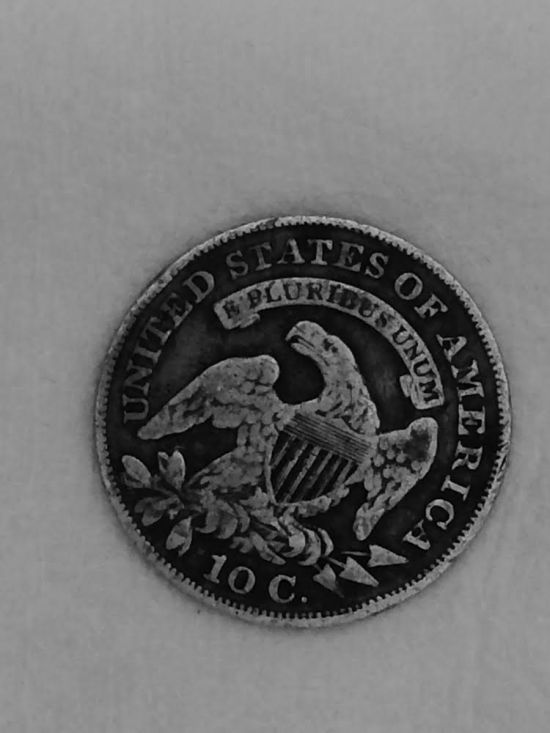 Edited by dsfreeworld
09/29/2014 3:11 pm
|
|
|
|
Pillar of the Community
 United States
4337 Posts |
leftover planchet from 1828 prior to size change? Is this possible?
JR-7?
JR-8?
Super confused...
Edited by dsfreeworld
09/29/2014 3:16 pm
|
|
Pillar of the Community
United States
937 Posts |
My first question is Are you using a set of dial vernier calipers?
If yes, Are you sure the dial was at zero?
If yes to both
As I recall (and this is just by memory as I am away from my reference books) They were struck in a loose collarso there could have been a bit of expansion upon striking, but that does seem a bit much. Could be broadstruck, perhaps?
|
|
Pillar of the Community
United States
4337 Posts |
digital calpier. very precise, has never been wrong. for reference I also measured several others:
1811
1814
1823
1824
than larger
1833
1834
1836
it could be broad struck! I never thought of that. It does not strike me as counterfeit with the appointments being so spot on to all of my others. #confused
|
|
Moderator
 United States
23522 Posts |
Well, if it were done with a transfer die then by definition it would match a known variety.
|
|
Pillar of the Community
United States
4337 Posts |
dave, does it look "off" in any way?
|
|
Pillar of the Community
United States
6370 Posts |
Bill Fivaz has an interesting collection of classic US coins that seem broadstruck but are actually PMD. They are made by putting the coin under a strip of leather and a hammer/mallet is applied until the coin is noticably larger in diameter. Possible explanation. |
|
Bedrock of the Community
United States
17884 Posts |
If it was broadstruck there would be no reeding. Even though the collars back then were not the tight fitting close collars that were used later, they did still impart the reeding on the coins during striking. The reeds were not applied by the Castaining machine during the rim upsetting like the lettered edges were on the capped bust halves. Typecoins explanation is a possibility. That is how "Texas sized" coins are produced. At one point there was a unique, I believe 1833, Half Dime that was oversized and it was finally determined to be a coin that had been enlarged by that method. |
|
Pillar of the Community
United States
4337 Posts |
Condor, all reeding. So if not a contemporary counterfeit and actually enlarged the way that has been explained, would you all consider it a "details" designation due to the PMD? Worth keeping as a numismatic curiosity in anyone's opinion? |
| |
Replies: 8 / Views: 1,205 |
|










 Posted 09/29/2014 3:18 pm


