| Author |
 Replies: 16 / Views: 3,883 Replies: 16 / Views: 3,883 |
|
Pillar of the Community
778 Posts |
Are weak legends like this (possibly due to having been Struck Through Grease), common or unusual for Canadian dollars? 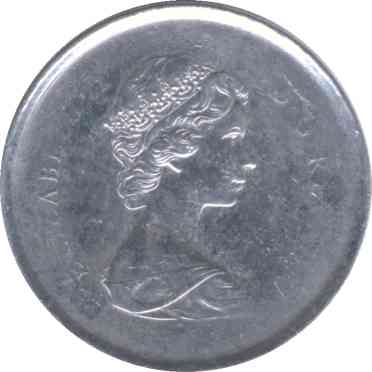 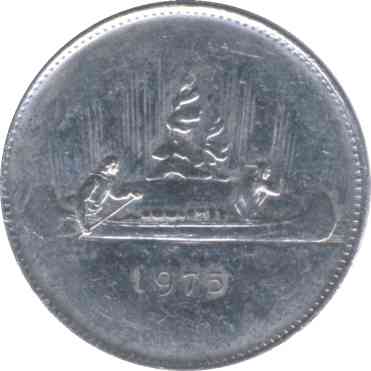 Thanks, Bill |
|
|
|
Pillar of the Community
Canada
1700 Posts |
I remember hosting a debate thread/poll on CCF last year about whether the struck through error should increase or decrease the value of coins. I believe that the result showed a 50/50 divide.
The reason why I'm bringing that up is because from that thread there were a few posts that relate to your coin. I think that give your coin is still highly identifiable and of high grade, it's quite unusual, especially due to the fact that the grease is around the outer part of the coin. In other words, the configuaration of the grease is rather unique. Speaking of value, it's certainly got some premium.
|
|
Pillar of the Community
Canada
1192 Posts |
That is a strange looking coin. Seems very unlikely that there would only be grease all the way around the outside, while the centre was unaffected. My guess would be that this coin spend a significant amount of time mounted in a bezel or was subjected to some form of artificial wear and tear.
|
|
Pillar of the Community
Canada
2528 Posts |
Pokermandude: it's unlikely, but possible. I've seen pics of LMC greasers having all the wording gone but the bust intact. SPP also has a 50-cent coin that is struck through with all the beads gone but the coat of arms largely intact. |
|
Bedrock of the Community
Australia
21789 Posts |
If there is lots of grease or other detritus of a greasy nature that interferes with the struck image, it will reasonably quickly travel towards the rim of the die, and thus preferentially affect the legends, rather than the central die features.
It has been quite a while since I have seen a coin this badly affected, but it seems to more often occur with smaller coins.
I would consider that this particular coin may have an increased value premium compared with other 'greasers'.
|
|
Moderator
 Canada
10473 Posts |
I think it is a very legitimate error... I love it...
"Discovery follows discovery, each both raising and answering questions, each ending a long search, and each providing the new instruments for a new search." -- J. Robert OppenheimerContent of this post is licensed under a Creative Commons Attribution-NonCommercial 3.0 Unported License. See: http://creativecommons.org/licenses...0/deed.en_USMy eBay store
|
|
Moderator
Canada
10473 Posts |
The dollar is now in my possession. It is a very legitimate error. The weight is within RCM tolerances for nickel dollars, and I suspect this error is a die set-up strike (pressure test strike). Note the depth of detail in the deeper part of the dies (Queen's hair, gunnels of the canoe) and the lack of detail toward the rim (remember that the dies are slightly convex, which helps with high speed production. The coin is reeded, so the collar was fully engaged. I love it... soon it will find a place in my PCGS showcase of nickel dollar errors: http://www.pcgs.com/SetRegistry/sho...aspx?sc=1621Thanks again to Bill... a gentleman numismatist here at CCF. "Discovery follows discovery, each both raising and answering questions, each ending a long search, and each providing the new instruments for a new search." -- J. Robert OppenheimerContent of this post is licensed under a Creative Commons Attribution-NonCommercial 3.0 Unported License. See: http://creativecommons.org/licenses...0/deed.en_USMy eBay store
|
|
Moderator
Canada
10473 Posts |
Well, some input from the experts (thanks Fred and Mike) have told me that since this coin is fully reeded - it cannot be a die set-up strike. So, after a very light acetone dip, I can see it was struck by a filled die, possibly oil or water. The good news though, revealed by the acetone dip, is this was a proof like strike!! Very cool, as proof like errors in general, are quite rare.
"Discovery follows discovery, each both raising and answering questions, each ending a long search, and each providing the new instruments for a new search." -- J. Robert OppenheimerContent of this post is licensed under a Creative Commons Attribution-NonCommercial 3.0 Unported License. See: http://creativecommons.org/licenses...0/deed.en_USMy eBay store
Edited by SPP-Ottawa
10/22/2014 8:17 pm
|
|
Bedrock of the Community
Australia
21789 Posts |
It is NOT a die pressure trial.
The evidence for a die pressure trial (low pressure), can be found in the lack of detail of the high points in the design.
Queen's hair in this case is relatively well struck up. With low die pressure, the lower parts of the design are struck up, but not the high points.
With greasers, some of the detail on the die is filled in, and so that detail does not appear on the coin
|
|
Pillar of the Community
Canada
1505 Posts |
Absolutely amazing how you guys can read coins, simply amazing.
my question is, how sure are you about your "readings"?
are there other possible options / answers?
just asking
|
|
Bedrock of the Community
Australia
21789 Posts |
If you go to Google images, search ' Grease Filled Die' and 'die pressure trial', you should find other examples pictured. (Google images is a very useful numismatic tool) |
|
Moderator
Canada
10473 Posts |
So how does one distinguish such a coin being struck through grease/oil versus 'insufficient ram pressure', as shown at the bottom of this link: http://www.error-ref.com/weak_strik...rampressure/Both coins (the Andrew Jackson dollar and mine) share similar attributes... "Discovery follows discovery, each both raising and answering questions, each ending a long search, and each providing the new instruments for a new search." -- J. Robert OppenheimerContent of this post is licensed under a Creative Commons Attribution-NonCommercial 3.0 Unported License. See: http://creativecommons.org/licenses...0/deed.en_USMy eBay store
|
|
Pillar of the Community
Canada
1505 Posts |
wow, very interesting
I had no idea
thank you
|
|
Pillar of the Community
Canada
2632 Posts |
What ever was on the obverse die or planchet (grease/water or both) caused this coin to strike up and look the way it does. Denticles on the reverse and nothing on the obverse tells me something interfered with the resistant pressure (anvil) IMHO
Wouldn't a lower pressure strike (with equally worn dies) show somewhat the same lack of design on both sides? - as opposed to one sharp die and one half worn, then one side would appear weaker although even pressure was applied.
just my opinion.
|
|
Pillar of the Community
Canada
693 Posts |
For a weak-strike vs struck-through debate I think we'd really need to see the rim/reeding. The article SPP linked to talks a lot about that.
|
|
Pillar of the Community
Canada
2632 Posts |
New pics all the way around would be awesome.
|
| |
Replies: 16 / Views: 3,883 |










 Posted 10/05/2014 9:42 pm


