Quote:
Is "Late Roman Bronze" the name of the denomination or is there a Latin word for it?
One of the things which you will discover once you get involved with ancients collecting is that there are gaps in our knowledge. We know some things, such as the list of names of the emperors and when they reigned, but other things - even simple things like "what did the Romans call these coins?", or the denominational relationships between these coins and those other coins - we simply don't know. Nobody bothered to write it down or if they did, the writings have been lost. The only word recorded in the surviving writings to describe them is "nummus", which is simply the Latin word for "coin"; whether this was supposed to be the proper name for this denomination as well is unknown. The word "follis" is also attached to them, though this more properly belongs to either earlier or later coins.
Quote:
How can you tell what the legend says? I can't make out a single letter.
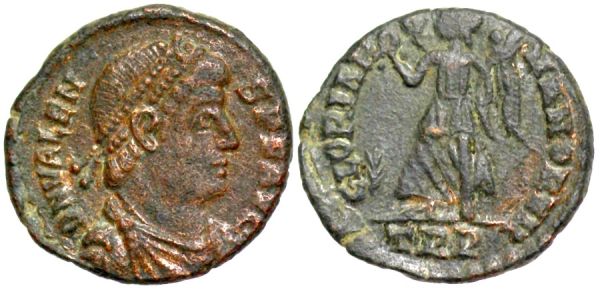
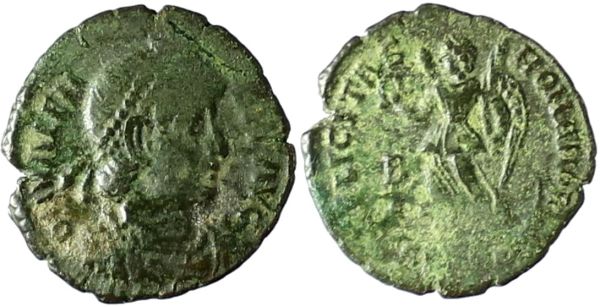
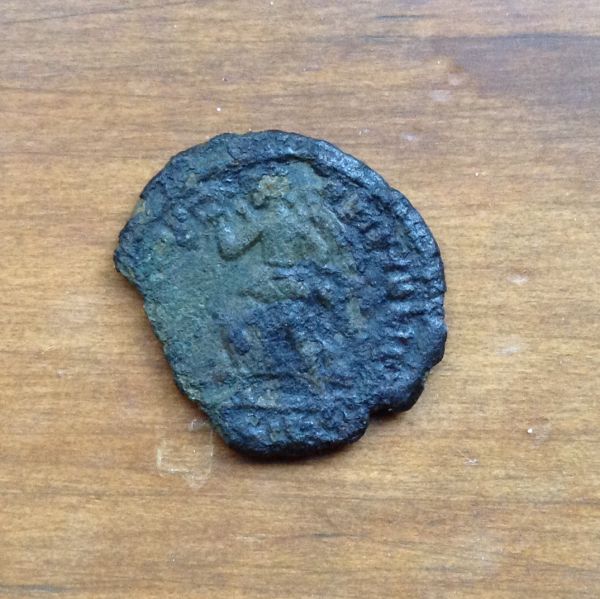
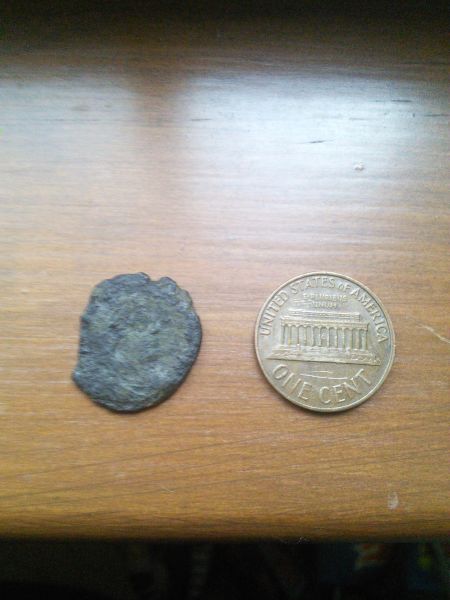
Reading damaged and/or badly worn ancient coins is a skill that takes practise and experience. In this case, experience helps a lot; coins from this time period were fairly rigid in their design; if the coin has Victory (a winged-angel-like figure) walking, then the legend must read SECVRITAS REIPVBLICAE or some variant thereof, since that is the only legend to appear with this coin type at this time. Then practice comes into play: once you identify the rough type and can match it with a
reference example, you know what it's supposed to say, so you can match up some of the blobs with the letters that they're supposed to be. In this case, REIPUBLI is fairly clearly readable.
Quote:
Anything else I can do to help narrow down the emperor?
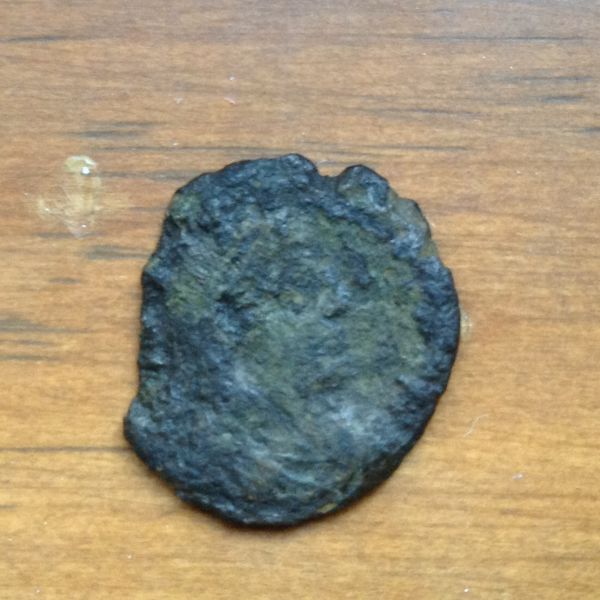
In theory, we can apply the same principles used on the reverse on the obverse as well, to narrow down the emperor's name. Unfortunately, this piece is I suspect too far gone to ID it further by the name; the parts where the most useful letters ought to be are exactly the parts where the edge of the coin is most corroded away. And portraiture on the coinage of this period simply isn't reliable enough to distinguish one emperor from another just by the portrait, as you can on many earlier Roman coins.
Don't say "infinitely" when you mean "very"; otherwise, you'll have no word left when you want to talk about something really infinite. - C. S. Lewis












 Posted 10/10/2014 3:48 pm