| Author |
 Replies: 17 / Views: 7,734 Replies: 17 / Views: 7,734 |
|
Valued Member
Australia
75 Posts |
This coin is a fake ebay item 111486150861The obverse die on the fake is derived from a different hub than that used in 1916. If you look at Jon Saxton's coin - http://www.triton.vg/H16Cmule.htmlyou can see that the I in KING is between denticles. On the coin in the ebay listing the I is at a denticle. Edited by agent86
10/15/2014 11:39 pm
|
|
|
|
Pillar of the Community
Australia
1041 Posts |
i hope not I am negotiating on it right now and have for 2 days this is the last listing he had for this coin 111481392713 on ebay |
|
Pillar of the Community
Australia
1041 Posts |
also there is some shill bidding going on
|
|
Pillar of the Community
Australia
852 Posts |
It looks like the coin has been photographed both before and after a mild cleaning. The blurb says it was collected back in the late 50s, so can anybody recall seeing this particular coin or is a fake history being created? Good spotting about the I.  |
|
Pillar of the Community
Australia
2830 Posts |
to my eye, the obverse looks cast.
|
|
New Member
Australia
42 Posts |
Shane,
I would be VERY wary of this coin. The wear on each side is quite different - much greater one side than the other.
The position of the I lined up with the denticle is not, of itself, convincing evidence as there was often variation in the position of the denticles in some of those early release coins.
The other thing would be to have it accurately weighed and its thickness to be checked with a micrometer to see if any variation exists there.
Cheers
Peter (notcb)
|
|
Valued Member
Australia
163 Posts |
|
|
Pillar of the Community
Australia
852 Posts |
notcb, the variation in the denticles is normally only minute (slight hub doubling, Mechanical Doubling) and nothing like this level of difference except when 2 different master dies are used (like the English and Indian obverses on the pennies). Now I know from my limited Indian 1/4 Anna coin collection that there were at least 2 masters, but I don't know if both were in use in 1916 and even if they were it would imply that the error of muling was done twice. The weight appears to match the 1/4 anna and the wear is not unusual as the obverses usually grade lower than the reverses and it isn't that different to a sample of halfpennies that I compared it to. Anyone know if the alleged restrikes actually exist and if they do then was a die from the other master used? PeterT,if the obverse looks cast then why not the reverse? You cannot cast one side only. |
|
Pillar of the Community
Australia
852 Posts |
Did a quick search online and found the I between the denticles for 1913, 1916, 1918, 1919, 1925 and 1926. I at a denticle for 1927,1928,1929,1934,1935 and 1936. So this might be a restrike as the mint would be more likely to have the newer obverse die in storage. A good test is that The Royal Mint sent out the specifications for a different alloy mix in mid 1921 to the branch mints. So metallurgical analysis (such as non destructive XRF analysis) might show the wrong alloy for 1916 was used. Even the right alloy wouldn't be conclusive as forgers have been known to melt down old coins to make the blanks. |
|
Pillar of the Community
Australia
1041 Posts |
just one thing about the triton page and my mate john saxton we will loose that site soon as he has his cancer back again and has not long to go .GOD BLESS HIS SOLE nicest bloke you will ever meet and one smart coin cookie
|
|
Valued Member
 Australia
75 Posts |
That is awful news about Jon. He has always been one of the most decent and helpful blokes in the hobby.
|
|
Valued Member
Australia
75 Posts |
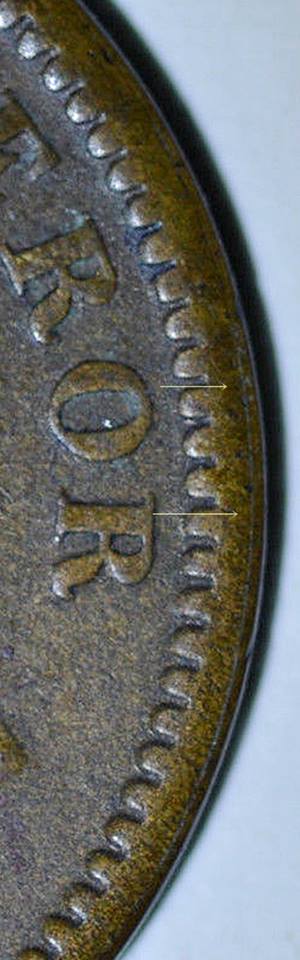
As far as this ebay coin is concerned: The obverse die differs from the genuine coins owned by Jon Saxton, Mark Duff (see the becnchmark collection - https://www.coinworld.com/insights/...oins-.html#), and the one in the Powerhouse Museum ( http://www.powerhousemuseum.com/col...irn=302006). These three coins have all been properly verified, including being x-rayed. The obverse of the ebay coin is an obverse not used until the mid to late 1920s. As pointed out by rbarat there is an apparent join on the coin. It is a fake. Shane if you buy this coin, be aware that you are purchasing a fake. nealeffendi, it is time to face reality. Your friend is selling a fake. It is quite possible that the fake dates from the 1960s or 1970s and that he had nothing to do with its creation, but it is fraudulent to sell it. It is a fake. |
|
Pillar of the Community
Australia
1041 Posts |
|
|
Pillar of the Community
Australia
852 Posts |
Hi Agent 86. I accept that it isn't a genuine mule from 1916 based on the post 1926 obverse. It may be a restrike, now collectors pay big dollars for mint restrikes from India (like the penny and halfpenny "proof" coins struck for collectors in 1965), but if it is a restrike then why would the die strike a 2 pearl obverse? Having only read about the restrikes I cannot confirm that they are not a mirage, if they exist then they should all have the same level of uncirculation (probably 8 pearlers with rust pits and plenty of die repair work). I cannot find where rbarat points out the apparent join.  I don't know the seller personally, if he doesn't know it is a fake then he isn't acting fraudulently. If he does then that is disappointing. The most important point How does anyone know the Powerhouse coin or the Duff coin or the Saxton coin is genuine? The verification was done back in the mid 1960s and all an x-ray proves is that it isn't 2 sides stuck together. Any forger of high standards would make dies, perhaps even have access to all the dies in storage in India (this was the precise time that the Indians were making all sorts of restrikes). If you have seen some of the David Gee fake coins then you will see what is possible for a determined faker to make and have thought of as genuine. Have they been XRF analysed for pre/post 1921 alloy composition? Just because mints and museums claim a coin is genuine does not make it so. As an example the Melbourne Museum have mislabled a number of coins in their collection and their coin collection curator (John Sharples) has published a number of papers on coins that are full of errors. The Canberra mint declared the 22/21 overdate threepence not a genuine overdate based on the false opinion that Royal Mints had standards that preclude the overdate (completely ignoring that the mints then were OK in using far worse dies like the 1921 double die penny). The Duff coin is in a NGC slab, I have no trouble in finding a dozen pre decimal coins that they have wrongly slabbed. Experts get things wrong all the time, even worse is that they might not even be experts in that particular coin or field of study. |
|
Valued Member
Australia
75 Posts |
IT IS A FAKE.
The join is visible just inside the rim.
Look at it and as I said before, get a grip on reality.
Enough people who know what they are doing have looked over those mules during the past 50 years. It is accepted they are real and for good reason.
If you look carefully at the Saxton coin you can see an excellent reason why it is genuine. It's up to you to see it as I'm not going to tell you what it is.
|
|
Pillar of the Community
Australia
1041 Posts |
david gee well I have read all the stories and collected lots of what he had made but wow HE SHORE GETS BLAMED FOR so many fakes ...... he was good but just didn't do that many of what he is given credit for I don't feel last status auction he had about 50 trials all to david gee ..... don't think so imo I have seen over 50 trials in the last year to david he only copied the most famouse coins I feel or that's what the die makers told to police and he was found with not 100s of trials
|
| |
Replies: 17 / Views: 7,734 |







 Posted 10/16/2014 12:08 am