| Author |
 Replies: 15 / Views: 8,049 Replies: 15 / Views: 8,049 |
|
|
Pillar of the Community
Canada
2531 Posts |
Does anyone have an idea on what the green is, and can this coin be saved? Only one side is green and it's because this coin was at the end of a sellotape "roll". I don't even know how long it's been stored like that, but I can be certain it's at least 10 years. 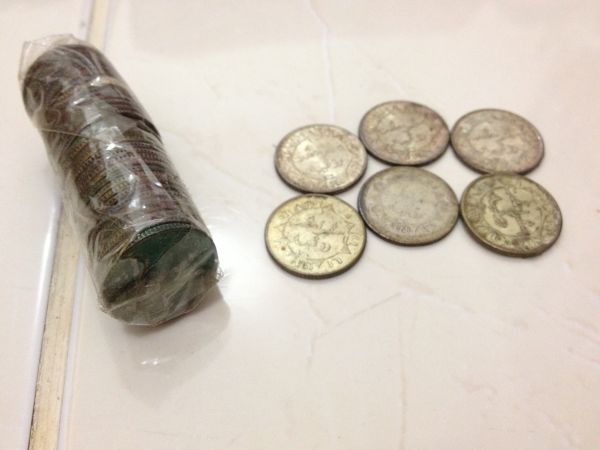 I'm certain this isn't paint. There was one further down the roll that looks like it had been spray-painted orange. 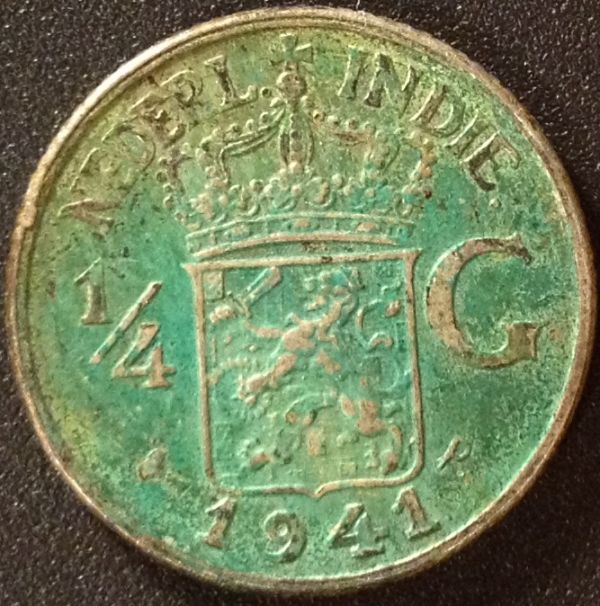 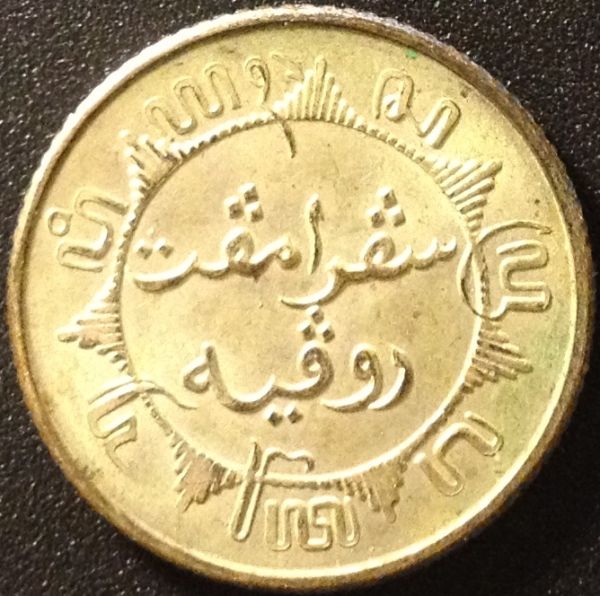 Here's a closer shot, maybe you can see the texture of the green. (Also a few nice cracks, there's a big one running through DERL+INDIE:)   Anyone knows what this green is? I hope it's not corrosion. |
|
|
|
Valued Member
United States
68 Posts |
|
|
Bedrock of the Community
Australia
21792 Posts |
These Indonesian quarter guilders have, if my memory serves me correctly, an alloy of .640 fine silver / copper.
They have been in a (chemically speaking), basic environment and the copper has preferentially surface corroded into a copper hydroxy carbonate, similar to verdigris.
I wouldn't worry too much about it though, because they are relatively common in EF conditon and found with mint luster. The Japanese effectively prevented their circulation during WW2, when they invaded Indonesia, thus they didn't circulate for long, if at all. They used to be found often in dealers' junk boxes in Sydney, and a lot of these coins found their way to Australia in soldiers' pockets.
VerdiCare may help with the cleaning of these quite well, because in this case, the surface layer of the 'green' would be quite shallow. The purity of the silver is sufficiently high enough to prevent deep corrosion of the copper component of the alloy.
|
|
Pillar of the Community
 Canada
2531 Posts |
According to Krause in 1980 it is .720 silver.
They've been exposed to the humidity of Indonesia for so long, I had left this like this in my drawer in a wood shelf for almost 10 years (which is why I said at least 10 years in the sellotape).
If they're common I guess it's fine if I leave it as is for now. If it wasn't common I doubt I'll have a roll plus six more anyway. There are a few very nice blast white (but the rims have toned) ones in the middle.
|
|
Bedrock of the Community
Australia
21792 Posts |
Pick out a half dozen of the best examples to keep for yourself.
Keep the rest for scrap silver coins, to be disposed of when you need a bit of extra money to buy something else.
|
|
Bedrock of the Community
United States
20753 Posts |
Why not just dip in Acetone? Or if not a valuable coin, Walmart Jewelry cleaner. |
|
Pillar of the Community
Canada
2531 Posts |
I'm hoping to never sell these off though since it was from my grandma. The green doesn't look like what acetone can clean and I don't really want to ruin this coin either.
And I guess I need to brush up on my history, since sel knows more on Indonesian history than I do...
|
|
Pillar of the Community
Canada
3692 Posts |
The higher the copper content the higher the oxidation in silver alloys. It starts levelling off above 90% mix. This is why sterling silver (92.5% fine silver) is used for wearable pieces that touch your skin. Slip on a copper or brass ring and you'll see your skin turn green sometimes tinted blue. If you want to make a pendant from a coin you'll enjoy it more if it's .925 and higher.
|
|
Bedrock of the Community
United States
20043 Posts |
Verdigris, due to copper in the alloy.
The good news, it doesn't look to thick yet. The bad news, it appears to a very hard type of verdigris which can be quite difficult to remove. Since I've never seen these types of coins conserved, I don't even know how well VC will work.
Lincoln Cent Lover!VERDI-CARE™ INVENTOR https://verdi.care/
|
|
Bedrock of the Community
United States
20043 Posts |
Quote:Why not just dip in Acetone? Or if not a valuable coin, Walmart Jewelry cleaner. Carl, you know acetone won't touch verdigris. It would be an exercise in futility. |
|
Valued Member
New Zealand
72 Posts |
dull and very dirty silver coins I find here I use with CLR, not sure if you have that over there but it combats lime deposits etc. Works very well on silver coins I dig
|
|
Pillar of the Community
Canada
2531 Posts |
That's interesting Libertad, so that's why most silver jewellery I see are sterling.
I don't really want to be buying stuff online yet but if I find any VC locally I'll test it out.
I don't know what CLR is. If it works with lime deposits I assume it's acid?
|
|
Valued Member
New Zealand
72 Posts |
I think it might be? its not a strong acid if it one. It comes in a plastic bottle, CLR stands for Calcium, Lime and Rust. I've got it on my hands plenty of times and never got any irritations but I wouldn't recommend doing that.
|
|
Pillar of the Community
Canada
2531 Posts |
From what it stands for I'm even more convinced it's acid, but I'm just guessing here, I've never heard of CLR before.
|
|
Bedrock of the Community
United States
20043 Posts |
Quote:
From what it stands for I'm even more convinced it's acid, but I'm just guessing here, I've never heard of CLR before. Yes, it is a solution of a couple different organic acids, primarily lactic acid. Using anything acidic on coins will permanently damage the surfaces. Acids and metals do not get along nicely. If you use acid on a coin, it will come out dull and lifeless. The application of a harsh cleaning to a coin is best done on the basic side of the pH scale. Sodium hydroxide (lye) is a better choice but it will still cause some havoc. Lincoln Cent Lover!VERDI-CARE™ INVENTOR https://verdi.care/
|
|
Valued Member
New Zealand
72 Posts |
I will keep that in mind if I come across anything rare. I am not too worried about my detected coins, we don't have anything rare over here and I have no intentions of ever selling them, took much to much effort to find them!
|
| |
Replies: 15 / Views: 8,049 |
|










 Posted 10/31/2014 7:03 pm


