| Author |
 Replies: 659 / Views: 49,701 Replies: 659 / Views: 49,701 |
|
|
|
Pillar of the Community
United States
5155 Posts |
Kingdom of Elam King KAMNASKIRES VI Late 1st cent BC to early 1st century AD Billon Tetradrachm 16.10g x 29mm obv: diademed bust of king right rev: male bust left with garbled legend ref: Seaby 5889 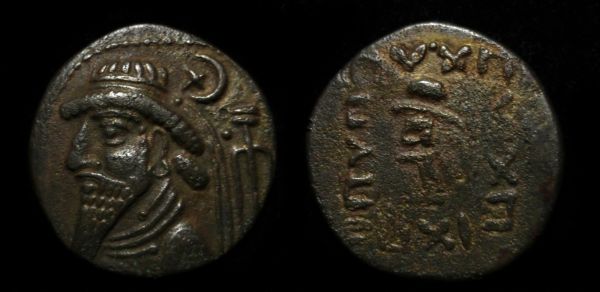 |
|
Valued Member
 United Kingdom
435 Posts |
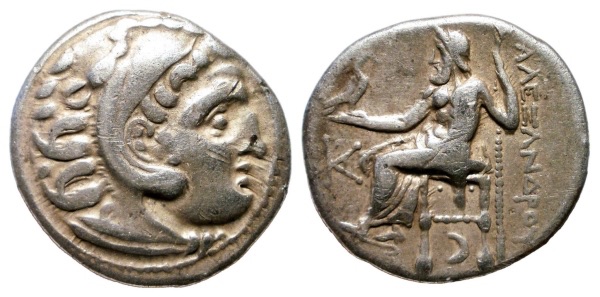 Here's one in the name of Kolophon. KINGS of MACEDON. Antigonos I Monophthalmos, Strategos of Asia, 323-305 BC., in name of Alexander III. AR Drachm. Kolophon mint. Struck c.310-301 BC. Obv. Head of Herakles r. wearing lion skin headdress. Rev. Î'ΛΕΞÎ'Ν- "ΡΟΥ, Zeus Aëtophoros seated l., monogram, K, in l. field, crescent below throne. (19mm, 4.27 g ) Ref Price 1825. Κολοφών as an ancient city in Ionia, modern Turkey, has a prestigious history. Founded around the turn of the first millennium BC, it was likely one of the oldest of the twelve cities of the Ionian League. It was the birthplace of the philosopher Xenophanes and the poets Antimachus and Mimnernus. In Greek antiquity two sons of Codrus, King of Athens, established a colony there. It was the strongest of the Ionian cities and renowned both for its cavalry and for the inhabitants' luxurious lifestyle, until Gyges of Lydia conquered it in the 7th century BC. Kolophon then went into decline and was eclipsed by neighbouring Ephesus and by the rising naval power of Ionia, Miletus. After the death of Alexander the Great, Perdiccas expelled the Athenian settlers on Samos to Kolophon, including the family of Epicurus, who joined them there after completing his military service. In the 3rd century BC, it was destroyed by Lysimachus, later a king (306 BC) in Thrace and Asia Minor, during the same era when he nearly destroyed (and did depopulate by forced expulsion) the neighboring Ionian League city of Lebedos. After Lysimachus' conquest, it failed to recover (unlike Lebedos) and lost its importance; actually, the name was transferred to the site of the port village of Notium, and the latter name disappeared between the Peloponnese at the time of Cicero. Additionally, the city, as a major location on the Ionic mainland, was cited as a possible home or birthplace for Homer. In his True History, Lucian lists it as a possible birthplace along with the island of Khios and the city of Smyrna, though Lucian's Homer claims to be from Babylon. Edited by Valecrucis
11/24/2014 08:32 am
|
|
Pillar of the Community
3772 Posts |
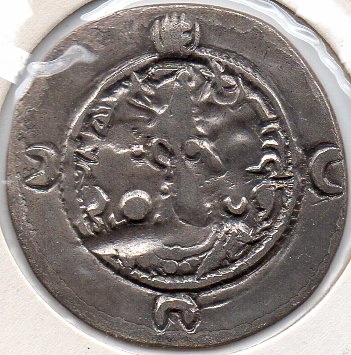 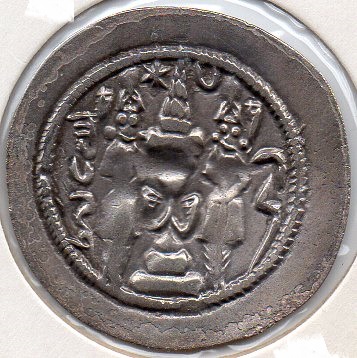 AR Drachm from Khusru I (531-579) minted in the year 41 (571+) in Yazd - Mitchiner#1057 / Sellwood Type 2 Obverse: Portrait facing right, to left "KHUSRUI" and to left "AFZUI" Reverse: Fire altar with attendants, "41' left and "IZ" right. |
|
Valued Member
United Kingdom
435 Posts |
Nice coin Medieval..
I have a Khusro drachm also...no decent images to share yet...but it has similar types of 'scoops' out of the silver. Do you have any idea what the purpose of these was for? If I saw them on a Roman Republican drachm I would know that they were to even out the quantity of silver in an an overly heavy coin, before striking...but in such a thin coin as these Sasanian drachms that would seem more difficult to achieve this way, so I wonder if they have a different explanation?
|
|
Pillar of the Community
United States
5155 Posts |
In most cases that scoop was made to reduce the weight of the planchet before striking, if it was determined to be too heavy according to current specifications. I don't know if this holds up in Sassanian coins but that would be my best guess.
|
|
Pillar of the Community
Netherlands
1204 Posts |
Kushan Empire: Vima Kadphises (circa 100 - 127/8 AD) AE Tetradrachm 27 mm diam. Weight: 17 grms. 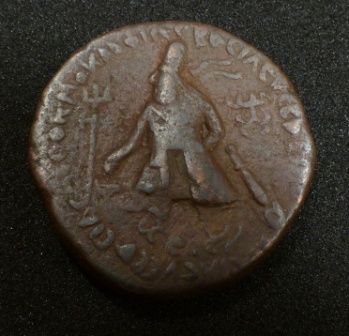 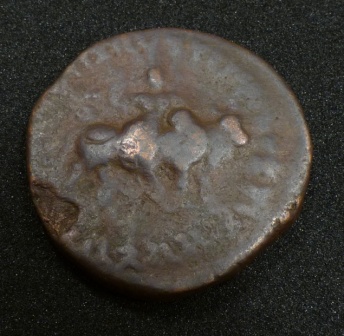 |
|
Pillar of the Community
United States
5155 Posts |
I am waiting for that excellent $9 gem of a Kajula Kadphises that Echizento has. Post it up!
|
|
Moderator
 United States
23731 Posts |
|
|
Pillar of the Community
3772 Posts |
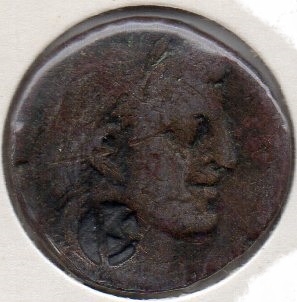 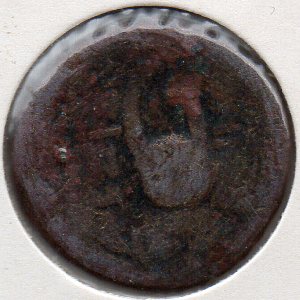 AE 26 from Kos, one of the Carian Islands minted ~88BC-50BC - cf.BMC#173 Obverse: Laureate head of Apollo right - unknown countermark Reverse: KWIWN left and EMMEN(?) right of lyre. all in laurel wreath Got this coin mainly because of the countermark, which I still haven't been able to find a reference for, after being able to identify the matrix I suspect it maybe reads KOC or similar. |
|
Valued Member
United Kingdom
435 Posts |
KINGS OF MACEDON. Kassander (317-305 BC). AE19. Uncertain Mint. 19mm, 7.42g. Obv: Head of Herakles right, wearing lion skin. Rev: BAΣIΛEΩΣ KAΣΣANDPOY. Rider on horseback r. Monogram beneath and monogram r. Ref. SNG Alpha Bank 900-936 var. 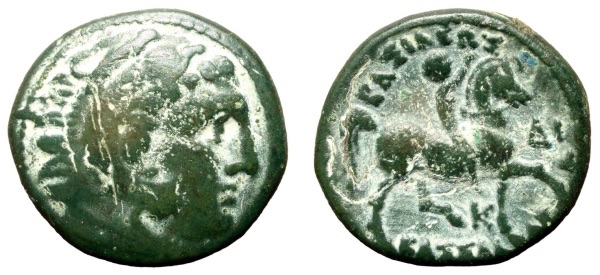 Edited by Valecrucis
11/24/2014 4:16 pm
|
|
Moderator
United States
23731 Posts |
AE 16 Aeolis, Kyme Obverse: eagle Reverse: One handled cup, KY 16 mm x 4.59 grams die axis 5h SB-4186 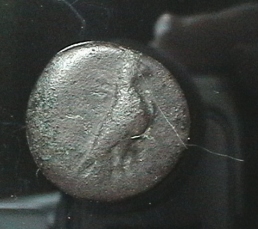 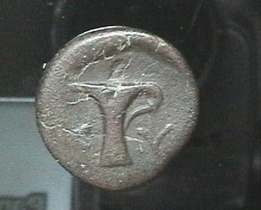 |
|
Pillar of the Community
3772 Posts |
Another one which has fallen victim to the humidity in Sydney and will have to be 'resettled'. 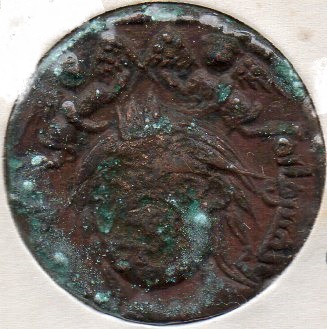 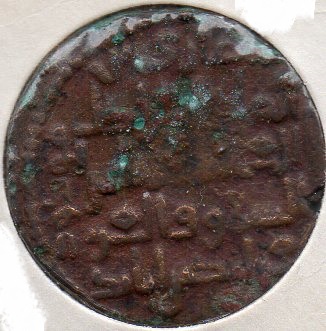 AE Dirhem from Kutb al din Modud ibn Zangi (AH544-Ah565 = 1149-1169) dated AH556 (1161), Zangids of Mosul - Mitchiner#1117var |
|
Valued Member
United Kingdom
435 Posts |
Forgot about Kyme: Aeolis, KYME, AE16. c.300-250BC Obv. Forepart of horse r. ΚΥ/ΕΥΝΙΚΟΣ Rev. Oenochoe. Monogram to l. 16mm, 4.40g SNG Cop 86var 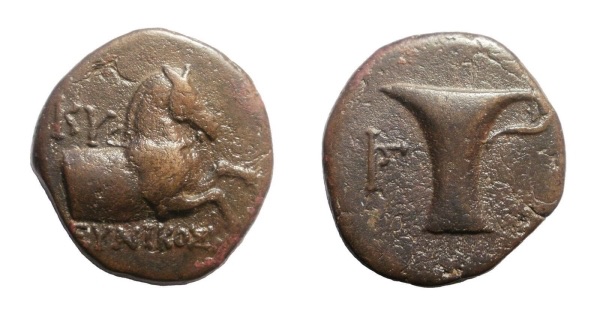 Aeolis, KYME AE 19 c250-200 BC Obv: Head of Amazon Kyme right, wearing tainia Rev: Horse advancing right; oinochoe below raised foreleg. Magistrate's name below. Size: 19 mm Weight: 7.05g Ref: SNG Copenhagen 102var 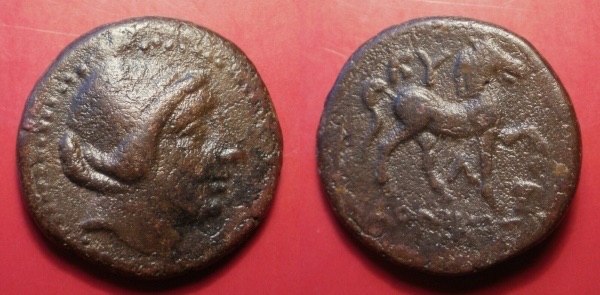 Edited by Valecrucis
11/24/2014 7:24 pm
|
|
Pillar of the Community
United States
7067 Posts |
Kamnaskires-Orodes (Elymais) tetradrachm early to mid 2nd century AD 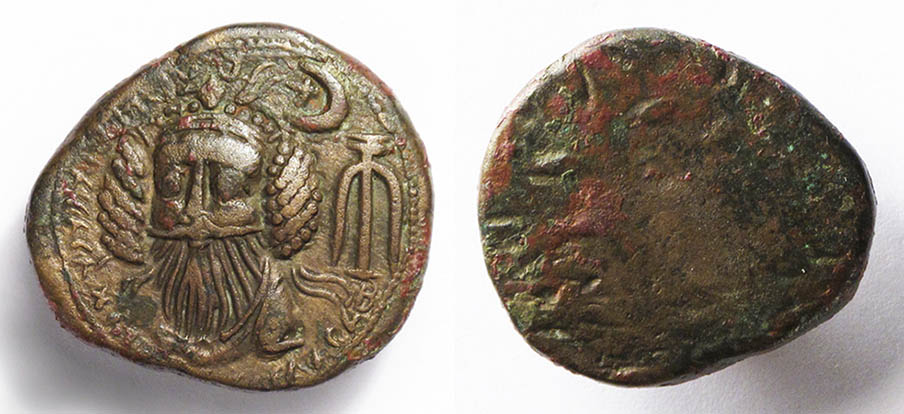 |
|
Pillar of the Community
United States
5014 Posts |
man, coming late to the "K" makes it hard to play something new. kai yan tong bao tang china  this is probably cheating a bit...but I see some "k"s!   |
| |
Replies: 659 / Views: 49,701 |





 First Page
 Previous Page


 Posted 11/24/2014 08:31 am


