| Author |
 Replies: 17 / Views: 4,480 Replies: 17 / Views: 4,480 |
|
New Member
United States
3 Posts |
Hello everyone, I've had this doubt for some time and I've never been able to solve it so I'll post a question here. According to the US mint site and also to wikipedia ( http://en.wikipedia.org/wiki/Americ...alo_(coin)), the American Buffalo coin has a diameter of 32.7 mm and a thickness of 2.95 mm. If you do the math, you get that the volume of the coin is: Volume = r*r*pi*h = 2.477 cm3 Since it's made of 99.99% pure gold, I assume I can use the density of the gold, which is 19.30 g/cm3 The weight of the coin should therefore be: Weight = Volume * density = 47.8g But the actual weight is instead 1 troy ounce = 31.10 g How is that possible? Does anyone know why there's a 30% difference? What am I doing wrong? Thanks |
|
|
|
Moderator
 United States
23522 Posts |
Welcome to Coin Community, fabry. My guess is that thickness dimension was measured somewhere near the maximum, on two opposite devices of the coin. So, the fields of the coin, being lower, would represent a deduction from the total volume rather than an addition.
|
|
Bedrock of the Community
United States
12437 Posts |
Thickness is generally not a standard used on US coins because it is not very useful in most cases. Where do you measure thickness on a struck coin? The rims are the thickest point while the fields are the lowest and the design has a variable thickness so there is no uniform measurement. Even the thickness of the rim can vary as a function of striking pressure(more pressure and a full strike= thicker rim than on a weak strike). However, 24kt gold is relatively soft so the Buffalos would receive a full strike and the thickness dimension is most likely a measurement at the rim. That would also explain the weight discrepancy from your calculations since your volume would not reflect the actual volume of a struck coin. |
|
Pillar of the Community
United States
4212 Posts |
Uhhh, if you say so. 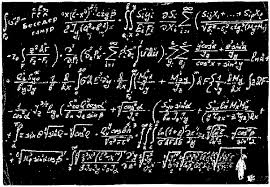 |
|
New Member
 United States
3 Posts |
Thanks for your replies and thanks for welcoming me to this forum! :)
Yes, at first I too thought the reason was the inaccuracy of the measurement of the thickness. But I'd have expected a discrepancy in the order of 5-10%... In order to have exactly one troy ounce of weight the thickness should be 1.9mm which is more than 1mm less than the thickness they provide.
But anyway, I suppose you are right, even though I'm not a 100% convinced.
Is there anyone here reading this post that owns an American Buffalo coin that can double check for me? Is there really such a big gap between the rim and other points of the coin?
Thanks
|
|
Pillar of the Community
United States
4901 Posts |
Quote:
How is that possible? Does anyone know why there's a 30% difference? What am I doing wrong? Just curious...why did you do it at all? |
|
Pillar of the Community
United States
586 Posts |
fabry, I would suggest using a measuring bottle. Drop the buffalo into the water, and measure the volume difference. Please let us know the new calculation result.  Edited by leon1998
11/21/2014 2:17 pm
|
|
Pillar of the Community
United States
4901 Posts |
Simple me would look at the coin...it says one ounce .999 pure gold...it weighs one ounce... Check....  p.s. your math might be a bit more accurate with a smooth surface planchet oops:  Edited by Foxwoods Man
11/21/2014 2:31 pm
|
|
New Member
United States
3 Posts |
@Foxwoods Man: why wouldn't everyone do it? If I need to spend a lot of money to buy a golden coin I want to know what I'm buying :)
@leon1998: yes I would have certainly followed that route if I had had one of those coins... If I eventually buy it, I will let you know my results :)
Thanks for your replies!
|
|
Pillar of the Community
United States
4901 Posts |
Quote:
@Foxwoods Man: why wouldn't everyone do it? If I need to spend a lot of money to buy a golden coin I want to know what I'm buying :) First...I doubt you would NEED to buy a golden coin..maybe want to buy or decide to buy but need? I don't get that. ....and second ...the American Buffalo Gold Coin has been around for a many years and is accepted and easily traded/sold/bought as one ounce of pure (.999) gold. That's good enough for 99.9% of investors..no imperfect math needed |
|
Pillar of the Community
United States
1286 Posts |
unless it's a chinese fake...
|
|
Pillar of the Community
United States
3755 Posts |
The gold and silver coins are guaranteed in weight and fineness by the US mint. I dont always buy into guarantees, but this one I do.
|
|
Pillar of the Community
United States
4901 Posts |
Correct...and that would apply to absolutely every coin or piece of precious metal known to man (or woman).
|
|
Pillar of the Community
United States
3755 Posts |
Thats going a bit overboard Fox. EVERY coin is NOT minted by the US mint. I surely do NOT trust the silver content of many older foreign coins like I do the US coins. And certainly every piece of PM is NOT guaranteed by the mint. |
|
Pillar of the Community
United States
621 Posts |
foxwoods man, He said "If I need to spend a lot of money to buy a golden coin I want to know what I'm buying :)". I think you may have misunderstood what he meant. He didn't say he needed to buy an expensive gold coin but that if he must spend a lot of money to buy a gold coin that he wants to learn as much as possible about them.
|
|
Pillar of the Community
United States
4901 Posts |
Quote:
I surely do NOT trust the silver content of many older foreign coins like I do the US coins The point was that I stated that the Buffalo was a safe coin to buy and it was pointed out "unless it was a fake from China" which is a valid point. Not all coins collectors/investors purchase are purchased direct from the Mint. Any secondary market be it ebay or your local shop can have fakes of ANY coin including the Morgan dollar, ASE, Gold Buffalo, or even the Pres dollar. The key is to buy from a trusted source and not to be smug just because it says USA on it. |
| |
Replies: 17 / Views: 4,480 |







 Posted 11/21/2014 1:10 pm


