











 Posted 11/28/2014 12:26 am


I am not familiar with this specific type having only seen one or two in person - however, it falls into a general class of coins that are distinctive because of the way they were produced.
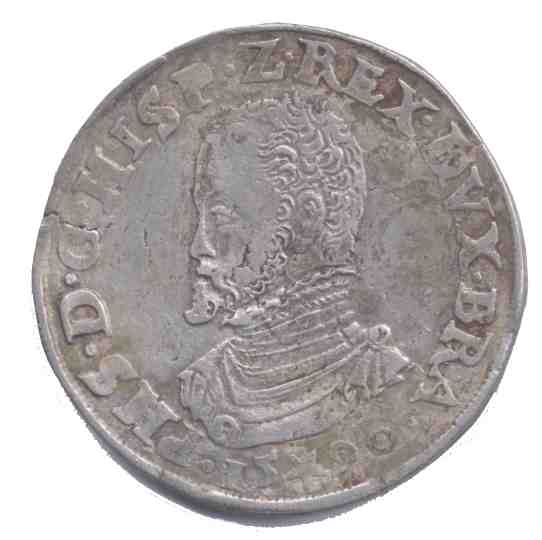
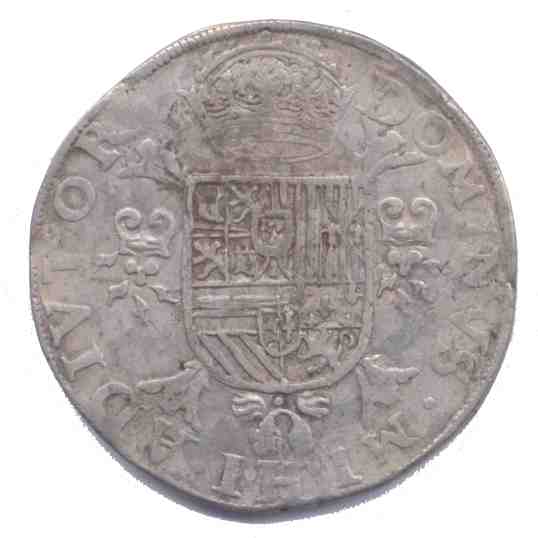
In 1590 the coin would have been made on a roller press and this coin appears to conform well to that general appearance. The die work is also very believable for 1590.
I do want to make one other comment in reference to the following quote:
That is not necessarily correct if you are dealing with a well trained forger. The first objective of any forger is to make money. The second is not to get caught or to have his work exposed. To succeed a forger needs to be good at both. A numismatic forger making copies of expensive or rare coins knows or should know his work will be looked at closely, far closer than copies of common coins or circulating coins.
Therefore I would DEFINITELY NOT give this coin a free pass because it appears to look appropriate. I would check the weight and specific gravity as well as on line archives looking for similar coins in pictures. Make sure the coin is not dead flat. Roller strikes came out of the press curved and they were flattened. There is usually some trace of this original curve. The curve will be oriented axially but I do not know if this type was engraved aligned with or perpendicular to the upright axis of the coin. There should be NO evidence of die rotation either since the engraving was paired. All coins made from one set of rollers will have identical alignment. Look at the edge to see if there is evidence of clipping to remove the coin from the strip of metal. Look for vertical or angled scratch marks on the edge as opposed to horizontal or random filing. Check the intersections of the vertical elements with the fields with an eye open to evidence of casting. Roller produced coins will look even more crude than screw press types. The coins also have no camber as is seen on screw press coins.
In 1590 the coin would have been made on a roller press and this coin appears to conform well to that general appearance. The die work is also very believable for 1590.
I do want to make one other comment in reference to the following quote:
Quote:
a forger wouldn't make such a botched job.
a forger wouldn't make such a botched job.
That is not necessarily correct if you are dealing with a well trained forger. The first objective of any forger is to make money. The second is not to get caught or to have his work exposed. To succeed a forger needs to be good at both. A numismatic forger making copies of expensive or rare coins knows or should know his work will be looked at closely, far closer than copies of common coins or circulating coins.
Therefore I would DEFINITELY NOT give this coin a free pass because it appears to look appropriate. I would check the weight and specific gravity as well as on line archives looking for similar coins in pictures. Make sure the coin is not dead flat. Roller strikes came out of the press curved and they were flattened. There is usually some trace of this original curve. The curve will be oriented axially but I do not know if this type was engraved aligned with or perpendicular to the upright axis of the coin. There should be NO evidence of die rotation either since the engraving was paired. All coins made from one set of rollers will have identical alignment. Look at the edge to see if there is evidence of clipping to remove the coin from the strip of metal. Look for vertical or angled scratch marks on the edge as opposed to horizontal or random filing. Check the intersections of the vertical elements with the fields with an eye open to evidence of casting. Roller produced coins will look even more crude than screw press types. The coins also have no camber as is seen on screw press coins.


