| Author |
 Replies: 10 / Views: 2,552 Replies: 10 / Views: 2,552 |
|
|
New Member
Mexico
7 Posts |
Hi everybody!! I recently buyed this piece and I was surprised... I am so proud of having Resplandores, the book writed by Dunigan and Parker and I have noted that my coin is not catalogued. In Guanajuato mint, they described four varieties, die style of 1828 - 1829 with 1/0 in 10 DS, Die style of 1828 - 1829 in normal legends, a mule with cap of 1828 - 1829 and eagle of distinct style, eagle from 1829 - 1830 and the last die style 1829 - 1830. Well but my coin is not any of them, as the image shown it have eagle from 1828 and cap from 1829 - 1830... So, whats your opinion colleagues? Thanks a lot! 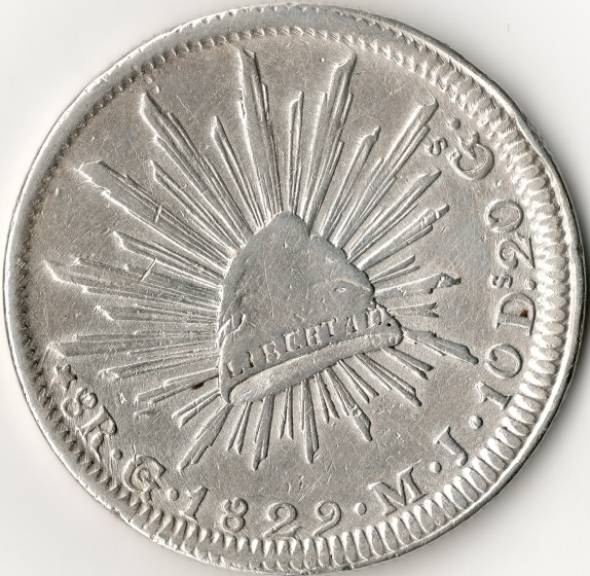 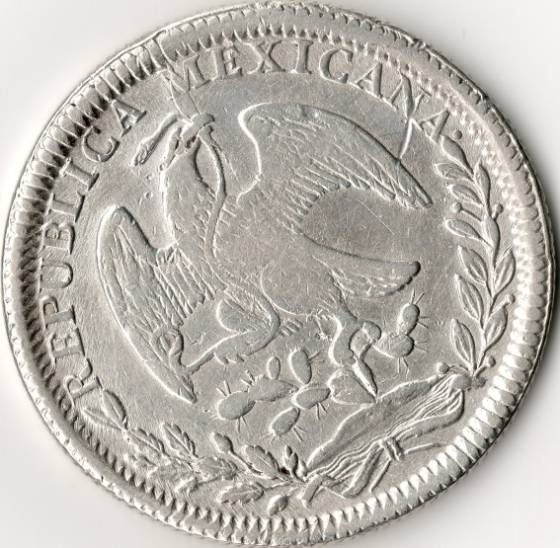 |
|
|
|
Pillar of the Community
United States
4883 Posts |
Have you weighed it yet? That'd be step number one. The uncatalogued pairing of die styles you've identified could be an indicator of a contemporary counterfeit.
Colligo ergo sum
|
|
Pillar of the Community
United States
5362 Posts |
AxelLidenbrock1864 Hello and  The mating of the 1828 eagle type with the 1829 Cap style (the reverse mule of the pair of types) is not in Resplandores but it is a mating I have seen before. The eagle die was seriously damaged but not worn out. It may have been held aside by mint workers and used at a later time when they needed a die fast. I have not seen an unbroken version of the eagle in a muled pair. This form of new die mating is not at all uncommon. Dunigan's book like most references on early Mexican issues is NOT perfect nor does it contain all known die varieties. Many have been added by specialists since his book was completed. I know of no one that has compiled a complete list of all the new matings or varieties. I would suggest that the number of the "reversed mules" would of necessity be very low and make the coin as rare or more rare than the other muled version. It is a superior find - nice catch - bet the seller had no clue. Hold onto this one - even though it is cleaned it should sell for a pretty penny provided it is not a recent forgery. To be sure - check the weight - density and ring. It looks fine to me with the exception of the color. Clearly it has been cleaned (which has dropped the value somewhat). The issues of 1828 and 1829 at Guanajuato often exhibit rotational flow erosion. This can also be associated with forgeries made with centrifugal casting. I have seen great forgeries of the 1836 and 1838 Go coins which have curved rotational erosion lines. I have not yet found one this early BUT IT IS POSSIBLE. So do all of the tests suggested and check the edge closely. I think you are OK with this coin but it is better to be safe than sorry.
Edited by swamperbob
12/01/2014 9:32 pm
|
|
Pillar of the Community
United States
5362 Posts |
Lucky Cuss I just noticed that you say: Quote:
The uncatalogued pairing of die styles you've identified could be an indicator of a contemporary counterfeit. I think it is critical to correct what I believe is a misunderstanding on your part. A contemporary counterfeit is clearly NOT indicated based on an uncataloged die pairing for the following reasons. A "counterfeit" of a mule of 2 different die styles would have been impossible to make at any time before image transfer methods were developed in the 1840 - 1850 time frame. In addition for a coin design of this quality a transfer design forgery would in my opinion date to a much later period of time. I would in fact expect to see only Numismatic Forgeries of a mule like this. A mule created only AFTER 1997 the date of Dunigan's book. There would be no reason for the creation of a reversed mule until someone realized it was rare. So I think the decision is really between only two possibilities, the coin is either genuine or a Numismatic Forgery. Period counterfeits of coins made in the 1825-1890 time frame were produced using off metals (base metals) and can typically be discovered with Specific Gravity tests (density tests). There (at least so far) is no documentation that definitively supports the creation of silver counterfeits of Cap and Ray issues. Therefore, I see little possibility of this coin being counterfeit at all. A Numismatic Forgery is what I would expect to see. Forgeries made after 1997 for the high end market probably would be made using full weight full assay silver. The die erosion seen in the dentils suggests centrifugal casting or a loose die chuck. So in that case the edge is the place to look. This is because if the coin was cast the edge had to be applied AFTER it was cast - if the coin is genuine the edge was applied BEFORE it was struck. So look for edge design distortion and of course identical wear. AS a last resort XRF tests could be done to prove gold is present in the alloy along with the two other metal trace markers needed to prove age. A lack of gold or incorrect trace markers would prove it was modern. I am about as certain as possible from seeing only pictures that this coin is GENUINE.
|
|
Pillar of the Community
United States
4883 Posts |
You're the expert, Robert, so I'll defer to you on this, and thank you for the detailed explanation. I'd still like to see the edge and get a weight (and better yet, as you point out, a specific gravity). I keep looking at these photos and can't help thinking there's something "funny" about its appearance. I'll tell you this, I wouldn't buy a coin like this without at least weighing it first.
Colligo ergo sum
|
|
New Member
 Mexico
7 Posts |
I´m really grateful with your comments. I consider myself just a novice in collectin´coins and my favorite series is this, the cap and rays. I will try to answer your questions, the weight is about 26.71 grams and the sound it seems to me good, just like an original coin. I read the instructions from Swamperbob about perform an SG test, I promise to do it next weekend. Send you the images, and thanks a lot. Add: Swamperbob, do you know the background image? I´m just waiting the next amigo!! 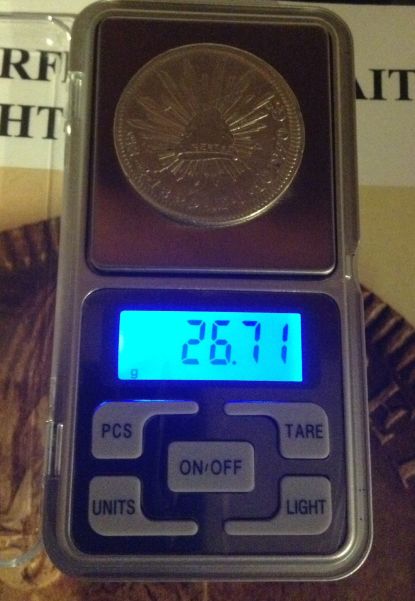 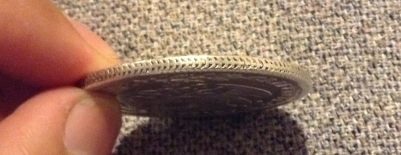 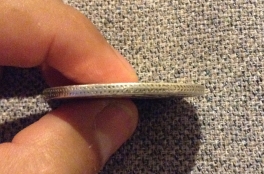 |
|
New Member
Mexico
7 Posts |
I just forget to comment it, Here in Mexico is hard to get an coin in original tone. Most coins are cleaned by sellers with the great idea of obtain a bettter profit. The image of the coin was not a photograph, I scanned it and possibly this explication is useful.
|
|
New Member
Mexico
7 Posts |
And If someone have a easy way to take pics from the edge, I really would appreciate to know!
|
|
Pillar of the Community
United States
5362 Posts |
A really useful picture of the edge will include enough of the face of the coin so that the edge can be correlated with the ONE face.
To hold the edge upright - I use an old ring box with a spring top. The box has cloth or felt on it so there is no damage to the coin. I use a rubber band around the box to increase the pressure.
You can also use a stack of 2x2 folding cardboard coin holders. Slide the coin into the stack and you can take the edge picture.
|
|
Pillar of the Community
United States
4883 Posts |
Quote:
Most coins are cleaned by sellers with the great idea of obtain a bettter profit. Yes, that's the bane of these. Many specimens that otherwise would receive a high grade seem to have had a Brillo® pad taken to them at some point.  Colligo ergo sum
Edited by Lucky Cuss
12/03/2014 10:03 am
|
|
Valued Member
United States
426 Posts |
Very nice find and beautiful coin!
|
| |
Replies: 10 / Views: 2,552 |
|










 Posted 12/01/2014 9:31 pm


