| Author |
 Replies: 7 / Views: 1,480 Replies: 7 / Views: 1,480 |
|
|
Pillar of the Community
United States
689 Posts |
Weighs 25.13 grams. I "felt" it was a fake when I paid $28 for it. Do you guys think it is a CC, maybe Riddell 260? The snake's neck is kind of skinny. Is $28 a good price? 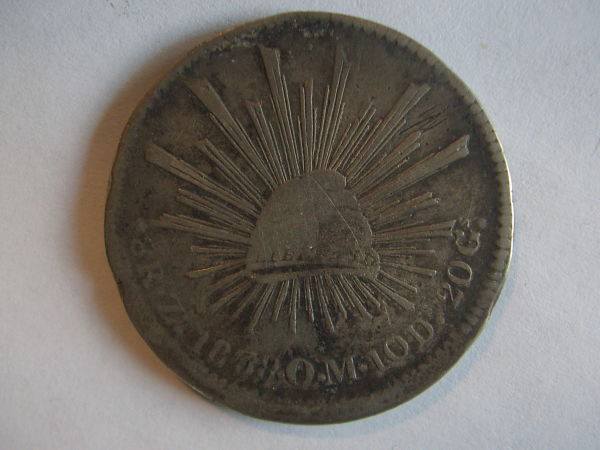 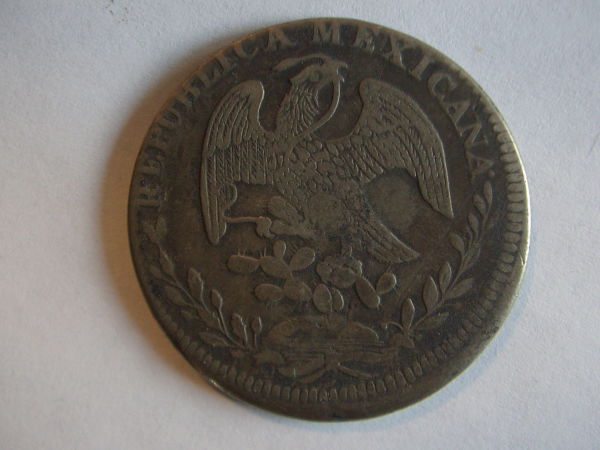 |
|
|
|
Pillar of the Community
United States
4883 Posts |
Well, the weight's too heavy for a Riddell No. 260, but the snake's too straight neck would seem to be a diagnostic of a contemporary counterfeit. These photos aren't really good enough for me to tell much more, but is the "s" superscript missing from the "D" as well?
Hopefully swamperbob will be able to opine on this specimen.
Colligo ergo sum
|
|
Pillar of the Community
Austria
566 Posts |
The bad silver is obvious, mistake in the details too. That must be a CC. For that money it is a bargain!
|
|
Pillar of the Community
United States
5362 Posts |
The coin is a rather common counterfeit which is not listed in Riddell. (Notice the open mouth on the eagle). It looks much better when worn than it does in MS. I believe they are later made counterfeits based on the alloys used. This variety is never seen in Sheffield Plate but usually appears as solid white metal. Dies are hand engraved and the coins are struck not cast. The edge design is a reasonable copy.
I classify the coin as Class 1 but with the note that it is late in date. The price of $ 28 is about right.
The same eagle die is used in connection with an 1843 Zs cap die.
|
|
Pillar of the Community
United States
4883 Posts |
Quote:
I believe they are later made counterfeits based on the alloys used. How much later? And do you have any info as to the fineness? Didn't spot the eagle's open beak, despite it's being clearly a deviating design element. Colligo ergo sum
|
|
Pillar of the Community
United States
5362 Posts |
Age is hard to estimate until I have the time and money to do XRF tests on this type.
When I first discovered this coin variety it was only in three very high grade examples. In MS the coin looks deplorable as I mentioned earlier. These coins looked very modern and at the time I classified them as Numismatic Forgeries (modern) and put them asside. After hunting for a few years I located a copy with a very old drill cancellation complete with very deep, very natural looking toning. Since then I have seen quite a few that appear to have circulated.
I believe it was a later issue because of the alloy type. It is solid metal not a typical layered issue of the 1830-1840 period. The alloy does not appear to be German Silver based on many with VERY dark toning. GS usually never achieves this color.
To understand my reasoning I need to explain to you the progression of major alloy types alloy types seen in typical counterfeits. This is a working theory that I plan to use in my next book with specific reference to dating of Cap and Ray types.
The earliest forgeries are normally debased silver alloys in the 500-700 fine range. They were displaced by the Sheffield Plate types from 1780-1840. These were displaced by German Silver from 1835-1860. These were displaced by silver electroplates 1855-1900. These were displaced by various white metals of low density with and without plates starting around 1880 but not predominating until the 1930s.
Obviously any method can be used at any point AFTER it was first discovered and not before. What I have discovered is that the frequency of use tapers off rapidly AFTER a new superior type entered the picture.
This coin seems to fall into the final post 1890 group. XRF testing may disclose a GS like alloy and I might move the date back to pre-Civil War.
Like many of my other theories I need far more data to consider it well supported or proven.
|
|
Pillar of the Community
 United States
689 Posts |
The superscript "s" above the "D" is present and kind of clear.
I'll play. My local XRF guy is $15-$20 a shot, can we do better? At $28 insurance is not necessary.
|
|
Pillar of the Community
United States
5362 Posts |
What does your local XRF guy use? The price is very low and will likely be one of the 0.10% accuracy hand held guns. To do the job well enough to accurately date the coin would require a lab level test good to 20 PPM (0.0002%) or better.
The test needs to distinguish between "Chinese white copper" (no zinc), later imported Paktong (low levels of zinc), German/English made Paktong, German silver from the period before the Civil War and modern German Silver used in numismatic forgery applications. The first 4 alloys would likely be distinguished easily at a low level of accuracy using a hand held XRF gun, but to make a call between modern GS and Civil War GS is much more difficult and would rely on modern trace contaminants.
|
| |
Replies: 7 / Views: 1,480 |
|







 Posted 12/26/2014 05:05 am





