| Author |
 Replies: 8 / Views: 1,502 Replies: 8 / Views: 1,502 |
|
|
New Member
United States
8 Posts |
I found this 1943 steel cent with an indent on the obverse in the center of the coin and a protrusion on the reverse. The details in the effected area are not distorted and I was hoping someone could explain what caused it, how to describe it, and is it worth anything. I'm not to familiar with error coins and would appreciate any help. 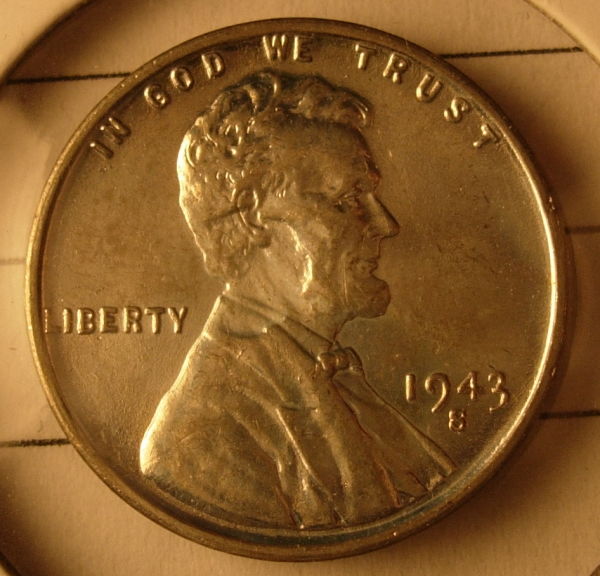 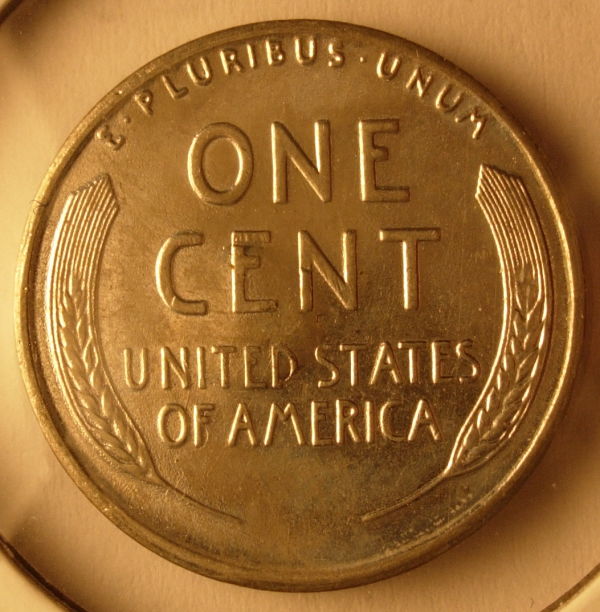 |
|
|
|
Pillar of the Community
United States
3360 Posts |
 Looks like it took a blow from a hammer-like tool. That would probably have happened after it left the mint. Let's see what some others think. What color is your coin? Edited by Pete2226
01/01/2015 3:25 pm
|
|
Moderator
 United States
23522 Posts |
Welcome to Coin Community, baker123. I know it's just White Balance but my heart stopped when I saw the color anyway.  I could see a postmint hit hard enough to dent through to the reverse without completely obliterating obverse detail. |
|
New Member
 United States
8 Posts |
Wouldn't the details be much more marred if hit with something after being minted? They seem pretty crisp.Sorry about the pics, it has your usual steel cent appearance.
|
|
Moderator
United States
23522 Posts |
Well, I'm not calling it gospel - by all means let's wait on Lincoln specialists, I'm a generalist - but given copper's relative softness I could see it happening this way. It's possible that it was struck by something yet softer than copper which absorbed some detail instead of obliterating it, while still being hard enough to dent the coin.
This conversation is hardly over, though.
|
|
Bedrock of the Community
United States
62064 Posts |
It appears to be a damaged coin. I wondered at first where the damage would affect the reverse and used an overlay of die placement to show what area would be affected. It is PSD: 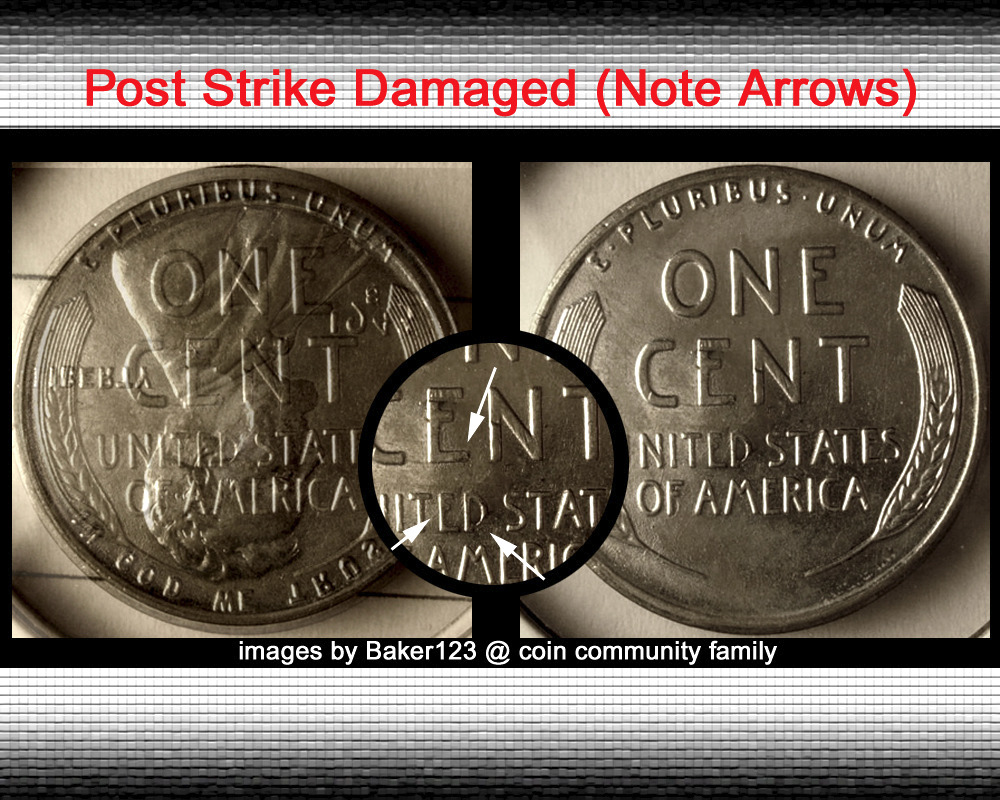 |
|
New Member
United States
8 Posts |
Thanks for all the input. I was stumped at how it occurred. PSD, good to know. |
|
Bedrock of the Community
United States
62064 Posts |
Probably something Ike a piece of wood was used with something very carefully to hit the wood, not touching it with a metal, and not bending the coin. Done carefully to create an error coin. But the damage on the reverse shows that it is a fake error.
|
|
Bedrock of the Community
United States
17884 Posts |
Quote:
but given copper's relative softness I could see it happening this way. It's possible that it was struck by something yet softer than copper which absorbed some detail instead of obliterating it, while still being hard enough to dent the coin. It isn't copper, it's steel so it will hold it's image better than copper would. And something like a piece of hard wood should be able to deform and accept part of the shape of the coin while still creating the dent on the reverse. A brass rod might work as well. The used a brass plate when the created the Scott CSA half dollar restrikes to keep the obverse of the half dollars from being severely flattened. The brass plate conformed to the shope of the obverse and then supplied support across the entire coin during the restriking. |
| |
Replies: 8 / Views: 1,502 |
|










 Posted 01/01/2015 3:29 pm


