| Author |
 Replies: 11 / Views: 3,204 Replies: 11 / Views: 3,204 |
|
|
New Member
United States
12 Posts |
I've been lurking here for a bit, buying up junk silver when I can - I have this old coin my aunt gave me several years ago. The guy at the coin shop said it could be a fake, he just wasn't sure. Any ideas?   |
|
|
|
Pillar of the Community
 United States
2703 Posts |
1558 Spanish Netherlands
Phillip II of Spain
The quality of the silver and crudeness of the strike looks right to me.
I would say it is authentic.
|
|
Pillar of the Community
United States
1984 Posts |
Looks like Philip II and I'd say your coin guy was right not to take up rocket surgery or brain science.
|
|
New Member
 United States
12 Posts |
THANKS for the information halfabust and t3 - it's always felt like a real chunk of silver - the coin shop guy just threw me off my mark.
|
|
Pillar of the Community
United States
1267 Posts |
Very nice coin. Actually I wouldn't be surprised if the "shop owner" knew it WAS authentic the moment they saw and held it.
Take Care
Ben
|
|
Pillar of the Community
Australia
3841 Posts |
I wouldn't say it's a counterfeit. It's more likely that it was overstruck on an older silver coin which gives it's weird appearence. Unfortunately Spanish coins aren't in my field of knowledge.  |
|
Pillar of the Community
United States
5362 Posts |
SilverAcolyte I wouldn't be too quick to start throwing rocks at the coin shop owner, at least not without a few checks. I am fairly familiar with Spanish silver having done this since the mid 1960s and frankly the look of that coin left me with "bad feelings". I don't know about everyone else but sometimes you look at a coin and get a quick impression about the piece. Here something seems wrong.
The more I look at the coin the less I like the appearance of the die work iteself. Now, that said, the appearance can be altered by post strike damage that has to be distinguished from strike imprefections.
So a couple questions:
1. Has the coin been weighed and have you run a specific gravity on it?
2. Under a microscope (30x or higher) have you examined the sides of the letters and other features where a "sharp" line of demarcation is expected. Also in the same way have you checked for protected original surfaces to see if the coin is struck or cast?
3. There is a comment about the possibility of an overstrike. That is very possible - but it should be obvious under a sterioscopic exam if there is an undertype. The design elements of the host coin are compacted but rarely 100% obliterested in areas of low strike pressure (design high spots - deep die recesses) so look for compacted design elements.
4. Check the edge of the coin - does it look "right"?
Perhaps I am always too suspicious, but I find there are a lot more fakes out there than the real thing.
|
|
Pillar of the Community
United States
2703 Posts |
Excellent suggestions, Swamperbob. SilverAcolyte, You did not mention the diameter, but a 41mm daaler coin should weigh about 33.6g. Zooming up the pictures provided, I don't see any evidence of casting or an undertype or post-strike damage. There seems to be sufficient detail in the protected surfaces in the shield to satisfy me. The edge split from striking (at 2:00 on the obverse) looks convincing to me in that it continues right down to a fine hairline through the "Z" which you would generally not see on a cast copy. The imperfections in the silver planchet (voids) have very fine details as well. My conclusion that the coin is authentic is based on the coins of this type which I have examined and have in my collection. Compare this 1558 daaler (Tournai, but very similar to Brabant) for sale by my friend Ernest at Monarchy auctions: 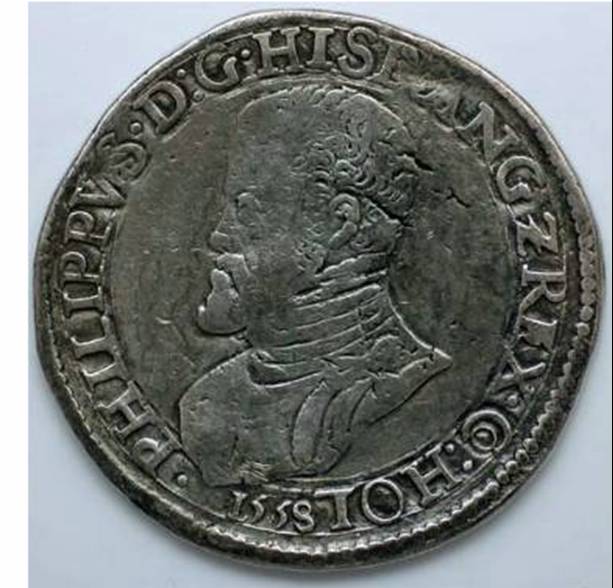 Your 1558 for comparison: 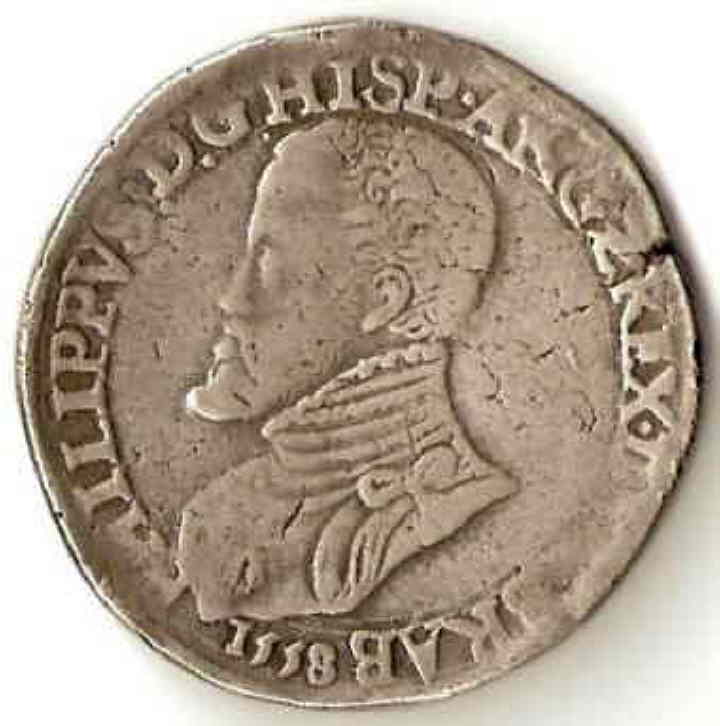 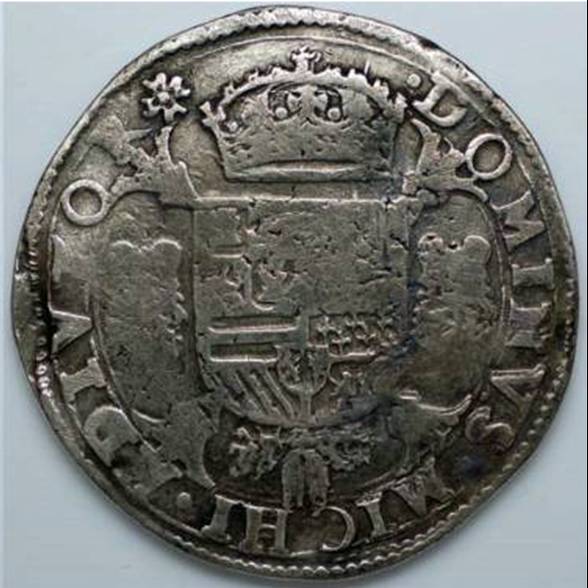 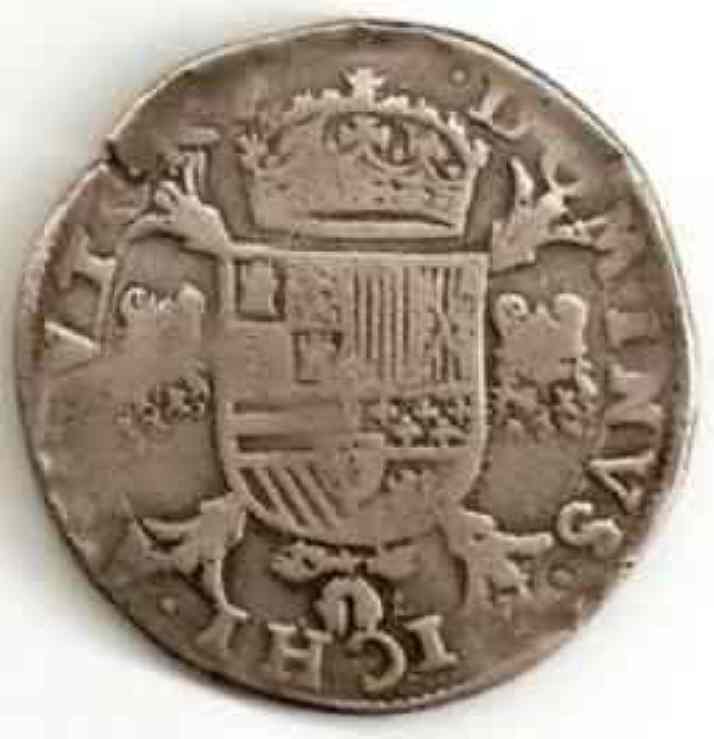 You can see similarities in cracks and voids in the silver near the portrait, the crudeness and uneven character of the strike, and the imprecise alignment of the letters in the legends. The serifs on the letters are actually quite consistent between the two pieces, even down to the slash in the Z at 9:00. I have couple of silver minors in my collection which were struck somewhat later. I bought them because they are above average for the type. Still, they show similarities to your coin with regard to the weak areas and crudeness of the strike and the characteristics of the legends: 1567 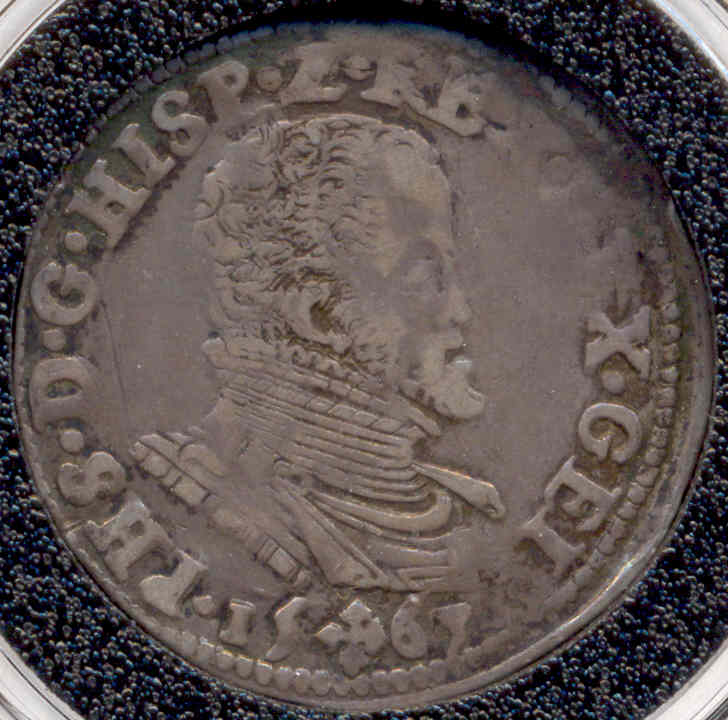 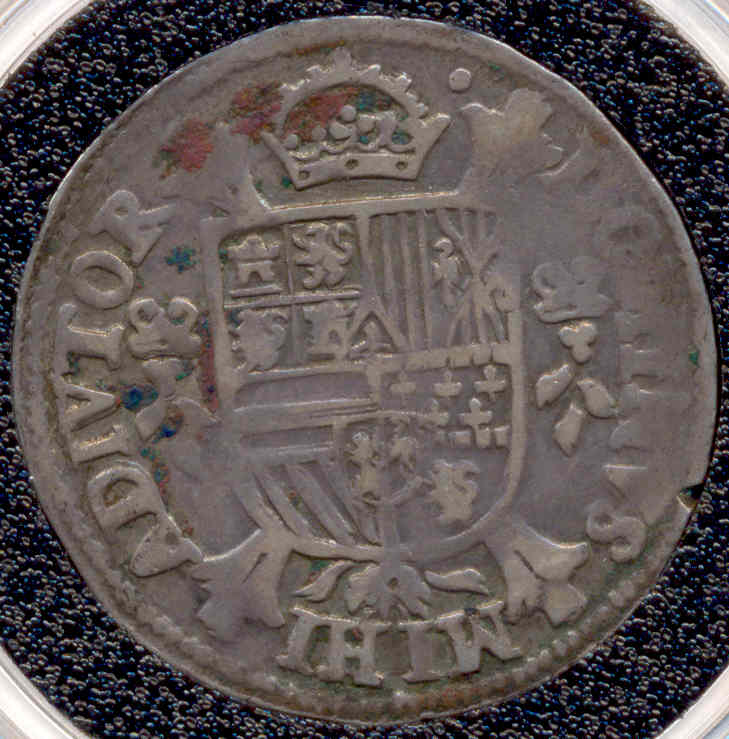 1572 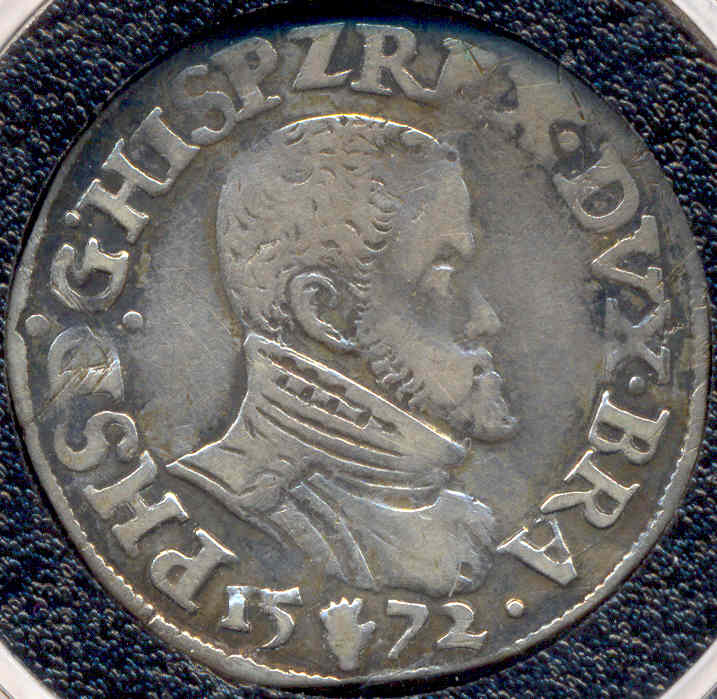 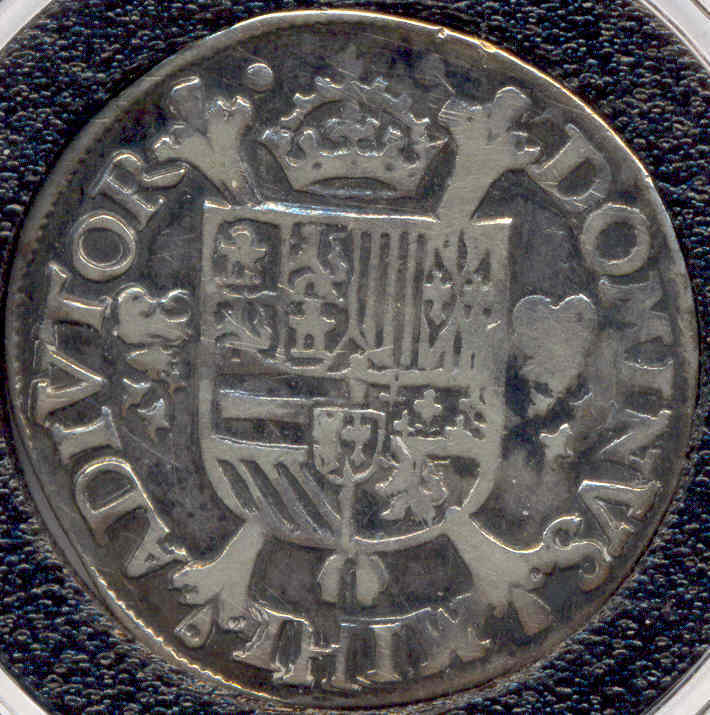 ------------- Swamperbob, I have not come across any fakes or reported fakes of these Spanish Netherlands types. Do you have any in your collection? |
|
Pillar of the Community
United States
5362 Posts |
t360 I have not an identical variety in my collection of counterfeits, but I have several Modern counterfeits of coins from the same period. The copies I own are made from transfer dies. So the coin being copied was real and the features seen on the real coin will transfer to the copy less some of the fine detail. These dies also lack the crispness of original die strikes. The copies often generally resemble coins that were worn as jewelry for some time. This is because use as jewelry (together with the inherent polishing that goes on) produces a softening of the detail and a loss of sharpness quite similar to the injection molded cast copies. That is one reason why a microscopic examination of the surfaces and the edge can be so important. I also enlarged the pictures of the coin and that is what I based my concern upon. Here is an example: Image Insert: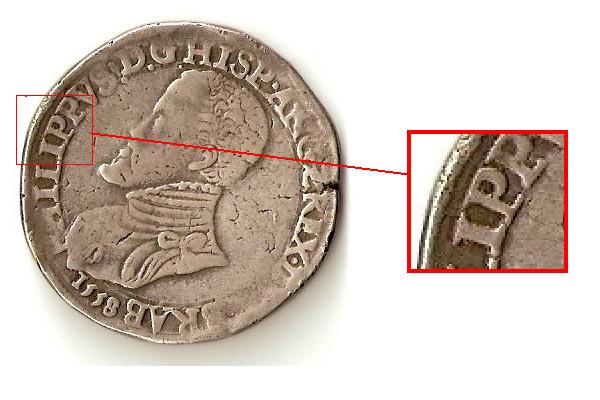 Image: Image:  SpanishNetherlands.jpg SpanishNetherlands.jpg41.35 KB If you notice on this enlargement the BRIGHT point of light on the inside of the P. To me that looks like a typical casting lump. A globular shaped feature that simply does not belong. You should also notice on the sides of adjacent letters similar but not as bright small "lumps". This is what I base my suspicion upon. I do not get the same impression looking at your other examples. That said it should be pointed out that the picture may be the problem or the post strike damage may be the cause. I just believe that out of an abundance of caution that some further study be made. Most of my experience with hammered coinage is in the English series, however, this King Philip was also King of England (Philip and Mary) and I am very familiar with that series of silver coins.
|
|
Pillar of the Community
United States
2703 Posts |
Yes that edge did catch my eye, I guess it did not quite trip an alarm for me though. quote:
...I just believe that out of an abundance of caution that some further study be made.
Hard to argue with that. Thanks Swamperbob for posting your analysis. |
|
Pillar of the Community
United States
1984 Posts |
I just want to make the comment that my point about the coin dealer had nothing to do with whether the coin is genuine or not. It had more to do with a coin dealer offering so little information, other than "It could be fake, it might be real, I don't know." I know coin dealers aren't supposed to know everything, but they should be able to do better than "I dunno."
|
|
Pillar of the Community
United States
5362 Posts |
halfabustisbetter - I hear what you are saying and that would apply to coins that a dealer is normally used to handling. However, when faced with a silver coin from 1558 - I would dare say most (99%)dealers would not have a clue. I know that we often attribute far more expertise to the average coin dealer than they deserve. They are in business and in that process they become familiar with some types of coins. The ones they sell most often. The longer they are in business the more they tend to learn. But having been a counterfeit detector for some years now, it often requires examination on several levels before I can make a definitive call. I work (and have worked) for several different coin dealers as an authenticator. Right now, I am working for a local dealer and I authenticate US gold and silver as well as foreign coins. Just the day before yesterday he gave me three US $1 gold coins that he had purchased. One looked good  , one looked so-so  and one clearly was a forgery  . This initial impression was based on a quick exam with a 10x loupe. This was exactly what he thought. He bought the best as an original, the second at melt and the third as a forgery for next to nothing. By the way, all three were the correct weight - within 0.01 gram. When I got home and I examined the coins with a 30X binocular microscope my opinion changed a bit - the so-so coin was absolutely fake and the coin that looked good - didn't look quite so good. The bad coin looked awful by the way. When I did a Specific Gravity for each coin using an analytical balance, I determined that all three were definitely forgeries. The coin that initially looked good was only 75% gold (plus or minus 3%). The so-so coin was pure gold and the counterfeit was almost 80% pure gold. So unless the dealer resorted to more than a quick look with a loupe - I really don't think he could offer a good opinion. It might be real it might not is actually as good as you can give.
|
| |
Replies: 11 / Views: 3,204 |
|







 Posted 09/17/2007 11:43 pm





