| Author |
 Replies: 9 / Views: 1,827 Replies: 9 / Views: 1,827 |
|
|
New Member
Spain
8 Posts |
1.67 grams and 15 mm size I beg reviews 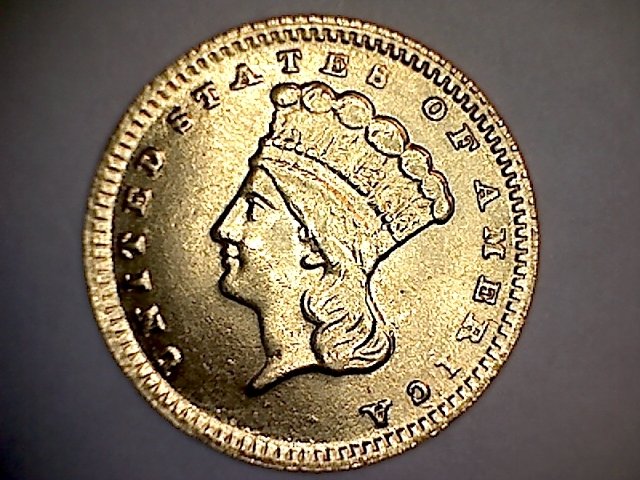 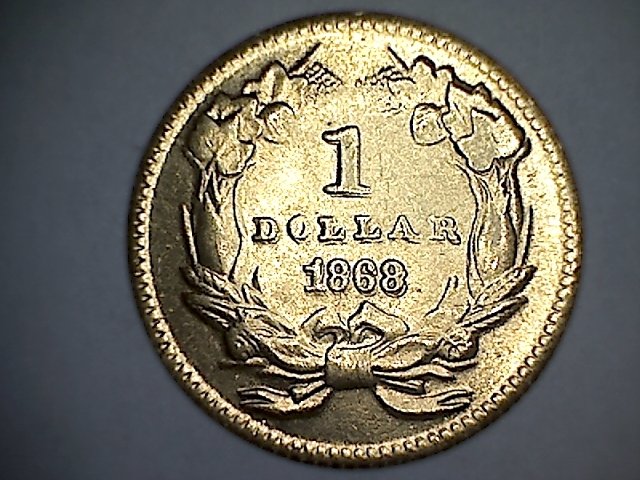 |
|
|
|
Moderator
 United States
23522 Posts |
Welcome to Coin Community, lsr. Your coin had a low mintage - only 10,000 - but it is available in the market and I am not surprised that it's been found in Europe.
Certain aspects of the coin are good indicators of authenticity. The denticles look sharp, and the rotated "A's" on the obverse are chatacteristic. I am worried about the doubling on the reverse, though. It is very strong and not expected. A type of doubling called Longacre Doubling is known for this one, but does not resemble what is seen here.
Opinions from more members are necessary.
|
|
Pillar of the Community
United States
1796 Posts |
Welcome Isr!
I must apologize, but SsuperDdave's worries are indeed significant. In addition to them, the denticles (the "teeth" around the edge of the coin) are spaced incorrectly for this issue.
What you have there is very likely a counterfeit.
However better pictures could help with a determination.
EDIT: I just found an example with similar denticles on the reverse, so I will have to defer to someone more familiar with this series than I. :-)
Edited by SteveCaruso
01/12/2015 12:04 pm
|
|
Bedrock of the Community
United States
10982 Posts |
Unfortunately it appears you have a counterfeit coin. There is no way to be 100% certain from images so I'll say I'm 99% sure you have a copy of a 1868 Gold Dollar.  |
|
Pillar of the Community
United States
6370 Posts |
After a quick Google search, I did not see any genuine examples with the RPD evident on this coin. Could be Strike Doubling, but I doubt it. From the pictures, the surfaces look rough. Both of these attributes are not usually present with a coin of such a low mintage. I must say that it is counterfeit. Doesn't match up to anything on AliExpress. Don't have access to my counterfeit gold detection guide at the moment, so I verify anything yet. |
|
Pillar of the Community
United States
6370 Posts |
The weight and diameter are within tolerance, so I don't know. Your example doesn't match up with any in my gold Counterfeit Detection guide by Bill Fivaz. |
|
Bedrock of the Community
United States
10982 Posts |
Quote:
The weight and diameter are within tolerance, so I don't know. Yeah, if the weight, diameter, and thickness are on the money and it looks A LOT better in-hand then there's a chance it's genuine. But...those images, the surfaces, the reverse doubling, and the "mushiness" of the reverse devices still point to counterfeit which it almost certainly is. I'd guess it's a die struck copy in 90% gold. $50 in gold turns into a $500+ "coin" if you find a buyer. |
|
Pillar of the Community
United States
604 Posts |
At first glance I thought to myself...those surfaces sure look rough.
Then I noticed that not all the dentils are uniform. For example, the dentil above the second "S" in States is "crooked".
Lastly, like BH1964 mentioned, the reverse seems "mushy" from the photos.
I guess I would feel more comfortable if it was slabbed.
|
|
New Member
 Spain
8 Posts |
by request BH1964 include scan of the coin. 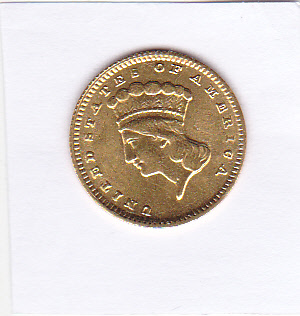 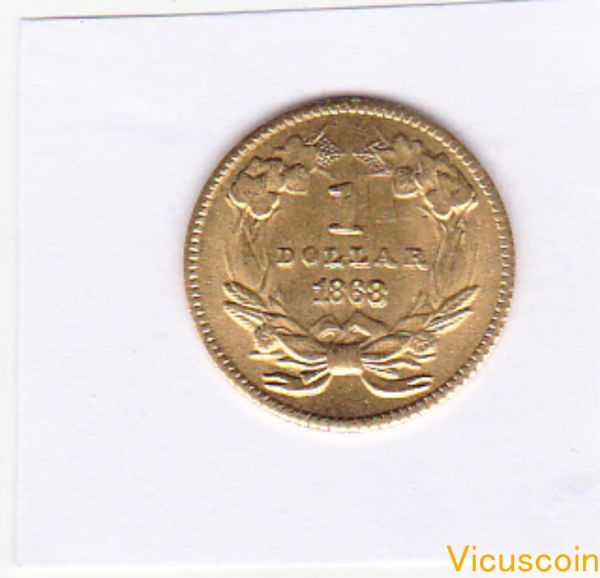 |
|
Bedrock of the Community
United States
10982 Posts |
Quote:
by request BH1964 include scan of the coin. Thank lsr. I wish I had better news for you but your G$1 is going to be counterfeit until proven genuine. I needs to go to ANACS or equivalent for determination. Perhaps you have access to a coin expert who can view it for you in person? Because it could be a $1,000 coin if genuine, an expert needs to see it in-hand. Good Luck! |
| |
Replies: 9 / Views: 1,827 |
|









 Posted 01/12/2015 12:00 pm


