| Author |
 Replies: 12 / Views: 5,290 Replies: 12 / Views: 5,290 |
|
|
Pillar of the Community
United States
1599 Posts |
Haven't posted here in a while, but still trying to get some decent shots using axial lighting. Below is my latest attempt. I am still having trouble with the lighting being even over the coin, but I finally have gotten a fairly accurate depiction of the color (toner). I will keep at it. 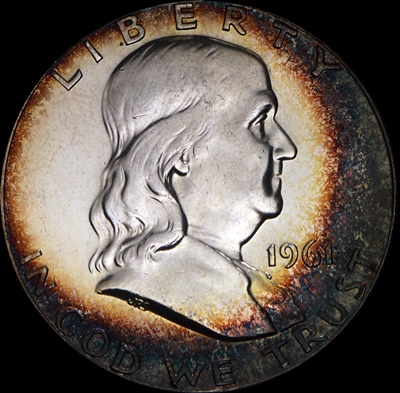 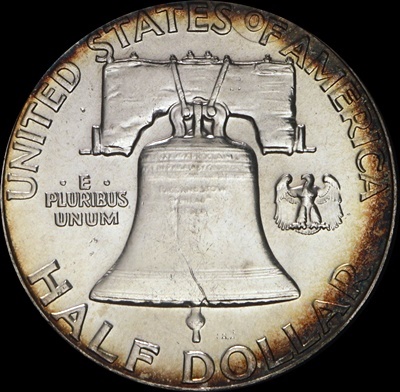 |
|
|
|
Pillar of the Community
United States
5825 Posts |
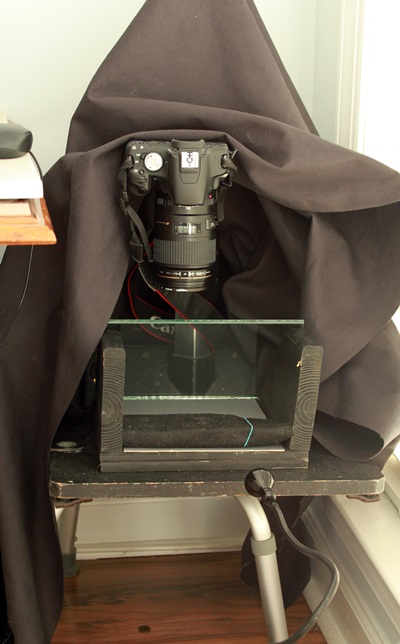
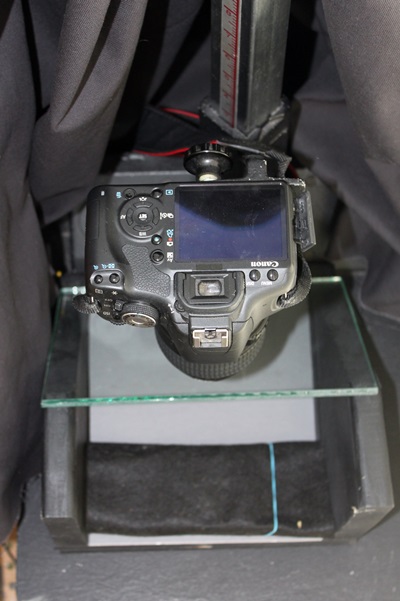
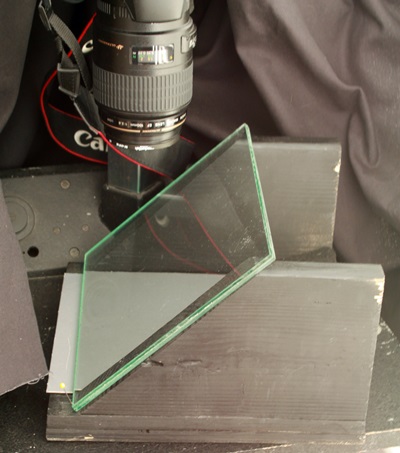
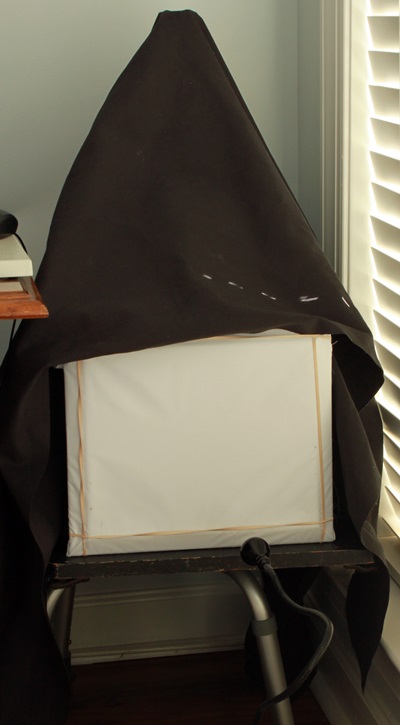
Can you post a picture of your complete setup? I'd be interested in seeing it. Here's mine:   When in use it wouldn't be lit up like that. The only light source would from the OTT-LITE shown. And all the non-black surfaces that you can see in the area would me masked. Even the vertical element of the camera stand has a sleeve on it (it's chromed and was giving me a reflection). |
|
Pillar of the Community
2087 Posts |
Kanga why not have the lighting and beam splitter positioned 90 degrees to your current set up( so the light is projected across the base board not at the column)?
Edited by austrokiwi
02/03/2015 09:52 am
|
|
Moderator
 United States
23522 Posts |
Doesn't matter really what direction you light from. One difficulty of axial lighting is that "normal" glass doesn't beamsplit very well and you recover only a small percentage of light reflected. Teleprompter glass reflects as much as 30-50% and is far easier to use, if a bunch more expensive. The axial "sweet spot" for regular glass is very narrow, and requires a lot of lumens since reflectivity is so low.
|
|
Pillar of the Community
2087 Posts |
Quote:
Doesn't matter really what direction you light from. Yep but that set up just didn't look ergonomic to me......but if it works and is comfortable to use it really doesn't matter. I use a a 50/50 beam splitter but it is an old type with a titanium dioxide coating. The plan is to up date with a much more modern Beam splitter. The type that has one surface coated to be anti reflective, and the other to be the "mirror" |
|
Moderator
United States
23522 Posts |
I would think you'd pretty much *have* to heavily coat the glass to achieve 50% reflectivity - your glass is probably as good as anything else capable of 50% and your images certainly make that case.
|
|
Pillar of the Community
 United States
1599 Posts |
|
|
Moderator
United States
23522 Posts |
One thing which gets often missed about axial lighting is the need for built-in adjustability. The only way a precise 45 degree glass angle works is if your lighting is placed with equal precision, which - if you think about it - is not possible because it's not a point source.
So you may need 44 degrees instead of 45, or a degree or two away from square. The size and shape of your lighting will affect this as well.
|
|
Pillar of the Community
2087 Posts |
Quote:
One thing which gets often missed about axial lighting is the need for built-in adjustability. I have to reinforce that point. Earlier this week I was trying to photograph a high lustre medal which was 63mm in diameter. It was diabolical initially. My beam splitter is fixed at 45 degrees and I was mounting the LED light, I use, via a simple clamp with no fine adjustment. Fortunately earlier this year( late last year) I did some more radical modifications to my copy stand. As a result I had a spare novoflex focusing rail and a spare manfrotto quick release ball head. This picture best demonstrates the result. It was only because I had the spare equipment that I could set up this "Rolls Royce" adjustment system. I think it would be way too expensive to purchase just for adjustable lighting in the normal course of events. BTW It solved the issues I was having with the 63mm medal.  Ignore the glare coming from the masking tape it's caused by the Flash from the camera I used for this shot. I do need to change the masking tape for black insulation tape( Dark room tape is just too expensive) Edited by austrokiwi
02/03/2015 12:01 pm
|
|
Moderator
United States
23522 Posts |
Something we should think about with axial lighting is the shape of the area to be lit and the amount of light thrown. Why do we use square lights to illuminate a round target, and fail to compensate for only transmitting 30% of the received lumens?
Axial lighting sources should be round, incandescent or clustered LED, and small (up to a max of R40) in diameter. "Spot" design as opposed to "flood." One single source for one single target, minimum of 60w equivalent and preferably more. Making that the sole source of photons is paramount. With so little effective light on the coin and the angle of reflection to the lens so important, any stray light whatsoever is detrimental. Don't even let light from the monitor get involved.
|
|
Pillar of the Community
2087 Posts |
Not sure I can agree in the case of my set up. The light I use is actually a bank of 160 LED's @ 5600 K. By a pure fluke it is actually the same width as my beam splitter and so it illuminates the whole beam splitter casting a very even bank of light on the subject. It is also dimmable, allowing adjustment of the light intensity. It handles slabs( I don't have many) and bank notes( I have decent amount) brilliantly. As I said it was a pure fluke that it is exactly the right size. I have not had a circular light come close to the utility of this square one( I have tried a number) The only thing I dislike about it is that it is battery powered. It will take a camera battery.
I use a medal light ( which fits exactly inside the housing as a white back light ( really helps in editing) and I "mount" coins on top of a microscope objective tube.
Edited by austrokiwi
02/03/2015 1:04 pm
|
|
Moderator
United States
23522 Posts |
All you need is a piece of glass capable of reflecting light downward to illuminate a circular target about 50mm in diameter. Any light beyond that is wasted anyway, and might as well dissipate. My ideal axial reflector is a gooseneck-mounted piece of glass no more than 100mm square. Infinite adjustability.
|
|
Pillar of the Community
2087 Posts |
Quote:
All you need is a piece of glass capable of reflecting light downward to illuminate a circular target about 50mm in diameter. And how exactly would that help with a 63mm medal ( you didn't read my earlier post very well)? I am most often photographing Thaler sized coins and sometimes very large medals a 50mm diameter round light is totally inadequate!! |
| |
Replies: 12 / Views: 5,290 |
|










 Posted 02/03/2015 09:48 am