| Author |
 Replies: 11 / Views: 3,107 Replies: 11 / Views: 3,107 |
|
|
Pillar of the Community
United States
974 Posts |
Edited by Nelrak
10/09/2007 02:55 am
|
|
|
|
Bedrock of the Community
United States
12437 Posts |
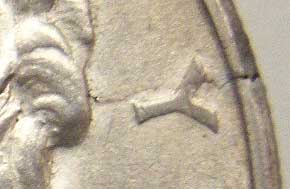
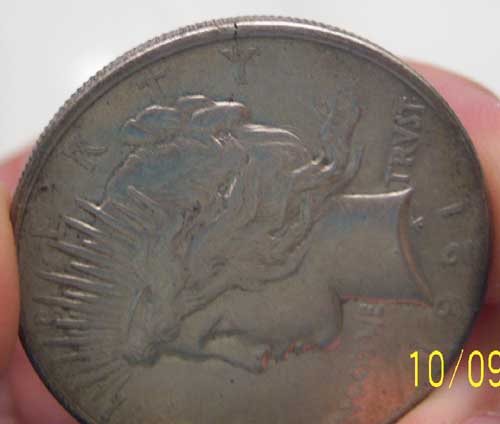
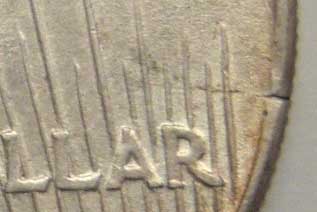
It sounds like you are possibly describing a cracked planchet. I don't know much about this type of error or its market value but that one sounds pretty dramatic. Take a look at one I found at Heritage from 1922 and see if it is similar http://coins.ha.com/common/view_ite...=1613&src=pr |
|
Pillar of the Community
 United States
974 Posts |
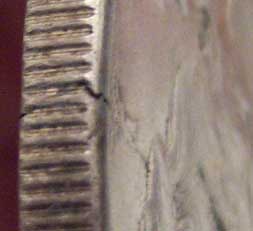
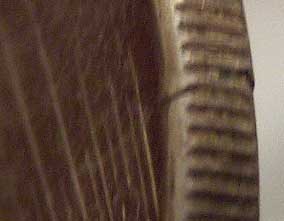
That's really close...it looks A LOT like that however the majority of the crack at the reeding and not as pronounced as the 1922 you found on HA. It appears it commanded a premimum as well on that coin $90 rather than $20.
Any other input?
|
|
Pillar of the Community
United States
1984 Posts |
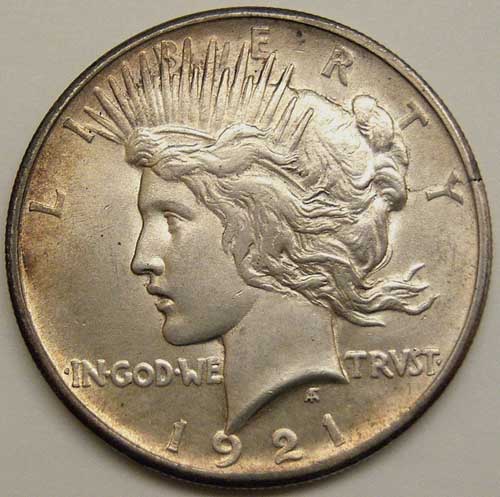
My input would be that if you can identify an MS coin and you believe it to be an MS coin, then a true die crack or other mint-made anomaly will not detract from the value, and may enhance it. The problem would be in the verification of the nature of the anomaly whether it's a die crack or shattered die, or post-mint, or whatever. I say that as someone who gladly pays a premium for coins with interesting die cracks; others might feel differently.
|
|
Bedrock of the Community
United States
14454 Posts |
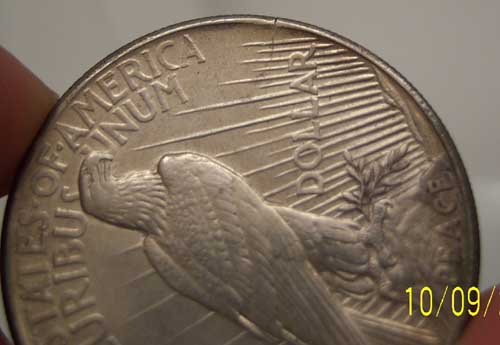
ok I am no error expert in no way shape or form but as far as I know a die crack would only be on the Obverse or the Reverse not on both, so this is either a planchet flaw or a man made anomaly. As I said at first I am in no way an expert and if I am wrong I am sure someone will let you know but this is my understanding
Edited by Bryan1315
09/27/2007 2:57 pm
|
|
Pillar of the Community
United States
974 Posts |
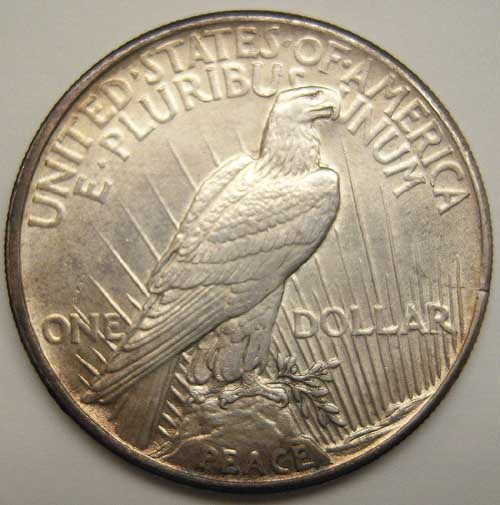
Ok now that I have it in hand, is this an actual mint error? Should I send it into PCGS for grading and verification? How rare are these types of errors if it is real?
|
|
Bedrock of the Community
United States
14454 Posts |
looks like a real split planchet to me but I have no idea if it would be worth authentication because I have no clue how rare something like this would be or if it would even add to the value at all
|
|
Pillar of the Community
United States
3507 Posts |
Authentic cracked planchet. That is not the same as a die crack. Again hard to place a price on it. Fairly uncommon. This being a 1921 Peace dollar makes pricing it even more difficult. This is one that could be worth slabbing. Thanks, Bill |
|
Pillar of the Community
United States
974 Posts |
Bill, thanks for the idea, which TPG would you suggest? |
|
Valued Member
United States
133 Posts |
I hate to tell this on myself, but in my younger days I bought a Morgan that was cracked clear thru like this, turns out it had been heated. It was a '96-O and I really thought I had something, turned out I had been had! LOL Be careful.
|
|
Pillar of the Community
United States
974 Posts |
I guess the only way to authenticate is to have it sent out for grading, any comments which company would be best for this type of potential error?
|
|
Valued Member
United States
199 Posts |
Die cracks are convexed . Split planchets are concaved. If you fingernail drops into the split it is a craked planchet on that coin. Neat find and hard to come by.
|
| |
Replies: 11 / Views: 3,107 |
|












 Posted 09/27/2007 2:02 pm


