











 Posted 03/03/2015 9:56 pm


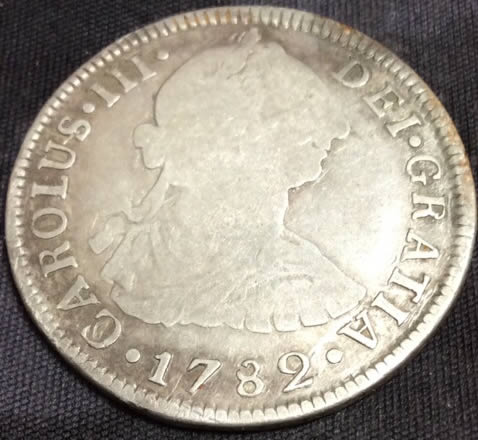
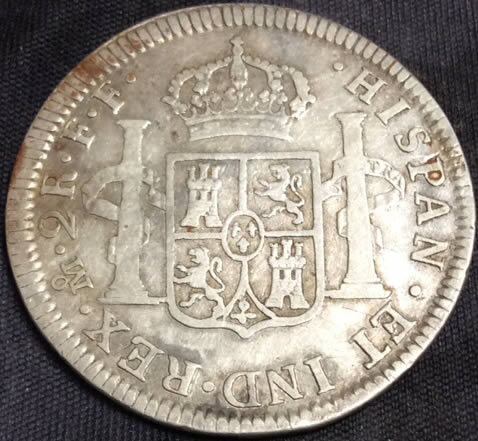
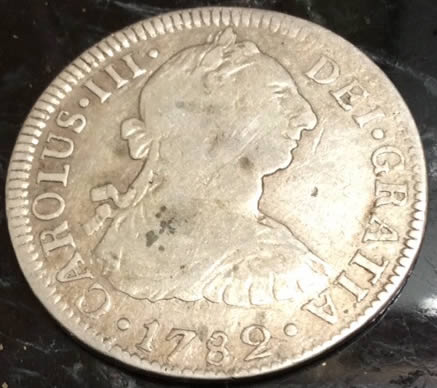
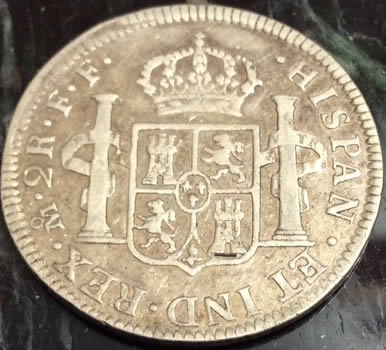
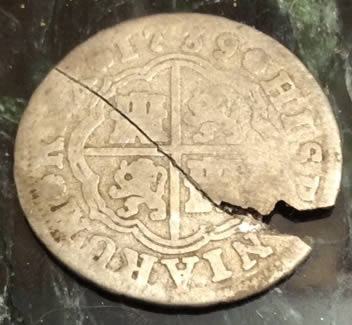
Thanks for posting. The two 1782 two reales of Mexico, assayer "FF" look like a matched set. If you said they came from a War of 1812 site, that would be about right for the amount of wear. I could believe they were lost even a little bit earlier. The 1739 one real (either Madrid or Seville) based on the reverse, is oddly missing a piece and split, most unlike normal silver. It appears to be a contemporary counterfeit, struck in a base silver alloy, most likely not 0.917 fine as one would expect. Old time shopkeepers would bounce coins like this on a marble slab on their counter to listen for the ring, and to see if they shatter like this coin appears ready to do. Counterfeits almost never have the right date, being back-dated to make folks think that honest wear and not shallow casting or poor striking caused the coin to look well circulated. Criminals with the requisite "mechanical arts," were transported to America certainly by the mid 1700s when fakes began to turn up with regularity. Now any self-respecting silversmith could make decent silver coins too, but "to counterfeit is death" as colonial notes used to say. It is a tough call what a poor but honest person would do if they got stuck with a bogus "dime," and so I think many were misplaced on purpose to keep the devil at bay.


