| Author |
 Replies: 10 / Views: 2,376 Replies: 10 / Views: 2,376 |
|
|
Valued Member
469 Posts |
What do you think? 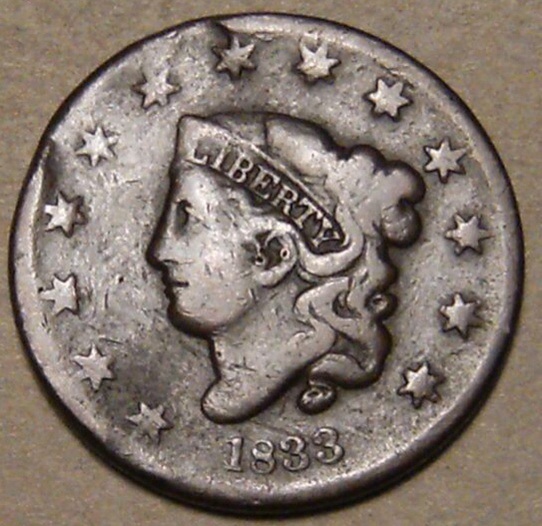 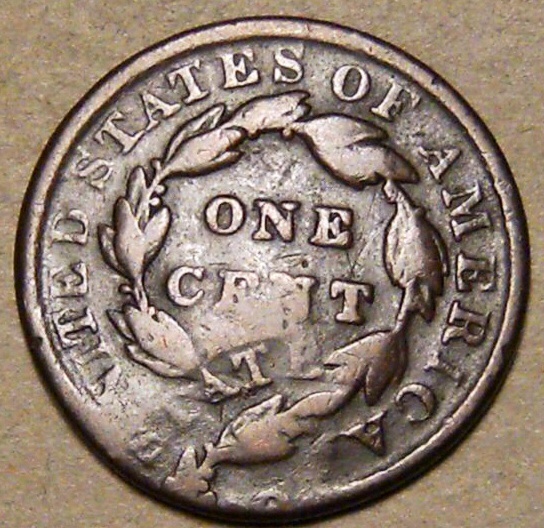 |
|
|
|
Valued Member
United States
449 Posts |
Looks like it to me. Nice find!
|
|
Moderator
 United States
23522 Posts |
Interesting. Have to wonder how the second strike got there with so little collateral damage on the obverse, since it was so far offset.
|
|
Valued Member
 469 Posts |
That's why I didn't think it was real. Shouldn't the obverse look much different?
|
|
Bedrock of the Community
United States
17884 Posts |
No not always. It is the rim weakness on the obv that bother me a little but that might be accounted for if the first offcenter strike slightly bent the planchet.
|
|
Moderator
United States
23522 Posts |
What if there were a blank planchet under this obverse for the second strike? Would that protect the obverse enough to retain this much detail? The obverse should be obliterated.
|
|
Valued Member
469 Posts |
Perhaps it would. It strikes me as pretty convenient that it is double struck clearly on the reverse yet the obverse retained nearly all detail disregarding the rim. Also, why isn't the second strike complete? It stops at "E" in "STATES." I'd imagine that you're supposed to be able to see the rest of it on an error like this.
|
|
Pillar of the Community
United States
616 Posts |
The extra design elements are raised and proportionate to the coin, therefore I beleive it to be a double strike.
It looks to me as if it was a feeder finger malfunction that probably caused this sorta reverse off-center double strike out of collar.
Whereas the struck coin was partially ejected from the chamber (75%), and when the second strike occurred the feeder finger somehow got wedged on top of the newly inserted planchet and was unable to clear the chamber, and when the hammer (reverse) die struck the remaining 25% of the previous strike that remained tilted inside the collar, down onto the feeder finger, to the planchet, it caused the well defined rim break you see on the obverse of the OP coin , ultimately shearing off the feeder finger in the process.
Which in turn, minimalized any further obverse damage beyond the rim on the first strike by absorbing most of the remaining strike pressure.
Just my humble opinion......
|
|
Valued Member
United States
122 Posts |
Interesting reading as I posted a Morgan $ previously that had a similar look. The lack of a reverse striking led most peoples opinions to that of it being done outside the mint. Nice to read other opinions and options as to what possibly caused this.
|
|
Valued Member
United States
122 Posts |
|
|
Moderator
United States
23522 Posts |
JDRMCB, if anything maybe the new planchet didn't feed at all. The feed finger not only took the force of the obverse die, it passed the force necessary to cause the second strike underneath it. That sounds like it would work. We'll probably never know for sure, but yours is pretty plausible thinking.
|
| |
Replies: 10 / Views: 2,376 |
|







 Posted 03/06/2015 10:52 am





