| Author |
 Replies: 9 / Views: 1,840 Replies: 9 / Views: 1,840 |
|
|
Pillar of the Community
Germany
1856 Posts |
Quote from the Bowers Encyclopedia of Colonial and Early American Coins. P 188: 'Although no official state authorization relating to a native New York coinage is known, a number of issues were made with legends relating to that state' The Nova Eborac (New York) coins are though to have been issued following a petition to the New York State Assembly by Ephraim Brasher and John Bailey dated February 1787. It seems likely that Brasher and Bailey operated a minting shop in New York City, and that those coins were produced there. So there appears to be some uncertainty concerning the origin of the Nova Eborac coinage, mainly because the original authorization documents cannot be traced. What is certain, however, is that this coinage appeared in 1787, and did circulate in the City and State. 4 distinct Nova Eborac types are known: The so-called large and small bust are both very scarce, while the 2 medium bust types with figure seated facing left and figure seated facing right are much more common. These are my examples of each of the medium bust types. As you can see, the coinage did circulate extensively. An interesting series to be sure. 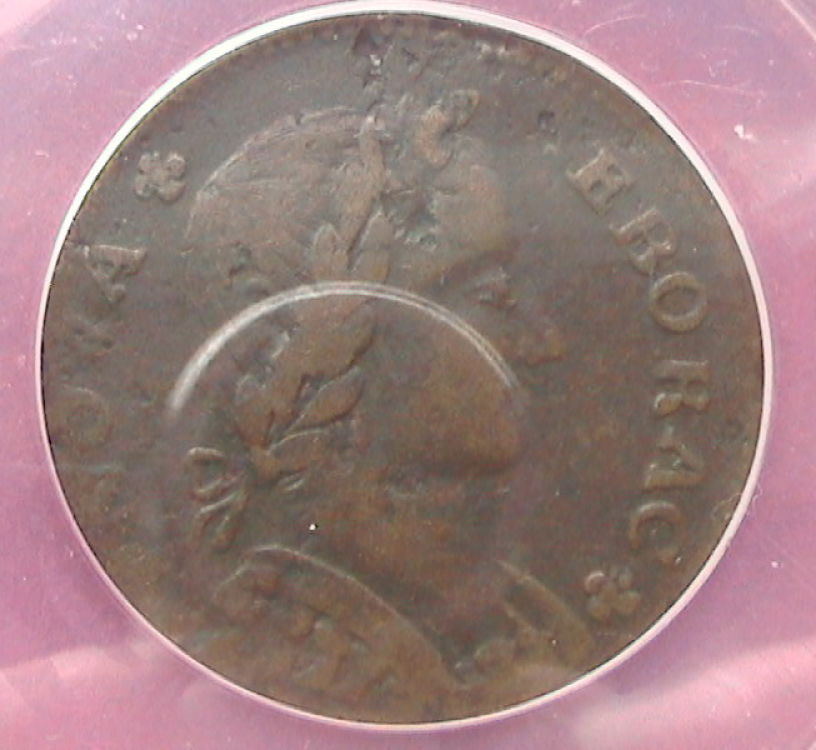 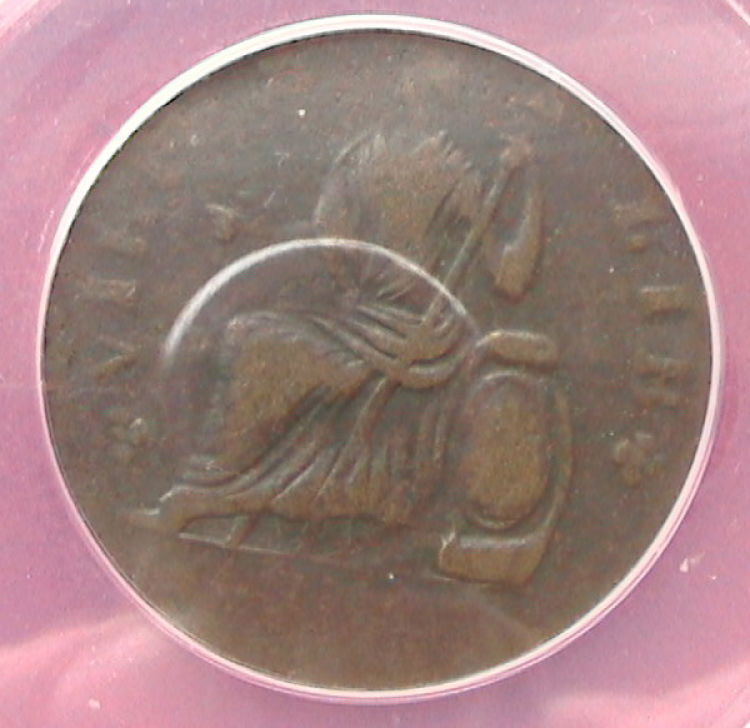 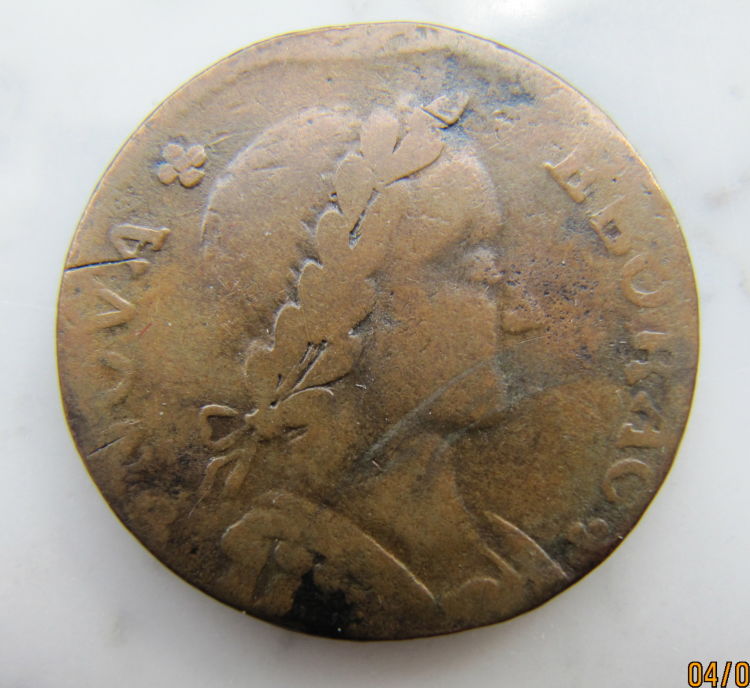 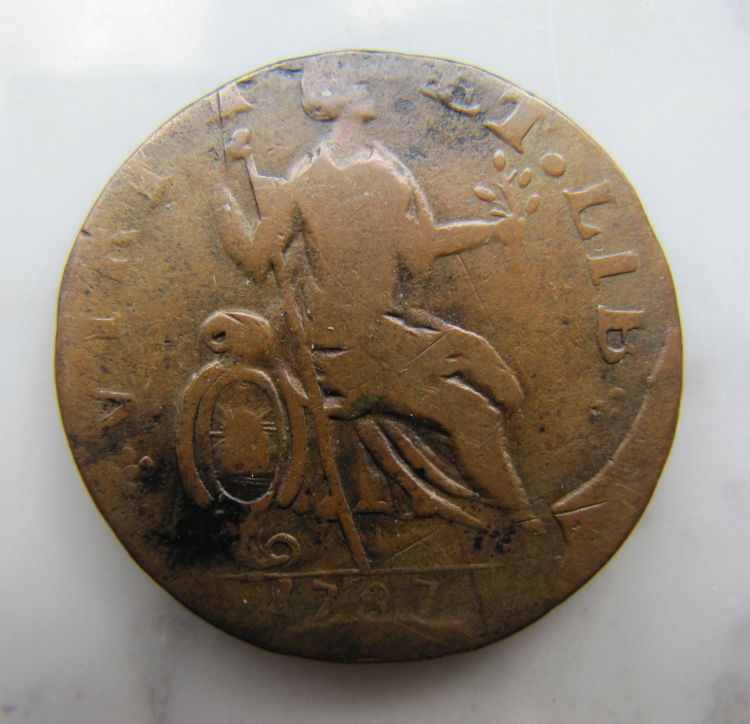 |
|
|
|
Pillar of the Community
United States
1566 Posts |
Very cool GERMANICVS. I have yet to acquire one of these. I'm just breaking into post colonials so it's good to see some great examples. Always a joy to see your copper.
|
|
Moderator
 United States
16694 Posts |
Crosby 1-B and 1-A.
Very nice examples GERMANICVS!
swcoin.ecrater.com
|
|
Pillar of the Community
United States
4431 Posts |
Thanks for the show, Germanicvs. Pleasing examples, these. To date, not one of this issue has appeared on my radar at a show. It's one of the few colonial issues for which I have yet to acquire a type coin. Now, I'll have to look harder!
|
|
Pillar of the Community
 Germany
1856 Posts |
Thank you for your comments guys. I like all pre-federal coinage, but specially those issues, like this one, which were minted in America. Nova Eboracs, specially these two types (thank you vermontensium for identifying the Crosby numbers) are fairly easy to find, so you will not have any trouble finding a suitable coin ExoGuy and Celticsoul. I found mine at a coin show In MA, but nice specimens are often available in ebay, and of course at major auctions. (A good seller (if I may mention it here) is Indeetlib from what I have read). |
|
Pillar of the Community
United States
604 Posts |
I've always been a collector of U.S. coinage, but not the colonials. However, I always find the information about them (like you provided) very interesting; not to mention the coins themselves.
In the back of my mind though, I'm curious as to how long it took to make just one of your coins compared to today's coinage. Any idea?
|
|
Pillar of the Community
United States
4431 Posts |
I've made purchases from Indeetlib and agree that he's a fine seller. I do prefer to buy coppers at shows though, what with the benefit of seeing coin in hand.
|
|
Pillar of the Community
Germany
1856 Posts |
Nickel Guy, it is a bit difficult to answer your question. But consider the following steps which had to be taken to be able to strike a coin back at the end of the 18th century.
- Raw metal strip preparation
- Cutting out the planchets from the metal strip
- Preparing the planchets for actual striking of the coin
- Striking the coin from the planchet in a screw-type press.
All of the operations above were manual, at least until the end of the 18th century. Preparing the planchets is said to have taken hours in some cases (polishing, smoothing, annealing). Each planchet was then hand-fed into the press which was also manually operated. The actual striking was probably also slow and not exceeding 30-50 coins per minute. So how long did it actually take to coin a colonial coin - probably several hundred time slower than is norm today (as a rough estimate).
The Bowers Encyclopedia of Early US and Colonial Coins has a good description of the typical process used to strike pre-federal coins in America.
Edited by GERMANICVS
03/10/2015 1:44 pm
|
|
Pillar of the Community
United States
1566 Posts |
Kevin at Inde Et Lib Numismatics is one of my go to guys for copper. Excellent seller, solid grades and full descriptions are what keep me coming back.
|
|
Pillar of the Community
United States
1566 Posts |
Excellent description of 18th century coining processes GERMANICVS. Sometimes they just cheated and over struck earlier pieces. I remember seeing a 1795 Half Cent struck over a Talbot Allum and Lee token here on the forum. |
| |
Replies: 9 / Views: 1,840 |
|







 Posted 03/09/2015 6:38 pm





