| Author |
 Replies: 18 / Views: 4,039 Replies: 18 / Views: 4,039 |
|
New Member
United States
36 Posts |
|
|
|
|
Pillar of the Community
United States
1512 Posts |
 oh, and  |
|
Pillar of the Community
Canada
4911 Posts |
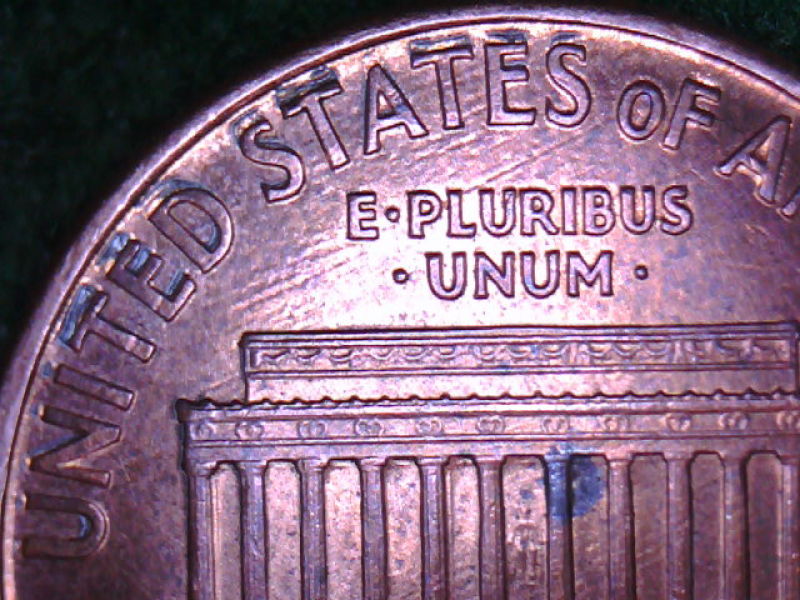
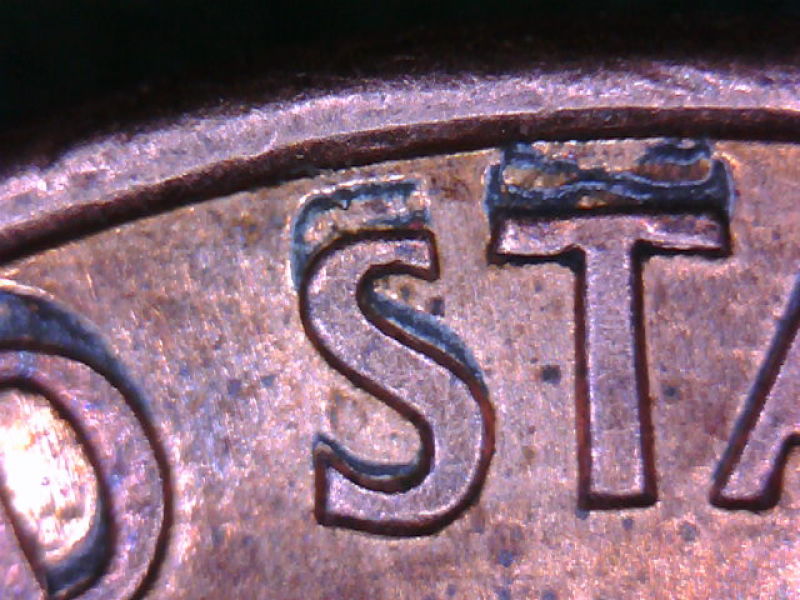
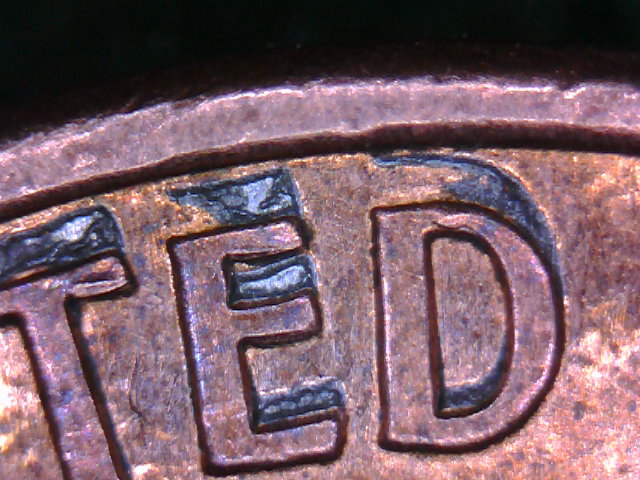
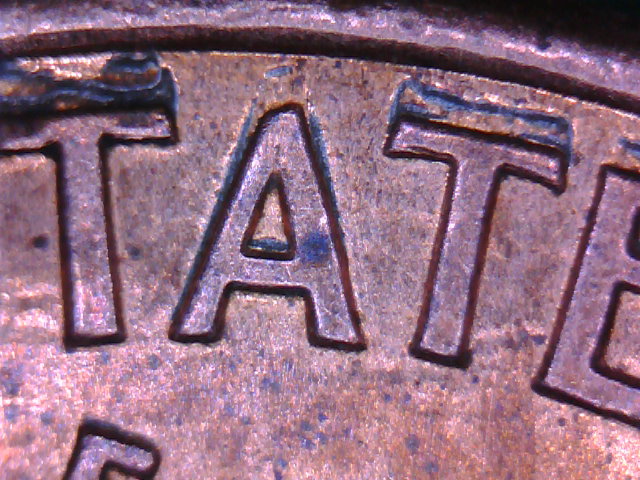
it is zinc being exposed from the planchet expanding during the striking process.
Feel free to call me Will.
|
|
Moderator
 United States
23522 Posts |
Fascinating coin, and it'll take someone better with arcane strike artifacts than I to identify what happened here. It seems to wide for regular "push" Machine Doubling. A stutter strike, maybe? I'm all sorts of about this one.  |
|
Pillar of the Community
United States
3359 Posts |
 with thedollarman |
|
Bedrock of the Community
Australia
21789 Posts |
One of the best ways of avoiding this, is to not have zinc cores.  An even better and cheaper way is to not strike them anymore, just as the Canadians did.  |
|
New Member
 United States
36 Posts |
"it is zinc being exposed from the planchet expanding during the striking process."
So, by your comment, this happens at the mint. Expanding, from heat? But why only in certain areas? Why does the "zinc" mimic the letter it is near, and basically make it look like a double letter, why does it take a shape? I do see it around the edge of the memorial also, but it only shows on the left side, why not the whole edge, for that matter why not all the letters on the reverse of the coin, and why not any of the letter on the obverse? Is the zinc closer to the top on the reverse and that is why it only mainly shows on reverses of coins? Is it more pressure on one side verses the other. but then, wouldn't the letters be weaker on one side verses the other? Is it from a defective blank planchet, may be more zinc on one side, and not even throughout?
I hope my questions don't sound to silly, but I want to understand this all better, and I wont unless I ask, it's just finding the right words.
|
|
Bedrock of the Community
United States
12437 Posts |
It is split plating doubling, the worst kind of "doubling" to have since it will eventually lead to zinc rot. As a coin is struck, the edges of the devices on a die can split the thin plating which then spreads out and exposes the zinc core as the planchet expands to the collar in the coining chamber.
|
|
Bedrock of the Community
United States
20753 Posts |
Nice looking mess on that coin. Sort of what error people are selling as doubled. Might consider keeping it and make sure you put it in a 2x2 and seal well to keep it from getting messed up. At a coin show you see things like this called errors and sell for a decent price all the time. Nice find.
|
|
Pillar of the Community
United States
2775 Posts |
I'm not a physicist nor an engineer so my analogy may be off.
I think the tensile strength of the copper plating is pushed to its limits due to the strike pressure moving the plated base metal outward. As the base metal pushes outward filling voids and devices along the way, the plating is being stretched.
We see it a lot at the outer devices and rim because both areas are pulling the plating in two directions when they fill in, thus the plating splits under the pressure of being pulled apart from two directions. It forms or mimics the shape of the device because it tears at the weakest point, which usually is at the edge or rim of the device.
No Big Bang, just a theory. Thanks Doug
|
|
Bedrock of the Community
United States
12437 Posts |
Quote:
At a coin show you see things like this called errors Anyone can call it whatever they want to but it is still not an error of any kind. |
|
Moderator
United States
23522 Posts |
Quote:
It is split plating doubling, the worst kind of "doubling" to have since it will eventually lead to zinc rot. As a coin is struck, the edges of the devices on a die can split the thin plating which then spreads out and exposes the zinc core as the planchet expands to the collar in the coining chamber.
Well, that's my new thing learned for the day. It makes intuitive sense that a layered coin like this could demonstrate layered striking behavior, but as a Classic guy this doesn't much appear on my radar. Thanks, and dollarman, I take back what I first thought of your reply.  |
|
Bedrock of the Community
United States
12437 Posts |
The initial 1980s-era issues have the most problems with split plating although it can be seen in all years throughout the Zincoln Memorial production. The lowering of the design relief and the elimination of hand-punched mintmarks also helped alleviate plating splits.
|
|
Bedrock of the Community
United States
20027 Posts |
This is very common on copper plated zinc cents, it is not an error nor a variety. It is damage created at the mint.
The coefficient of expansion is different for copper and zinc, it is at least partially to blame. I also agree with Halo1st, if the thickness of the copper is not uniform, it can create gaps long the edges where the copper is stretched beyond it's limits and it simply tears exposing the core.
|
|
Bedrock of the Community
United States
17884 Posts |
Quote:
It makes intuitive sense that a layered coin like this could demonstrate layered striking behavior, but as a Classic guy this doesn't much appear on my radar You can see something similar on classics as well. They don't have plating that can split but the extreme stretching of the metal by the lettering around the periphery can result is a difference to the crystal structure of the metal in those areas. This structure difference causes the metal to tone at different rates. You can often see this on Morgan dollars with toning where you will see a lighter or untoned shadowing of the lettering that looks very similar to what you see on the OP coin. There is no plating on the coins but the end result is caused by the same effect. |
|
Pillar of the Community
United States
4809 Posts |
|
| |
Replies: 18 / Views: 4,039 |









 Posted 03/27/2015 4:56 pm





